

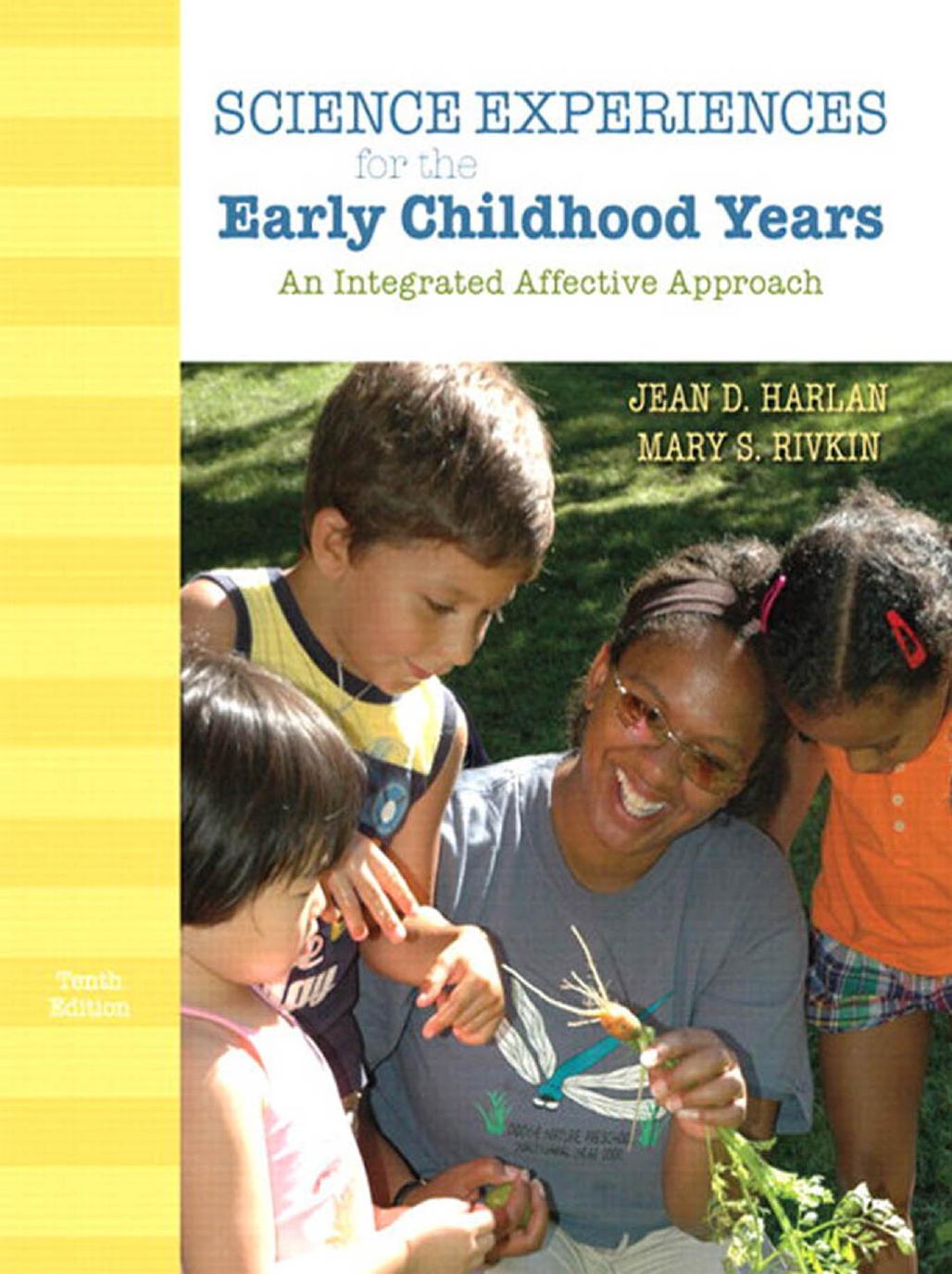
Science Experiences for the Early Childhood Years An Integrated Affective Approach 10th Edition by Jean Harlan, Mary Rivkin ISBN 013237336X 978-0132373364
Original price was: $70.00.$35.00Current price is: $35.00.
Instant download Science Experiences for the Early Childhood Years An Integrated Affective Approach 10th Edition Jean D. Harlan after payment
Science Experiences for the Early Childhood Years An Integrated Affective Approach 10th Edition by Jean Harlan, Mary Rivkin – Ebook PDF Instant Download/Delivery: 013237336X , 978-0132373364
Full download Science Experiences for the Early Childhood Years An Integrated Affective Approach 10th edition after payment
Product details:
ISBN 10: 013237336X
ISBN 13: 978-0132373364
Author: Jean Harlan, Mary Rivkin
A classic in the field, this text takes an integrated approach to science without watering it down, and emphasizes understanding and addressing children’s affective nature. It remains a forward-thinking, innovative resource for teaching science to young learners, and a best-selling resource for the field.
Clearly organized, the text provides a research-based rationale for early science education in Part I chapters. Emphasizing that meaningful science for young children builds on the emotional underpinnings of their curiosity and concerns about the everyday world, and their pleasure in exploring it, this resource encourages new teachers to help children live appreciatively and thoughtfully on Earth.
The topical chapters in Part II offer solid, accessible, concept-based activities and are concurrent with the vision of the new Framework for K-12 Science Education, being developed by the Board on Science Education of the National Academy of Science. For each unit presented, students are provided with all the comprehensive integrating and connecting elements to strengthen children’s learning of science. Early educators’ own content and pedagogical knowledge will be expanded as they practice using the units in class and in field placements.
Science Experiences for the Early Childhood Years An Integrated Affective Approach 10th Table of contents:
Part One The Rationale
1 An Integrated Affective Approach to Science Learning
The Ingredients of Learning
Attention
Curiosity
Emotions
Affect and Learning
Positive Affect and Learning
Negative Affect and Learning
Multiple Learning Pathways
Two Ways of Thinking
Multiple Intelligences Theory
An Integrated Learning Framework
Promoting Concept Connections
References
2 Science Participants: Children, Teachers, Families, and Communities
Young Children as Thinkers
Cognitive Development Theories
Young Children as Persons
Sense of Initiative
Sense of Industry
Respecting Personal Development Traits
The Teachers
Who Can Teach Science?
Attitude Contagion
Authentic Interest
Teaching Roles
The Families
Communities
References
3 Guiding Science Learning and Assessments in the Early Years
Guided Science
Reasons for Guided Discovery Science
Guiding Learners
Teaching Styles
Organizing Approaches
Preparation for Teaching Science to Young Children
Indirect and Direct Teaching
Learning to Question
Leading Discussions
Organizing Time and Space for Science
Introducing Science Activities
Guiding Explorations
Nurturing Learners
Dispelling Stereotypes
Adapting Experiences for Younger Children
Adapting Experiences for Children with Special Needs
Learning in the Context of Cooperation
Integrated Curriculum Themes
Objectives and Assessment
Gaining from Our Mistakes
Professional Growth
References
Part Two Concepts, Experiences, and Integrating Activities
4 Plants
Concept: There are many kinds of plants; each has its own form.
Concept: Most plants make seeds for new plants.
Concept: Seeds grow into plants with roots, stems, leaves, and flowers.
Concept: Most plants need water, light, minerals, warmth, and air.
Concept: Some plants grow new plants from their roots.
Concept: Many foods we eat are seeds.
Concept: Some plantlike forms grow from spores.
Integrating Activities
Math Experiences
Music (Resources in Appendix A)
Literature Links
Poems (Resources in Appendix A)
Fingerplays
Art Activities
Play
Creative Movement
Creative Thinking
Food Experiences
Field Trips
Promoting Concept Connections
Maintaining Concepts
Improving School Grounds
Connecting Concepts
Family and Community Support
Resources
Online Resources
5 Animals
Concept: There are many kinds of animals.
Capture Techniques
Temporary Housing
Insect Pests
Concept: Animals move in different ways.
Care of Earthworms
Concept: Each animal needs its own kind of food.
Concept: Many animals make shelters to rear their young.
Concept: Humans and animals often live together.
Animals in the Classroom
Integrating Activities
Math Experiences
Music (Resources in Appendix A)
Literature Links: Animal Characteristics
Literature Links: Insects, Spiders, and Earthworms
Literature Links: Fish, Mollusks, Amphibians, and Reptiles
Literature Links: Birds
Literature Links: Mammals
Literature Links: Habitats
Literature Links: Baby Animals, Hatching, and Pets
Literature Links: Animal Math
Poems (Resources in Appendix A)
Fingerplays
Art Activities
Play
Creative Movement
Creative Thinking
Food Experiences
Field Trips
Promoting Concept Connections
Maintaining Concepts
Improving School Grounds
Connecting Concepts
Family and Community Support
Resources
Online Resources
6 The Human Body
Concept: Each person is unique.
Concept: Bones support us.
Concept: Muscles move our bones.
Concept: The heart and lungs keep us alive.
Concept: Senses inform us.
Concept: Our bodies need our care.
Integrating Activities
Math Experiences
Music (Resources in Appendix A)
Literature Links: Individuality
Literature Links: The Body
Literature Links: Health Care
Poems (Resources in Appendix A)
Fingerplays
Art Activities
Play
Creative Thinking
Creative Movement
Food Experiences
Field Trips
Promoting Concept Connections
Maintaining Concepts
Improving School Grounds
Connecting Concepts
Family and Community Support
Resources
Online Resources
7 Air
Concept: Air is almost everywhere.
Concept: Air is real; it takes up space.
Concept: Air presses on everything on all sides.
Concept: Moving air pushes things.
Concept: Fast-moving air keeps planes aloft.
Concept: Air slows moving objects.
Concept: Living things need air to survive.
Integrating Activities
Math Experiences
Music (Resources in Appendix A)
Literature Links
Poems (Resources in Appendix A)
Fingerplays
Art Activities
Play
Creative Movement
Creative Thinking
Food Experiences
Field Trips
Promoting Concept Connections
Maintaining Concepts
Improving School Grounds
Connecting Concepts
Family and Community Support
Resources
Online Resources
8 Water
Concept: Water has weight.
Concept: Water’s weight and upthrust help things float.
Concept: Water goes into the air.
Concept: Water can change forms reversibly.
Concept: Water is a solvent for many materials.
Concept: Water clings to itself.
Concept: Water clings to other materials.
Concept: Water moves into other materials.
Integrating Activities
Math Experiences
Music (Resources in Appendix A)
Literature Links
Poems (Resources in Appendix A)
Fingerplays
Art Activities
Play
Creative Movement
Creative Thinking
Food Experiences
Promoting Concept Connections
Maintaining Concepts
Improving School Grounds
Connecting Concepts
Family and Community Support
Resources
Online Resources
9 Weather
Concept: The sun warms Earth.
Concept: Changing air temperatures make the wind.
Concept: Evaporation and condensation cause precipitation.
Concept: Raindrops can break up sunlight.
Concept: Weather can be measured.
Concept: Lightning is static electricity.
Concept: Charged electrons make sparks when they jump.
Integrating Activities
Math Experiences
Music (Resources in Appendix A)
Literature Links
Poems (Resources in Appendix A)
Art Activities
Creative Movement
Creative Thinking
Food Experiences
Field Trips
Promoting Concept Connections
Maintaining Concepts
Improving School Grounds
Connecting Concepts
Family and Community Support
Resources
Online Resources
10 Rocks and Minerals
Introduction
Concept: There are many kinds of rocks.
Rock Formation
Mineral Content
Three Types of Rock Formation
Concept: Rocks slowly change by wearing away.
Concept: Crumbled rocks and dead plants make soil.
Concept: Old plants and animals left prints in rocks.
Concept: Minerals form crystals.
Integrating Activities
Math Experiences
Music (Resources in Appendix A)
Literature Links
Poems (Resources in Appendix A)
Art Activities
Play
Creative Movement
Creative Thinking
Food Experiences
Field Trips
Promoting Concept Connections
Maintaining Concepts
Improving School Grounds
Connecting Concepts
Family and Community Support
Resources
Online Resources
11 Magnetism
Concept: Magnets attract some things but not others.
Concept: Magnets vary in strength.
Concept: Magnets pull through some materials.
Concept: One magnet can be used to make another magnet.
Concept: Magnets are strongest at each end.
Concept: Each end of a magnet acts differently.
Integrating Activities
Math Experiences
Music
Literature Links
Poems (Resources in Appendix A)
Storytelling with Magnets
Art Activities
Play
Creative Thinking
Promoting Concept Connections
Maintaining Concepts
Improving School Grounds
Connecting Concepts
Family and Community Support
Resources
Online Resources
12 The Effects of Gravity
Introduction
Concept: Gravity pulls on everything.
Integrating Activities
Math Experiences
Music
Literature Links
Poems (Resources in Appendix A)
Art Activities
Play
Creative Movement
Creative Thinking
Food Experiences
Field Trips
Promoting Concept Connections
Maintaining Concepts
Improving School Grounds
Connecting Concepts
Family and Community Support
Resources
Online Resources
13 Simple Machines
Introduction
Concept: Friction can heat, slow, and wear away objects.
Concept: A lever helps lift objects.
Concept: A ramp shares the work of lifting.
Concept: A screw is a curved ramp.
Concept: Simple machines help move things along.
Concept: Some wheels turn alone; some turn together.
Concept: Single wheels can turn other wheels.
Concept: Single wheels can help us pull down to lift up.
Integrating Activities
Math Experiences
Music (Resources in Appendix A)
Literature Links
Poems (Resources in Appendix A)
Art Activities
Play
Other Indoor Fun
Creative Movement
Creative Thinking
Food Experiences
Field Trips
Promoting Concept Connections
Maintaining Concepts
Improving School Grounds
Connecting Concepts
Family and Community Support
Resources
Online Resources
14 Sound
Introduction
Concept: Sounds are made when something vibrates.
Concept: Sound travels through many things.
Concept: Vibrating objects of different sizes make different sounds.
Integrating Activities
Math Experiences
Music
Literature Links
Poems (Resources in Appendix A)
Fingerplays
Art Activities
Play
Listening Activities
Creative Movement
Creative Thinking
Food Experience
Field Trips
Promoting Concept Connections
Maintaining Concepts
Improving School Grounds
Connecting Concepts
Family and Community Support
Resources
Online Resources
15 Light
Introduction
Concept: Nothing can be seen without light in everyday experience.
Concept: Light appears to travel in a straight line.
Concept: Shadows are made when light beams are blocked.
Concept: Night is Earth’s shadow.
Concept: Everything we see reflects some light.
Concept: Light contains many colors.
Concept: Bending light beams make things look different.
Integrating Activities
Math Experiences
Music (Resources in Appendix A)
Literature Links
Storytelling with Lights
Poems (Resources in Appendix A)
Art Activities
Play
Creative Movement
Creative Thinking
Food Experiences
Promoting Concept Connections
Maintaining Concepts
Improving School Grounds
Connecting Concepts
Family and Community Support
Resources
Online Resources
Teaching Resources
16 Our Environment
Concept: We are interconnected with all the natural elements in the environment.
Concept: There is an interconnectedness among things: plants, animals, air, water, weather, rocks, and ourselves.
Concept: The environment is where we are. We can study it as well as live in it.
Concept: We can work together to sustain the environment by reducing, rethinking, reusing, and recycling.
Integrating Activities
Math Experiences
Music (Resources in Appendix A)
Literature Links: The Environment
Literature Links: Children Helping the Environme
People also search for Science Experiences for the Early Childhood Years An Integrated Affective Approach 10th:
science experiences for the early childhood years
early childhood science activities
science work experience ideas
science early childhood development
science for early childhood
Tags: Jean Harlan, Mary Rivkin, Science Experiences, Early Childhood