

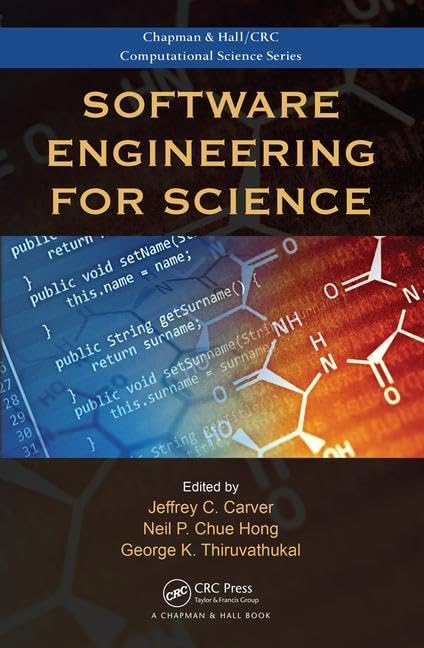
Software Engineering for Science 1st edition by Jeffrey Carver – Ebook PDF Instant Download/Delivery: 1498743854, 9781498743854
Full download Software Engineering for Science 1st edition after payment
Product details:
ISBN 10: 1498743854
ISBN 13: 9781498743854
Author: Jeffrey Carver
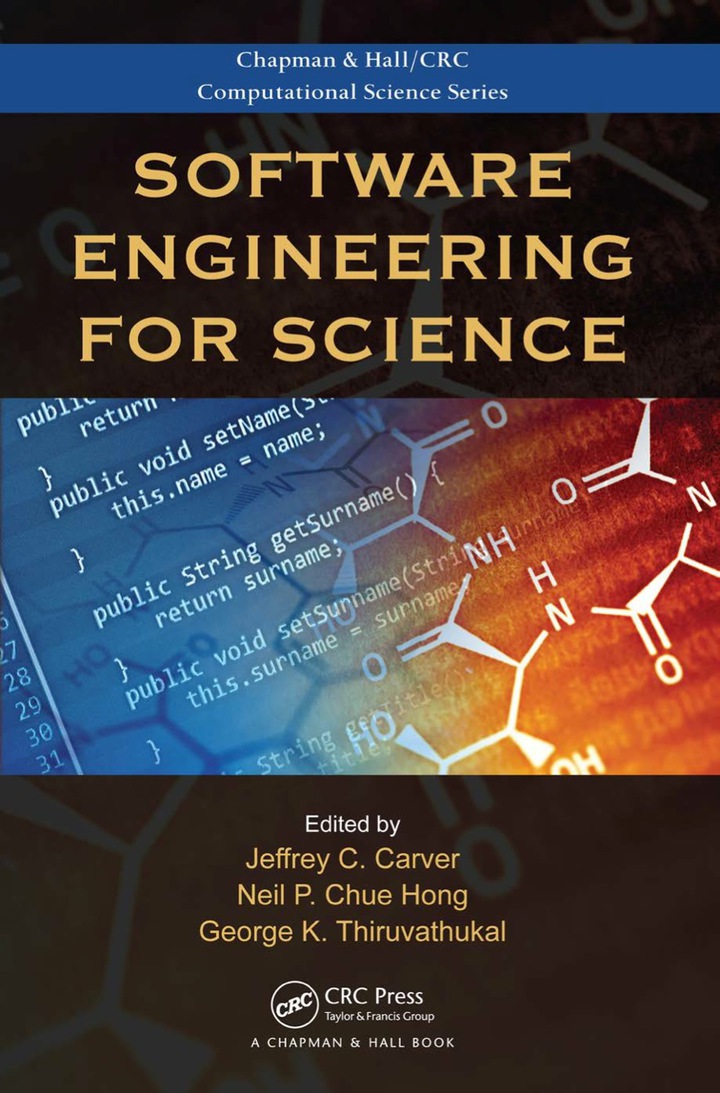
Software Engineering for Science provides an in-depth collection of peer-reviewed chapters that describe experiences with applying software engineering practices to the development of scientific software. It provides a better understanding of how software engineering is and should be practiced, and which software engineering practices are effective for scientific software. The book starts with a detailed overview of the Scientific Software Lifecycle, and a general overview of the scientific software development process. It highlights key issues commonly arising during scientific software development, as well as solutions to these problems. The second part of the book provides examples of the use of testing in scientific software development, including key issues and challenges. The chapters then describe solutions and case studies aimed at applying testing to scientific software development efforts. The final part of the book provides examples of applying software engineering techniques to scientific software, including not only computational modeling, but also software for data management and analysis. The authors describe their experiences and lessons learned from developing complex scientific software in different domains. About the Editors Jeffrey Carver is an Associate Professor in the Department of Computer Science at the University of Alabama. He is one of the primary organizers of the workshop series on Software Engineering for Science (http://www.SE4Science.org/workshops). Neil P. Chue Hong is Director of the Software Sustainability Institute at the University of Edinburgh. His research interests include barriers and incentives in research software ecosystems and the role of software as a research object. George K. Thiruvathukal is Professor of Computer Science at Loyola University Chicago and Visiting Faculty at Argonne National Laboratory. His current research is focused on software metrics in open source mathematical and scientific software.
Software Engineering for Science 1st Table of contents:
Introduction
1 Software Process for Multiphysics Multicomponent Codes
1.1 Introduction
1.2 Lifecycle
1.2.1 Development Cycle
1.2.2 Verification and Validation
1.2.3 Maintenance and Extensions
1.2.4 Performance Portability
1.2.5 Using Scientific Software
1.3 Domain Challenges
1.4 Institutional and Cultural Challenges
1.5 Case Studies
1.5.1 FLASH
1.5.1.1 Code Design
1.5.1.2 Verification and Validation
1.5.1.3 Software Process
1.5.1.4 Policies
1.5.2 Amanzi/ATS
1.5.2.1 Multiphysics Management through Arcos
1.5.2.2 Code Reuse and Extensibility
1.5.2.3 Testing
1.5.2.4 Performance Portability
1.6 Generalization
1.7 Additional Future Considerations
2 A Rational Document Driven Design Process for Scientific Software
2.1 Introduction
2.2 A Document Driven Method
2.2.1 Problem Statement
2.2.2 Development Plan
2.2.3 Software Requirements Specification (SRS)
2.2.4 Verification and Validation (V&V) Plan and Report
2.2.5 Design Specification
2.2.6 Code
2.2.7 User Manual
2.2.8 Tool Support
2.3 Example: Solar Water Heating Tank
2.3.1 Software Requirements Specification (SRS)
2.3.2 Design Specification
2.4 Justification
2.4.1 Comparison between CRAN and Other Communities
2.4.2 Nuclear Safety Analysis Software Case Study
2.5 Concluding Remarks
3 Making Scientific Software Easier to Understand, Test, and Communicate through Software Engineerin
3.1 Introduction
3.2 Case Studies
3.3 Challenges Faced by the Case Studies
3.3.1 Intuitive Testing
3.3.2 Automating Tests
3.3.3 Legacy Code
3.3.4 Summary
3.4 Iterative Hypothesis Testing
3.4.1 The Basic SEIR Model
3.4.2 Experimental Methodology
3.4.3 Initial Hypotheses
3.4.3.1 Sanity Checks
3.4.3.2 Metamorphic Relations
3.4.3.3 Mathematical Derivations
3.4.4 Exploring and Refining the Hypotheses
3.4.4.1 Complexities of the Model
3.4.4.2 Complexities of the Implementation
3.4.4.3 Issues Related to Numerical Precision
3.4.5 Summary
3.5 Testing Stochastic Software Using Pseudo-Oracles
3.5.1 The Huánglóngbìng SECI Model
3.5.2 Searching for Differences
3.5.3 Experimental Methodology
3.5.4 Differences Discovered
3.5.5 Comparison with Random Testing
3.5.6 Summary
3.6 Conclusions
3.7 Acknowledgments
4 Testing of Scientific Software: Impacts on Research Credibility, Development Productivity, Maturat
4.1 Introduction
4.2 Testing Terminology
4.2.1 Granularity of Tests
4.2.2 Types of Tests
4.2.3 Organization of Tests
4.2.4 Test Analysis Tools
4.3 Stakeholders and Team Roles for CSE Software Testing
4.3.1 Stakeholders
4.3.2 Key Roles in Effective Testing
4.3.3 Caveats and Pitfalls
4.4 Roles of Automated Software Testing in CSE Software
4.4.1 Role of Testing in Research
4.4.2 Role of Testing in Development Productivity
4.4.3 Role of Testing in Software Maturity and Sustainability
4.5 Challenges in Testing Specific to CSE
4.5.1 Floating-Point Issues and Their Impact on Testing
4.5.2 Scalability Testing
4.5.3 Model Testing
4.6 Testing Practices
4.6.1 Building a Test Suite for CSE Codes
4.6.2 Evaluation and Maintenance of a Test Suite
4.6.3 An Example of a Test Suite
4.6.4 Use of Test Harnesses
4.6.5 Policies
4.7 Conclusions
4.8 Acknowledgments
5 Preserving Reproducibility through Regression Testing
5.1 Introduction
5.1.1 Other Testing Techniques
5.1.2 Reproducibility
5.1.3 Regression Testing
5.2 Testing Scientific Software
5.2.1 The Oracle and Tolerance Problems
5.2.1.1 Sensitivity Testing
5.2.2 Limitations of Regression Testing
5.3 Regression Testing at ESG
5.3.1 Building the Tools
5.3.1.1 Key Lesson
5.3.2 Selecting the Tests
5.3.2.1 Key Lessons
5.3.3 Evaluating the Tests
5.3.3.1 Key Lessons
5.3.4 Results
5.4 Conclusions and Future Work
6 Building a Function Testing Platform for Complex Scientific Code
6.1 Introduction
6.2 Software Engineering Challenges for Complex Scientific Code
6.3 The Purposes of Function Unit Testing for Scientific Code
6.4 Generic Procedure of Establishing Function Unit Testing for Large-Scale Scientific Code
6.4.1 Software Analysis and Testing Environment Establishment
6.4.2 Function Unit Test Module Generation
6.4.3 Benchmark Test Case Data Stream Generation Using Variable Tracking and Instrumentation
6.4.4 Function Unit Module Validation
6.5 Case Study: Function Unit Testing for the ACME Model
6.5.1 ACME Component Analysis and Function Call-Tree Generation
6.5.2 Computational Characteristics of ACME Code
6.5.3 A Function Unit Testing Platform for ACME Land Model
6.5.3.1 System Architecture of ALM Function Test Framework
6.5.3.2 Working Procedure of the ALM Function Test Framework
6.6 Conclusion
7 Automated Metamorphic Testing of Scientific Software
7.1 Introduction
7.2 The Oracle Problem in Scientific Software
7.3 Metamorphic Testing for Testing Scientific Software
7.3.1 Metamorphic Testing
7.3.2 Applications of MT for Scientific Software Testing
7.4 MRpred: Automatic Prediction of Metamorphic Relations
7.4.1 Motivating Example
7.4.2 Method Overview
7.4.3 Function Representation
7.4.4 Graph Kernels
7.4.4.1 The Random Walk Kernel
7.4.5 Effectiveness of MRpred
7.5 Case Studies
7.5.1 Code Corpus
7.5.2 Metamorphic Relations
7.5.3 Setup
7.6 Results
7.6.1 Overall Fault Detection Effectiveness
7.6.2 Fault Detection Effectiveness across MRs
7.6.3 Effectiveness of Detecting Different Fault Categories
7.7 Conclusions and Future Work
8 Evaluating Hierarchical Domain-Specific Languages for Computational Science: Applying the Sprat Ap
8.1 Motivation
8.2 Adapting Domain-Specific Engineering Approaches for Computational Science
8.3 The Sprat Approach: Hierarchies of Domain-Specific Languages
8.3.1 The Architecture of Scientific Simulation Software
8.3.2 Hierarchies of Domain-Specific Languages
8.3.2.1 Foundations of DSL Hierarchies
8.3.2.2 An Example Hierarchy
8.3.3 Applying the Sprat Approach
8.3.3.1 Separating Concerns
8.3.3.2 Determining Suitable DSLs
8.3.3.3 Development and Maintenance
8.3.4 Preventing Accidental Complexity
8.4 Case Study: Applying Sprat to the Engineering of a Coupled Marine Ecosystem Model
8.4.1 The Sprat Marine Ecosystem Model
8.4.2 The Sprat PDE DSL
8.4.3 The Sprat Ecosystem DSL
8.4.4 The Ansible Playbook DSL
8.5 Case Study Evaluation
8.5.1 Data Collection
8.5.2 Analysis Procedure
8.5.3 Results from the Expert Interviews
8.5.3.1 Learning Material for DSLs
8.5.3.2 Concrete Syntax: Prescribed vs. Flexible Program Structure
8.5.3.3 Internal vs. External Implementation
8.6 Conclusions and Lessons Learned
9 Providing Mixed-Language and Legacy Support in a Library: Experiences of Developing PETSc
9.1 Introduction
9.2 Fortran-C Interfacing Issues and Techniques
9.3 Automatically Generated Fortran Capability
9.4 Conclusion
10 HydroShare – A Case Study of the Application of Modern Software Engineering to a Large Distribu
10.1 Introduction to HydroShare
10.2 Informing the Need for Software Engineering Best Practices for Science
10.3 Challenges Faced and Lessons Learned
10.3.1 Cultural and Technical Challenges
10.3.2 Waiting Too Long between Code Merges
10.3.3 Establishing a Development Environment
10.4 Adopted Approach to Software Development Based on the Lessons Learned
10.4.1 Adopting Best Practices in Modern Software Engineering
10.4.2 Iterative Software Development
10.4.3 Virtual Machines
10.4.4 Code Versioning
10.4.5 Code Reviews
10.4.6 Testing and Test-Driven Development
10.4.7 Team Communication
10.4.8 DevOps
10.5 Making Software Engineering More Feasible and Easier to Integrate into One’s Research Activit
10.6 Conclusion
References
Index
People also search for Software Engineering for Science 1st :
software engineering for science
software engineering for data scientists
software engineering fresno state
software engineering four year plan
software engineering scsu
Tags: Jeffrey Carver, Software Engineering, Science