


Statistical Thinking for Non Statisticians in Drug Regulation 2nd edition by Richard Kay – Ebook PDF Instant Download/Delivery: 1118470978, 978-1118470978
Full download Statistical Thinking for Non Statisticians in Drug Regulation 2nd edition after payment
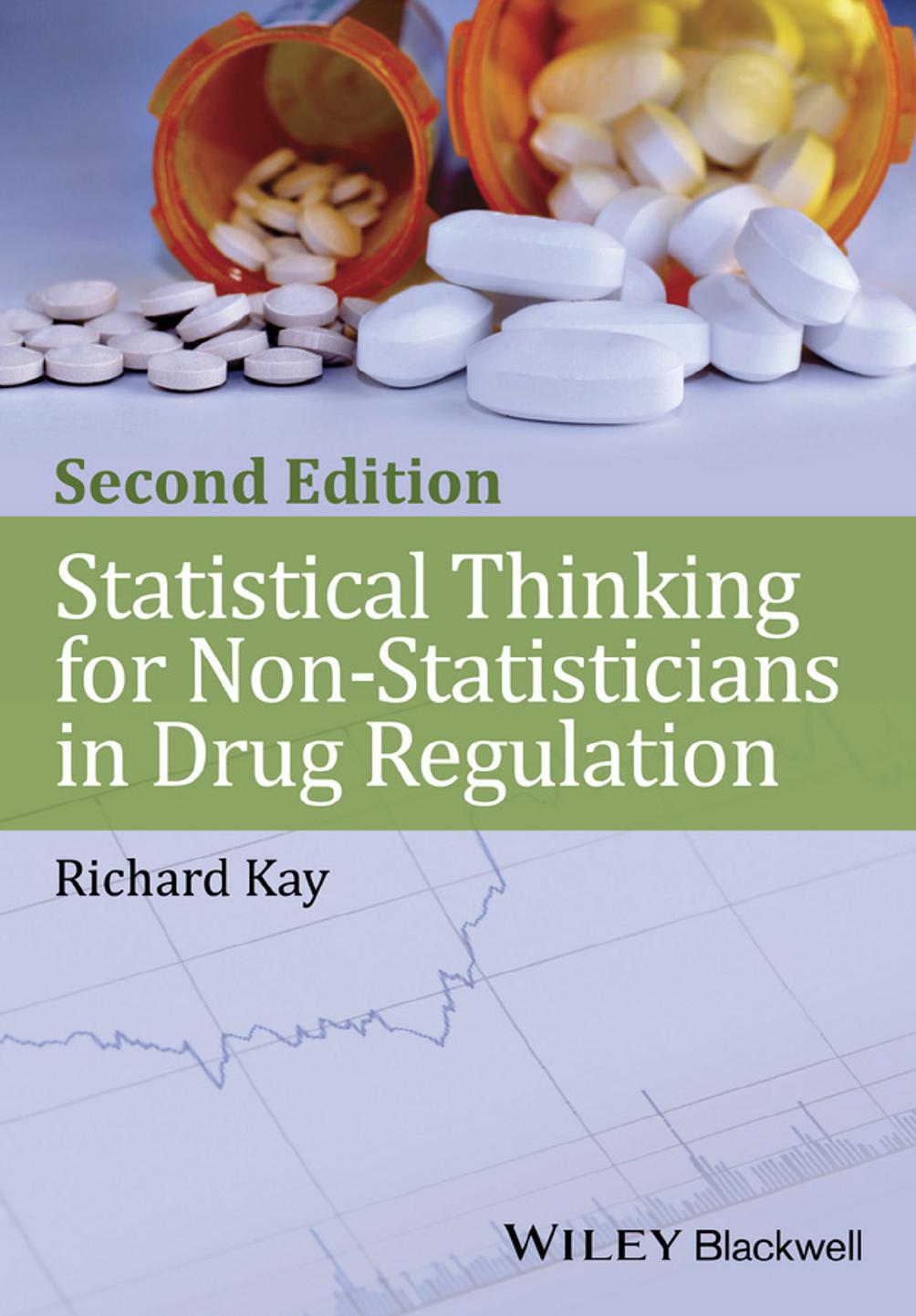
Product details:
ISBN 10: 1118470978
ISBN 13: 978-1118470978
Author: Richard Kay
Statistical Thinking for Non-Statisticians in Drug Regulation, Second Edition, is a need-to-know guide to understanding statistical methodology, statistical data and results within drug development and clinical trials.
It provides non-statisticians working in the pharmaceutical and medical device industries with an accessible introduction to the knowledge they need when working with statistical information and communicating with statisticians. It covers the statistical aspects of design, conduct, analysis and presentation of data from clinical trials in drug regulation and improves the ability to read, understand and critically appraise statistical methodology in papers and reports. As such, it is directly concerned with the day-to-day practice and the regulatory requirements of drug development and clinical trials.
Fully conversant with current regulatory requirements, this second edition includes five new chapters covering Bayesian statistics, adaptive designs, observational studies, methods for safety analysis and monitoring and statistics for diagnosis.
Authored by a respected lecturer and consultant to the pharmaceutical industry, Statistical Thinking for Non-Statisticians in Drug Regulation is an ideal guide for physicians, clinical research scientists, managers and associates, data managers, medical writers, regulatory personnel and for all non-statisticians working and learning within the pharmaceutical industry.
Statistical Thinking for Non Statisticians in Drug Regulation 2nd Table of contents:
1 Basic ideas in clinical trial design
1.1 Historical perspective
1.2 Control groups
1.3 Placebos and blinding
1.4 Randomisation
1.5 Bias and precision
1.6 Between- and within-patient designs
1.7 Crossover trials
1.8 Signal noise and evidence
1.9 Confirmatory and exploratory trials
1.10 Superiority equivalence and non-inferiority trials
1.11 Data and endpoint types
1.12 Choice of endpoint
2 Sampling and inferential statistics
2.1 Sample and population
2.2 Sample statistics and population parameters
2.3 The normal distribution
2.4 Sampling and the standard error of the mean
2.5 Standard errors more generally
3 Confidence intervals and p-values
3.1 Confidence intervals for a single mean
3.2 Confidence interval for other parameters
3.3 Hypothesis testing
4 Tests for simple treatment comparisons
4.1 The unpaired t-test
4.2 The paired t-test
4.3 Interpreting the t-tests
4.4 The chi-square test for binary data
4.5 Measures of treatment benefit
4.6 Fisher’s exact test
4.7 Tests for categorical and ordinal data
4.8 Extensions for multiple treatment groups
5 Adjusting the analysis
5.1 Objectives for adjusted analysis
5.2 Comparing treatments for continuous data
5.3 Least squares means
5.4 Evaluating the homogeneity of the treatment effect
5.5 Methods for binary categorical and ordinal data
5.6 Multi-centre trials
6 Regression and analysis of covariance
6.1 Adjusting for baseline factors
6.2 Simple linear regression
6.3 Multiple regression
6.4 Logistic regression
6.5 Analysis of covariance for continuous data
6.6 Binary categorical and ordinal data
6.7 Regulatory aspects of the use of covariates
6.8 Baseline testing
7 Intention-to-treat and analysis sets
7.1 The principle of intention-to-treat
7.2 The practice of intention-to-treat
7.3 Missing data
7.4 Intention-to-treat and time-to-event data
7.5 General questions and considerations
8 Power and sample size
8.1 Type I and type II errors
8.2 Power
8.3 Calculating sample size
8.4 Impact of changing the parameters
8.5 Regulatory aspects
8.6 Reporting the sample size calculation
9 Statistical significance and clinical importance
9.1 Link between p-values and Confidence intervals
9.2 Confidence intervals for clinical importance
9.3 Misinterpretation of the p-value
9.4 Single pivotal trial and 0.05
10 Multiple testing
10.1 Inflation of the type I error
10.2 How does multiplicity arise?
10.3 Regulatory view
10.4 Multiple primary endpoints
10.5 Methods for adjustment
10.6 Multiple comparisons
10.7 Repeated evaluation over time
10.8 Subgroup testing
10.9 Other areas for multiplicity
11 Non-parametric and related methods
11.1 Assumptions underlying the t-tests and their extensions
11.2 Homogeneity of variance
11.3 The assumption of normality
11.4 Non-normality and transformations
11.5 Non-parametric tests
11.6 Advantages and disadvantages of non-parametric methods
11.7 Outliers
12 Equivalence and non-inferiority
12.1 Demonstrating similarity
12.2 Confidence intervals for equivalence
12.3 Confidence intervals for non-inferiority
12.4 A p-value approach
12.5 Assay sensitivity
12.6 Analysis sets
12.7 The choice of Δ
12.8 Biocreep and constancy
12.9 Sample size calculations
12.10 Switching between non-inferiority and superiority
13 The analysis of survival data
13.1 Time-to-event data and censoring
13.2 Kaplan-Meier curves
13.3 Treatment comparisons
13.4 The hazard ratio
13.5 Adjusted analyses
13.6 Independent censoring
13.7 Sample size calculations
14 Interim analysis and data monitoring committees
14.1 Stopping rules for interim analysis
14.2 Stopping for efficacy and futility
14.3 Monitoring safety
14.4 Data monitoring committees
15 Bayesian statistics
15.1 Introduction
15.2 Prior and posterior distributions
15.3 Bayesian inference
15.4 Case study
15.5 History and regulatory acceptance
15.6 Discussion
16 Adaptive designs
16.1 What are adaptive designs?
16.2 Minimising bias
16.3 Unblinded sample size re-estimation
16.4 Seamless phase II/III studies
16.5 Other types of adaptation
16.6 Further regulatory considerations
17 Observational studies
17.1 Introduction
17.2 Guidance on design conduct and analysis
17.3 Evaluating and adjusting for selection bias
17.4 Case–control studies
18 Meta-analysis
18.1 Definition
18.2 Objectives
18.3 Statistical methodology
18.4 Case study
18.5 Ensuring scientific validity
18.6 Further regulatory aspects
19 Methods for the safety analysis and safety monitoring
19.1 Introduction
19.2 Routine evaluation in clinical studies
19.3 Data monitoring committees
19.4 Assessing benefit–risk
19.5 Pharmacovigilance
20 Diagnosis
20.1 Introduction
20.2 Measures of diagnostic performance
20.3 Receiver operating characteristic curves
20.4 Diagnostic performance using regression models
20.5 Aspects of trial design for diagnostic agents
20.6 Assessing agreement
21 The role of statistics and statisticians
21.1 The importance of statistical thinking at the design stage
21.2 Regulatory guidelines
21.3 The statistics process
21.4 The regulatory submission
21.5 Publications and presentations
People also search for Statistical Thinking for Non Statisticians in Drug Regulation 2nd:
statistical thinking for non statisticians in drug regulation pdf
statistical thinking for non statisticians in drug regulation 3rd edition
statistical and non statistical methods
statistical thinking for non-statisticians in drug regulation by richard kay
statistical and non statistical analysis