


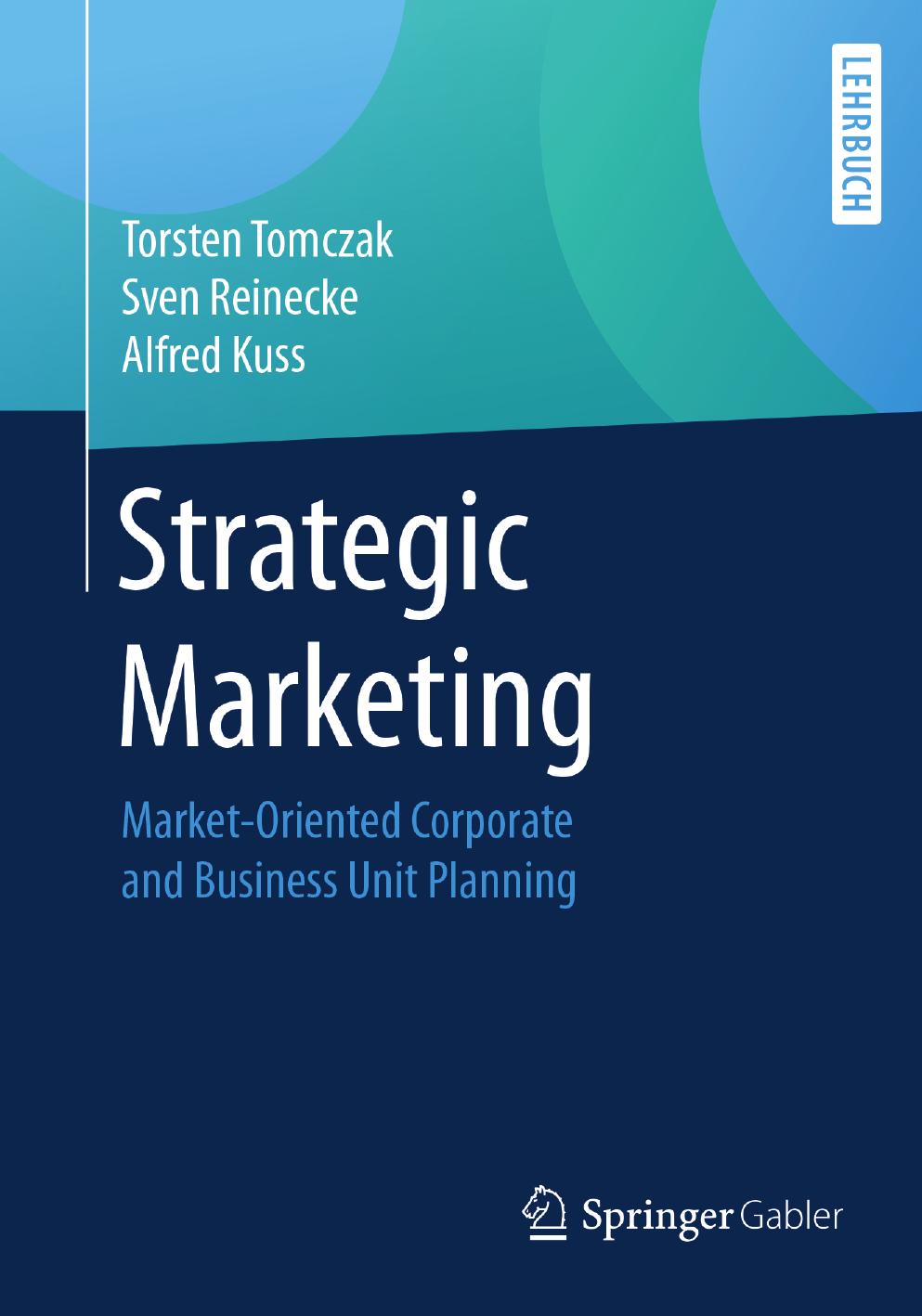
Strategic Marketing Market Oriented Corporate and Business Unit Planning 1st edition by Torsten Tomczak, Sven Reinecke, Alfred Kuss ISBN 3658184179 9783658184179
Original price was: $70.00.$35.00Current price is: $35.00.
Instant download Strategic Marketing Market Oriented Corporate and Business Unit Planning 1th Wei Zhi after payment
Strategic Marketing Market Oriented Corporate and Business Unit Planning 1st edition by Torsten Tomczak, Sven Reinecke, Alfred Kuss – Ebook PDF Instant Download/Delivery: 3658184179 , 9783658184179
Full download Strategic Marketing Market Oriented Corporate and Business Unit Planning 1st edition after payment
Product details:
ISBN 10: 3658184179
ISBN 13: 9783658184179
Author: Torsten Tomczak, Sven Reinecke, Alfred Kuss
This textbook gives a clear and comprehensive overview of the process of strategic marketing planning. The authors provide a systematic framework that helps to structure the vast and complex marketing knowledge, thus making it more accessible and easier to use for strategic marketing planning. Many short case reports and examples serve to illustrate the key aspects of the marketing planning process. Contents The information basis of marketing planning Market-oriented corporate planning Market-oriented business unit planning Planning the marketing mix Marketing implementation and management control
Strategic Marketing Market Oriented Corporate and Business Unit Planning 1st Table of contents:
1 Introduction
1.1 The Marketing Concept
1.1.1 From Production Orientation to Marketing Orientation
1.1.2 Definitions of the Marketing Concept
1.1.3 Features of Marketing
1.1.4 Strategic Marketing
1.2 The Process of Marketing Planning – An Overview
1.2.1 The Marketing Mix
1.2.2 The Role of Brands
1.2.3 The Process of Marketing Planning and the Structure of this Textbook
References
2 The Information Basis of Marketing Planning
2.1 General Information Basis of Marketing Planning
2.1.1 The Product Lifecycle
2.1.2 The Experience Curve
2.1.3 Economies of Scale and Economies of Scope
2.1.4 Success Factors
2.2 Environmental and Industry Analysis
2.2.1 Environmental Analysis
2.2.2 Industry Analysis
2.2.3 Competitive Analysis
2.3 Corporate Analysis
2.3.1 Strengths and Weaknesses
2.3.2 Value Chain Analysis
2.4 Market Research and Aspects of Buyer Behaviour
References
3 Market-Oriented Corporate Planning
3.1 Competition and Competitive Advantages
3.1.1 Basic Principles
3.1.2 Characteristics of Markets and Resources as the Basis for the Success of a Firm
3.1.3 Development and Effects of Competitive Advantages
3.2 Guidelines Derived from Strategic Corporate Planning
3.3 Definition of Business and Market Activities
3.3.1 Relevant Markets, Market Areas and Market Segments
3.3.2 Abell’s Approach for Defining Markets
3.3.3 Strategic Business Units
3.3.4 Limits to the Vertical Integration of Companies
3.4 Market Selection and Target Portfolio (Where and in Which Direction?)
3.4.1 From the Current to the Target Portfolio
3.4.2 Portfolio Standard Strategies
3.5 Fundamental Market Strategy Options (How?)
3.5.1 Overview
3.5.2 Differentiation
3.5.3 Comprehensive Cost Leadership
3.5.4 Concentration on Special Segments
3.5.5 Outpacing Strategies
3.6 Timing Aspects of Marketing (When?)
3.6.1 Early or Late Market Entry
3.6.2 Strategic Windows
3.7 Corporate Brand Management
3.7.1 Basic Principles
3.7.2 Brand Portfolio Management
3.7.3 Brand Architecture
3.7.4 Expansion of Brand Competence via Brand Extension
References
4 Market-oriented Business Unit Planning
4.1 Interdependencies Between Corporate Planning, Business Unit Planning and Marketing Mix Planning
4.2 Determining the Growth Strategy
4.2.1 Overview
4.2.2 The Basic Concept of the Task-Oriented Approach
4.2.3 Core Tasks in Marketing
4.3 Core Task Profiles
4.3.1 Types of Core Task Profiles
4.3.2 Competition-Beating Core Task Profiles
4.4 Cooperations and Networks
4.5 Positioning
4.5.1 Overview
4.5.2 Relationship Between Brand Identity and Brand Positioning
4.5.3 The Classical Positioning Model
4.5.4 Active Positioning
4.5.5 Positioning in the Markets of the End Customer and the Intermediary
4.5.6 Positioning Strategy on Business Unit Level
References
5 Planning the Marketing Mix
5.1 Overview: Elements and Effects of the Marketing Mix
5.2 Product
5.2.1 Functions of Products and Services
5.2.2 Structure and Scope of the Product Range or Assortment
5.2.3 Decisions on Individual Products and Services
5.2.4 Individualisation vs. Standardisation of Products and Services
5.3 Price
5.3.1 Functions and Mechanisms of Pricing
5.3.2 Pricing Goals
5.3.3 Price Setting
5.3.4 Price Differentiation and Variation
5.4 Communication
5.4.1 Functions and Instruments of Communication
5.4.2 Communication Instruments
5.4.3 Integrated Marketing Communication
5.5 Distribution
5.5.1 Functions and Management of Distribution
5.5.2 Distribution Organs
5.5.3 Management of Distribution Channels
5.6 Planning the Marketing Mix
5.6.1 Planning the Marketing Mix as a Complex Decision-Making Problem
5.6.2 Problems of Optimising the Marketing Mix
5.6.3 Guideline Planning of the Marketing Mix
5.6.4 Detailed Planning of the Marketing Mix
5.7 Summary
References
6 Marketing Implementation and Management Control
6.1 Marketing Implementation
6.1.1 Characterisation of the Implementation Challenge
6.1.2 Marketing Organisation
6.1.3 The Marketing Budget
6.1.4 Corporate Culture and Employees
6.2 Marketing Management Control
6.2.1 Marketing Management Control as Quality Assurance for Management
6.2.2 Tasks of Marketing Management Control
6.3 The Balanced Scorecard as an Aid for Implementation and Control
References
Further Readings
Index
People also search for Strategic Marketing Market Oriented Corporate and Business Unit Planning 1st:
strategic marketing market‐oriented corporate and business unit planning
what is strategic marketing
what is strategic marketing management
what is market oriented strategic planning
what do you mean by strategic marketing
Tags: Torsten Tomczak, Sven Reinecke, Alfred Kuss, Strategic Marketing, Business Unit