


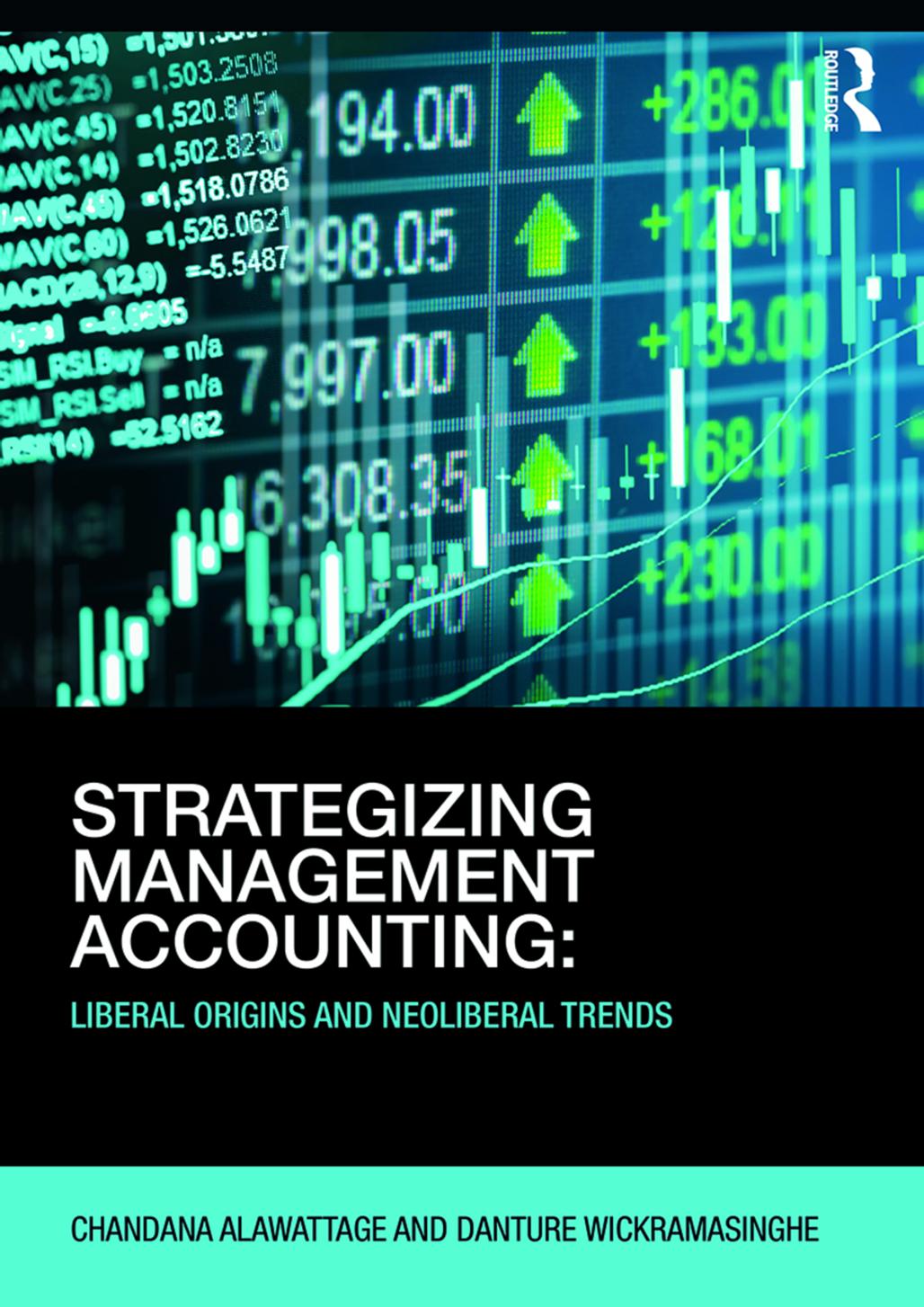
Strategizing Management Accounting Liberal Origins and Neoliberal Trends 1st edition by Chandana Alawattage, Danture Wickramasinghe ISBN 1317667025 9781317667025
Original price was: $70.00.$35.00Current price is: $35.00.
Instant download Strategizing Management Accounting Liberal Origins and Neoliberal Trends after payment
Strategizing Management Accounting Liberal Origins and Neoliberal Trends 1st edition by Chandana Alawattage, Danture Wickramasinghe – Ebook PDF Instant Download/Delivery: 1317667025 , 9781317667025
Full download Strategizing Management Accounting Liberal Origins and Neoliberal Trends 1st edition after payment
Product details:
ISBN 10: 1317667025
ISBN 13: 9781317667025
Author: Chandana Alawattage, Danture Wickramasinghe
The theory and practice of management accounting should be seen within the context of varieties of global capitalism, to appreciate its role as a ‘calculative technology of capitalism’ which is practiced on factory floors, corporate boards, computer networks, spreadsheets, and so forth. This new textbook is the first to introduce the field from a rounded social science perspective. Strategizing Management Accounting offers a theoretical discussion on management accounting’s strategic orientation by accommodating two interrelated lines of analyses, from historical and contemporary perspectives. The book illustrates how ‘new management accounting’ has evolved into the form in which it exists today in its neoliberal context and how those new management accounting practices have become manifestos for the managers, as calculative technologies of decision making, performance management, control, corporate governance, as well as global governance, and development within various forms of organizations across the globe. Each chapter draws on Foucauldian analysis of biopolitics explaining how neoliberal market logic informs a set of strategies and mechanisms through which various social entities and discourses are made governable by considering them as biopolitical entities of global governance. Written by two recognized accounting experts, this book is vital reading for all students of management accounting and will also be a useful supplementary resource for those wanting to understand and research accounting’s vital role in contemporary society.
Strategizing Management Accounting Liberal Origins and Neoliberal Trends 1st Table of contents:
Part I: Liberal origins
1. Old spirit of capitalism: the political-economic context of management accounting
1.1 Contextualizing the old logic of management accounting: pillars of analysis
1.2 Political base of traditional management accounting: modernity, modernism, and capitalism
1.3 Governmentality: political changes of modernity and management accounting
1.3.1 Biopolitical accounting: accounting for population and economy
1.3.2 Social medicine as a case of population accounting
1.3.3 Disciplinary accounting: micro-management of individual bodies
Disciplining space
Disciplining time
Disciplined bodies
1.4 Capitalism: ideology and economic structure of management accounting
1.4.1 Liberal markets
1.4.2 Accumulative markets
1.4.3 Free labour and socialized capital
1.5 Summary and conclusions
Assignments
2. Old spirit of capitalism: the institutional context of management accounting
2.1 Introduction
2.2 Socializing capital: the invention of corporation
2.2.1 Transcending capital
2.2.2 The logic of capital and its calculative mode of operation
2.2.3 Management accounting as a tool of calculative justification
2.2.4 Management accounting as a tool of calculative structuring
2.3 Capitalizing production: the invention of the factory
2.3.1 Production systems before the invention of factory systems
2.3.2 The factory system
Mechanization of production
Rationalization of work
Regimentation of labour
Cost accounting
2.4 Managerial hierarchy
2.4.1 Disciplinary logic of managerial hierarchy
2.4.2 Structural logic of managerial hierarchy: specialization
2.4.3 Democratic logic of managerial hierarchy
2.4.4 Logic of economic coordination: hierarchy vs markets
2.5 Managerial hierarchy
Assignments
3. The practicist epistemology of management accounting
3.1 Introduction
3.2 Reflective practice: practicist epistemology of management accounting
3.2.1 Management accounting as a reflective practice
3.2.2 Intra-organizational epistemic practices
3.2.3 Extra-organizational epistemic practices
3.2.4 Practicist epistemology as actor-networks
3.3 Pedagogical reproduction
3.3.1 Pedagogy as a symbolic system
3.3.2 Pedagogical reproduction at work: deconstructing the CIMA qualification structure
3.3.3 Becoming an accountant as the embodiment of the field
3.4 Summary and conclusions
Assignments
4. The scientific epistemology of management accounting
4.1 Introduction
4.2 Academic theorization and the professional practice
4.3 Mainstream vs critical theorizations
4.4 Rationalist justification of management accounting knowledge
4.5 Economic rationality of management accounting
4.5.1 Economic logic of managerial decision making
4.5.2 The economic rationality of management control
4.6 Systems rationality of management accounting
4.6.1 Cybernetics and management control
4.6.2 Structural functionalism and management control
Structural functionalism in classical definition of management control
Simons’ levers of control and structural functionalism
4.7 Empiricist epistemology of management accounting
4.7.1 Testing contingencies
4.7.2 Case studying the practice
4.8 Summary and conclusions
Assignments
Part II. Neoliberal trends
5. Neoliberalization of management accounting
5.1 A point of departure
5.2 Neoliberal transformations
5.3 Neoliberal effect
5.4 Neoliberal market logic
5.4.1 Techno-managerial reconstruction of neoliberal markets
5.4.2 Market as a heterotopia
5.5 Neoliberal political logic
5.6 Neoliberal reconstructions in management accounting
5.6.1 Strategizing the firm
5.6.2 Strategizing the state and civil society
5.6.3 Strategizing the biopolitical issues
5.7 Summary and conclusions
Assignments
6. Strategizing the firm: Strategic discourses of competitive positioning
6.1 Introduction
6.2 Reinventing the strategic terrain
6.2.1 Mapping the strategic terrain for strategy prescriptions
6.2.2 Neoliberal implications of portfolio planning models
6.3 Strategizing economics: Porter’s strategy discourses
6.3.1 Structure-conduct-performance model
6.3.2 Competitive advantage: from factor endowment to competitive positioning
6.3.3 Competitive strategy: towards generic market strategies
6.3.4 Strategic analyses
6.4 Biopolitics of Porterian strategy discourses
6.4.1 Competitiveness as a biopolitical problem
6.4.2 Epistemological politics of competitiveness
6.5 Summary and conclusions
Assignments
7. Strategizing the firm: Strategic discourses of organizational reconfiguration
7.1 Introduction
7.2 Post-bureaucratic discourses: reinventing bureaucracy
7.2.1 Job redesign movement: Taylorism humanized
7.2.2 Management by objectives: participation in decision making and domesticating industrial relations
7.2.3 The post-bureaucratic ideal: the interactive type
7.3 Postmodern discourses: the emergence of a new cultural and informational social order
7.3.1 Signification of simulacra and the movement from production to reproduction
7.3.2 Entrepreneurialization of labour
7.3.3 Immaterialization of labour
7.3.4 Management by themes
7.4 Strategic critique of performance management: Kaplanian influences
7.4.1 Strategic linking and balancing: reinvention of performance management
Critiquing the traditional
Discoursing the new simulacrum: strategic performance management systems
The BSC promotes top executive ideology as strategy
The BSC’s reconceptualization of the shareholder as the strategic ultimatum
Causal and finality relations in the BSC
7.5 Summary and conclusions
Assignments
8. Strategizing the firm: Strategic reconfiguration of the production systems – flexibility and quality
8.1 Introduction
8.2 Manufacturing flexibility
8.2.1 Flexible consumption
8.2.2 Flexible machines
8.2.3 Flexible labour
8.2.4 Flexible manufacturing systems
System flexibilities
Accounting in FMS
8.2.5 Flexible specialization and integration
8.2.6 Flexible accumulation
8.3 Producing quality and leaning the production
8.3.1 Quality as a new managerial paradigm
8.3.2 Economic justification of TQM: cost minimization logic of zero-defect rate and continuous improvements
8.3.3 Quality-based discourses of organizational transformation
Incorporating quality into top management discourses and leadership
Japanization of the organizational processes
8.4 TQM and JIT as disciplinary and biopolitical regime
8.4.1 Disciplinary politics of TQM/JIT
8.4.2 Biopolitics of TQM/JIT
8.5 Summary and conclusions
Assignments
9. Strategizing cost management
9.1 Introduction
9.2 The old spirit of cost management
9.3 Problematizing the old spirit
9.4 New cost management: a surveillance assemblage
9.5 Cost management as a holistic programme
9.5.1 Cost controls beyond the shop-floor: new vistas for cost management
1 The beyond budgeting movement
2 Cost management innovations in operations management
ERP effect
The Japanese effect
9.5.2 Cost management in the new terrain of decision making: the theory of constraints and throughput accounting
9.5.3 Bundling: the hybridization effect
Bundling
Hybridization
9.5.4 Strategizing the cost object
9.6 Summary and conclusions: neoliberal implications
Assignments
10. Strategizing interfirm relations
10.1 Introduction
10.2 Interfirm relations, supply chains, and heterarchy
10.2.1 Reorganization of accountability relations
10.2.2 Organization for diversity: basis of heterarchy
10.3 New vistas of management accounting in interfirm relations
10.4 Open-book accounting and distributed intelligence
10.4.1 Target costing in interfirm relations
10.4.2 Functional analysis in interfirm relations
10.4.3 The BSC in interfirm relations
10.4.4 Value chain accounting in interfirm relations
10.4.5 Category management in interfirm relations
10.4.6 Total cost of ownership in interfirm relations
10.5 Trust and power issues in interfirm relations
10.5.1 Trust as a social reality
10.5.2 Trust as a basis for designing system interfirm relations
10.5.3 Power as an alternative to trust
10.6 Summary and conclusions
Assignments
11. Strategizing the state and NPM agenda
11.1 Setting the scene
11.2 Neoliberalism and the state transformation
11.2.1 The state is re-engineered
11.2.2 Rightward orientation of state bureaucracy
11.2.3 Elevation of the penal scheme
11.3 NPM ideals
11.3.1 NPM as a deterministic embracement
11.3.2 NPM as a critical encounter
11.4 Specific practices of NPM accounting (NPMA)
11.4.1 Cost management
11.4.2 Strategic planning and performance measurements
11.4.3 New forms of budgeting
11.4.4 New form of accountability
11.5 Summary and conclusions
Assignments
12. Strategizing civil society as a management accounting entity
12.1 Introduction
12.2 Civil society: meaning and transformation
12.2.1 Meaning
12.2.2 Transformation: the case of developing countries
12.3 Biopolitics of civil society
12.4 The process of strategizing
12.4.1 Corporatizing civil society entities
12.4.2 Incorporating ideological and discursive resources
12.4.3 Constructing entrepreneurial selves
12.4.4 Adopting multiple evaluative criteria
12.5 Summary and conclusions: linking civil society accountability to management
Assignments
13. Neoliberalization of corporate governance
13.1 Setting the scene
13.2 Neoclassical origin of corporate governance ideas and its neoliberal extensions
13.2.1 Neoliberal extensions
13.3 Corporate governance transformations: a biopolitical view
13.3.1 Corporate governance, security, and global governmentality
13.3.2 Neoliberal corporate governance as a form of soft regulation
13.4 Neoliberal corporate governance in practice
13.4.1 Neoliberalization of legitimacy
13.4.2 Neoliberalization of accountability
Individualizing accountability in corporate governance
Socializing accountability in corporate governance
Biopolitical accountability
13.5 Management accounting and corporate governance
13.6 Summary and conclusions
Assignments
14. Greening the firm: environmental management accounting
14.1 Introduction
14.2 Sustainability: the basic concept and its components
14.3 Sustainability’s neoliberal political logic
14.3.1 Rationalizing the oxymoron
14.4 Management accounting’s rationalization of sustainability
14.4.1 Corporate accountability and sustainability
14.4.2 Strategizing sustainability
14.4.3 Envisioning sustainability
14.4.4 Sustainability as postulate of strategic positioning
14.5 Operationalizing sustainability
14.5.1 Sustainability in capital investment decisions
14.5.2 Sustainable value chain analysis and competitive position analysis
14.5.3 Sustainable balanced scorecards
Privileging financial over sustainability
14.5.4 Cost accounting for sustainability
Use of ABC in sustainability costing
Lifecycle costing (LCC) and whole life costing (WLC)
14.5.5 Environmental management systems
14.6 Summary and conclusions
Assignments
15. Strategizing development
15.1 Introduction
15.2 Development and accounting: the connection
15.3 Developmentality and governmentality
15.3.1 Development discourse and its textual ramifications
15.3.2 The development machine
15.3.3 Developmentality, governmentality, and calculative practices
15.4 Accountingization of development: the case of World Bank Development Reporting
15.4.1 Calculating (under)development: the problematization phase
15.4.2 Managing the underdeveloped and professionalization of development
15.5 Developmentalization of accounting: the case of microfinance
15.5.1 Microfinance as a ‘Holy Grail’ of rural development
15.5.2 Microfinance and accounting
15.5.3 Writing back to the World Bank: microfinance in the financial market
15.6 Summary and conclusions
Assignments
References
Index
People also search for Strategizing Management Accounting Liberal Origins and Neoliberal Trends 1st:
what is management accounting
strategies in accounting and management
accounting strategy examples
strategic account management best practices
strategic accounting solutions
Tags: Chandana Alawattage, Danture Wickramasinghe, Strategizing Management, Neoliberal Trends