
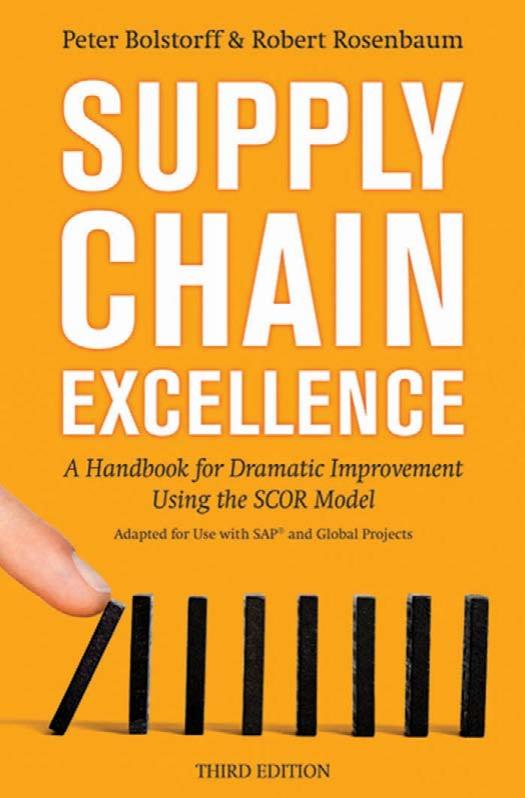
Supply Chain Excellence 1st edition by Peter Bolstorff, Robert Rosenbaum ISBN 0814437532 978-0814437537
Original price was: $70.00.$35.00Current price is: $35.00.
Instant download Supply Chain Excellence A Handbook for Dramatic Improvement Using the SCOR Model Bolstorff Peter. Rosenbaum Robert after payment
Supply Chain Excellence 1st edition by Peter Bolstorff, Robert Rosenbaum – Ebook PDF Instant Download/Delivery: 0814437532, 978-0814437537
Full download Supply Chain Excellence 1st edition after payment
Product details:
ISBN 10: 0814437532
ISBN 13: 978-0814437537
Author: Peter Bolstorff, Robert Rosenbaum
The Supply Chain Operation Reference (SCOR) framework is a proven solution to the ever-present business struggle of strengthening and improving company-wide processes.
This leading cross-industry model for maximizing efficiency provides you with a lasting competitive advantage, revealing the key to achieving flawless production in a compressed timeline. By incorporating the proven Supply Chain Council DCOR and CCOR models to expand the process scope, Supply Chain Excellence offers a comprehensive look at the entire value chain process and provides you with a step-by-step guide for implementing an improvement strategy that will help your organization succeed.
Supply Chain Excellence 1st Table of contents:
Chapter 1 The Supply Chain Operations Reference Model
The Cross-Industry Standard for Supply Chain
The Supply Chain Council
The SCOR Framework
Value Chain Processes
Using SCOR to Drive Supply Chain Improvement
Build Organizational Support
Define Project Scope
Analyze Performance
Develop Project Portfolio
Implement Projects
Extend to the Greater Value Chain
The Value of a SCOR Initiative
Chapter 2 Phase 0: Build Organizational Support for Supply Chain Improvement
Finding the Tipping Point for Change
The Evangelist
The Evangelist’s Resume
Experience
The Active Executive Sponsor
Educate-for-Support Behaviors of the Active Executive Sponsor
Planning and Organizing Behaviors of the Active Executive Sponsor
Measures and Strategy Behaviors of the Active Executive Sponsor
Design Solutions Behaviors of the Active Executive Sponsor
Establishing Core Team Buy-In
Collective Experience
Attitude
Effective Communication Skills
Ability to Cope Well in Chaos
Picking the Project Design Team
Problem-Solving Experience
Personality Factors
Dedication: Discipline to Tasks
Access to Data
Chapter 3 Phase 1: Define Project Scope
Planning and Organizing a Supply Chain Excellence Initiative
The Business Context Summary
Strategic Background
Financial Performance
Internal Profile
External Profile
The Supply Chain Definition Matrix
The Project Charter
Chapter 4 Phase 2: Analyze Performance
April 18 and 25: Project Kickoff and SCOR Metrics
The Project Kickoff
Picking a Balanced Set of Supply Chain Metrics
Data Collection and Benchmarks
Chapter 5 Phase 2: Data, Benchmarks, and Competitive Requirements
May 2 and 9: Putting Performance in Perspective
Initial Data Review
The SCORmark Survey
Competitive Requirements Analysis
Rules for Prioritization
Metric Defect Analysis
Sponsor Update Considerations
Chapter 6 Phase 2: Scorecards and Gap Analysis
May 16 and 23: Estimating the Size of the Opportunity
The Scorecard Review
The Scorecard Gap Analysis
Chapter 7 Phase 2: Defect Analysis
May 30 and June 6: Answering the Questions of Who, What, Where, When, and How Much and Then Telling
Defect Analysis
Perfect Order Fulfillment
Order Fulfillment Cycle Time
Upside Supply Chain Flexibility
Supply Chain Management Cost
Inventory Days of Supply
Planning for the First Team On-Site
The Steering Team Review
Change Management: Dealing with Denial
Change Management: Placing Blame
Change Management: Book the Numbers
Chapter 8 Phase 3: Develop the Project Portfolio
June 16 and July 11–15: Building Shared Vision and the Project List
Planning the Brainstorm Event
Invitees
Effective Communication
Organized Brainstorm Categories
The Appropriate Venue
Predefined Leadership Roles
Documentation Approach
Conducting the Brainstorm Session
Chapter 9 Phase 3: Refine the Project Portfolio
July 11–15: Validating the Project Benefits and SCOR Processes
Consolidating Problems to Projects Using SCOR
Validating the Problem Weight
Chapter 10 Phase 3: Opportunity Analysis
July 11–15: Due Diligence for the Project List
Summarizing the Opportunity
The Project Opportunity Worksheet
Identify Further Validation Resources
Conducting Steering Team Review Number Three
Chapter 11 Phase 4: Lay Groundwork to Implement Projects
Mapping Out the Details and Portfolio Implementation Plans
Implementation Project Charters
Chapter 12 Phase 4: From Portfolio Development to Implementation
Organizing Supply Chain Improvement as Part of Daily Life: Faster, Better, and Cheaper
Initiating Implementation
Chapter 13 Phase 4: Initiate Implementation
Getting Organized, Getting People, Getting Data
Identify and Approve Project Resource Plan
Establish the Project Schedule and Kickoff Date
Review Project Background and Develop the Performance Baseline
Chapter 14 Phases 2–4: The Staple Yourself Interview and SCOR Level 3 Process Diagram
June 13–17: How the Work Really Gets Done; a Tool for All Phases
Preparing for the Staple Yourself Interview
Understanding the Staple Yourself Interview Worksheet
Fowlers Analysis of P3 Plan Make
Assembling the AS IS Process and RACI Diagrams
Chapter 15 Phase 4: Solution Design
Defining How the Process Should Work at SCOR Level 3
The SCOR Level 3 Blueprint
Configuring the Level 3 Blueprint for Project 7
Chapter 16 Phase 4: Level 4 Process Development and the Storyboard
How Business Process Improvement Is Like a Good Cartoon
Constructing a SCOR Level 4 Process
Plan Supply Chain (P1) Level 4 Samples
Fowlers P3 Level 4 Processes and Storyboard
Chapter 17 Phase 4: Configure, Solution Test, Pilot, Refine, and Roll Out
Moving the Needle on Performance
Configuration (or Build)
Solution Test
Pilot One, Refine, and Pilot Two
Rollout
Chapter 18 Phase 4: Supply Chain Strategy
Supply Chain Excellence as a Way of Life
What Is Supply Chain Strategy?
Trading Partner
Trading Partner Dimensional Challenges
Organization
Organization Dimensional Challenges
Processes
Process Dimensional Challenges
Technology
Technology Dimensional Challenges
Performers
Performer Dimensional Challenges
Chapter 19 Extend to the Greater Value Chain
Analyzing Barriers to Profitable Growth
Value Chain Excellence
Build Organizational Support
Identify Value Chain Improvement Roles, Evangelists, Active Executive Sponsor(s), Core Steering Team
Assemble and Deliver Appropriate Educational Content and Gain Consensus for a Pilot Project
Define Value Chain Project Scope
Calculate the Number of Value Chains
Assemble High-Level Industry Comparison
Decide on the Project Scope
Analyze Value Chain Performance and Project Portfolio Development
Identify Appropriate Value Chain Performance Metrics and Assemble Appropriate Benchmark Comparisons
Assess and Prioritize Competitive Requirements
Perform Metric Defect Analysis
Develop a Project Portfolio
Implementation Considerations
Product-to-Market Map
Level 2 Process Diagrams
Staple Yourself Interviews
TO BE Level 4 Process Diagrams with Information System Storyboards
Conclusion
Appendix: Fowlers Inc. Supply Chain Excellence Project Charter
I. Introduction
Purpose of the Project Charter
Project Charter Contents
Maintenance of the Project Charter
II. Project Overview
Scope
Business Objectives
Project Objectives
III. Project Approach
Methodology
Project Schedule
Steering Team Meetings
Risks and Dependencies
Project Organization
Roles and Responsibilities
Benefits and Measures of Success
Benchmark Sources
Benefit Analysis
Project Communication
People also search for Supply Chain Excellence 1st :
supply chain center of excellence
achieving supply chain excellence through technology
building supply chain excellence in emerging economies
operational standards for supply chain excellence
supply chain excellence by coursera
Tags: Peter Bolstorff, Robert Rosenbaum, Supply Chain Excellence