


Test Bank for ACCT2 Financial 2nd edition by Jonathan Tyler – Ebook PDF Instant Download/Delivery: 0170350347, 978-0170350341
Full download ACCT2 Financial 2nd edition after payment
Product details:
ISBN 10: 0170350347
ISBN 13: 978-0170350341
Author: Jonathan Tyler
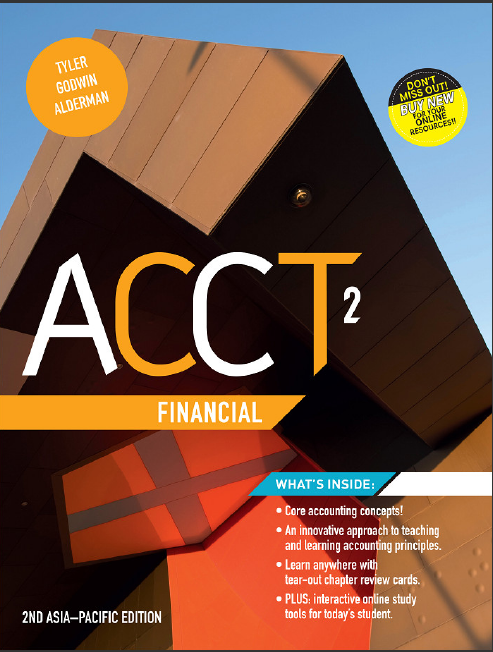
ACCT Financial is the Asia-Pacific edition of the proven 4LTR press approach to financial accounting, designed to enhance students’ learning experiences. The text is aimed squarely at the preparers/debits and credits method of teaching and is presented in an easy-to-read and accessible style. Concise, yet complete, coverage supported by a suite of online learning aids equips students with the tools required to successfully undertake an introductory financial accounting course. This edition features the 2014 Woolworths Annual Report.
ACCT2 Financial 2nd Table of contents:
Ch 1: Financial Accounting
Ch 1: Learning Objectives:
Ch 1: Introduction
Learning Objective 1: Beginning Assumptions
Learning Objective 2: Reporting Profitability: The Income Statement
Learning Objective 3: Reporting Financial Position: The Balance Sheet
Learning Objective 4: Reporting Equity: The Statement of Changes in Equity
Learning Objective 5: Reporting Cash Flows: The Cash Flow Statement
Learning Objective 6: Qualitative Characteristics of Accounting Information
Learning Objective 7: The Conceptual Framework
Ch 1: Exercises
Ch 1: Problems
Ch 1: Cases
Ch 2: Financial Statements
Ch 2: Learning Objectives:
Ch 2: Introduction
Learning Objective 1: Business Forms
Learning Objective 2: Generally Accepted Accounting Principles (GAAP)
Learning Objective 3: The Balance Sheet
Learning Objective 4: The Income Statement
Operating (Other) Expenses
Learning Objective 5: Horizontal and Vertical Analyses
Learning Objective 6: The Statement of Changes in Equity
Learning Objective 7: Information Beyond the Financial Statements
Ch 2: Exercises
Ch 2: Problems
Ch 2: Cases
Ch 3: Recording Accounting Transactions
Ch 3: Learning Objectives:
Ch 3: Introduction
Learning Objective 1: The Accounting Information System
Learning Objective 2: Accounting Transactions and the Accounting Equation
Learning Objective 3: The Dual-Entry Accounting System
Learning Objective 4: Recording Transactions in the Accounting System
Learning Objective 5: Comprehensive Example: Journal Entries to Financial Statements
Ch 3: Exercises
Ch 3: Problems
Ch 3: Cases
Ch 4: Accrual Accounting and Adjusting Entries
Ch 4: Learning Objectives:
Ch 4: Introduction
Learning Objective 1: Accrual and Cash Bases of Accounting
Learning Objective 2: Adjusting Journal Entries
Learning Objective 3: Comprehensive Example: Adjusting Journal Entries
Learning Objective 4: Closing Process
Learning Objective 5: The Accounting Cycle: A Summary
Ch 4: Exercises
Ch 4: Problems
Ch 4: Cases
Ch 5: Cash and Internal Controls
Ch 5: Learning Objectives:
Ch 5: Introduction
Learning Objective 1: Internal Control
Learning Objective 2: Components of Internal control
Learning Objective 3: Cash Controls
Learning Objective 4: Reporting Cash and Cash Equivalents
Learning Objective 5: Analysing Cash
Ch 5: Exercises
Ch 5: Problems
Ch 5: Cases
Ch 6: Receivables
Ch 6: Learning Objectives:
Ch 6: Introduction
Learning Objective 1: Recording and Reporting Accounts Receivable
Learning Objective 2: Uncollectible Receivables
Learning Objective 3: Estimating Bad Debt Expense
Learning Objective 4: Analysing Accounts Receivable
Learning Objective 5: Notes Receivable
Ch 6: Exercises
Ch 6: Problems
Ch 6: Cases
Ch 7: Inventory
Ch 7: Learning Objectives:
Ch 7: Introduction
Learning Objective 1: Recording, Expensing and Reporting Inventory
Learning Objective 2: Inventory Costing Methods
Learning Objective 3: Comparing Inventory Costing Methods
Learning Objective 4: Inventory Errors
Learning Objective 5: Estimating Ending Inventory
Learning Objective 6: Lower-of-Cost-and-Net-Realisable-Value
Learning Objective 7: Evaluating a Company’s Management of Inventory
Learning Objective 8: Appendix: Periodic Inventory System
Ch 7: Exercises
Ch 7: Problems
Ch 7: Case
Ch 8: Non-Current Assets and Intangible Assets
Ch 8: Learning Objectives:
Ch 8: Introduction
Learning Objective 1: Recording, Expensing and Reporting Non-Current Assets
Learning Objective 2: Calculating Depreciation Expense
Learning Objective 3: Adjustments Made During a Non-Current Asset’s Useful Life
Learning Objective 4: Disposing of Non-Current Assets
Learning Objective 5: Evaluating a Company’s Management of Non-Current Assets
Learning Objective 6: Non-Current Assets and Cash Flows
Learning Objective 7: Intangible Assets
Ch 8: Exercises
Ch 8: Problems
Ch 8: Cases
Ch 9: Liabilities
Ch 9: Learning Objectives:
Ch 9: Introduction
Learning Objective 1: Current Liabilities
Learning Objective 2: Non-Current Liabilities
Learning Objective 3: Bonds
Learning Objective 4: Redeeming a Bond Before Maturity
Learning Objective 5: Additional Liabilities
Learning Objective 6: Evaluating a Company’s Management of Liabilities
Learning Objective 7: Appendix: Determining a Bond’s Issuance Price
Learning Objective 8: Appendix: Effective Interest Method of Amortisation
Ch 9: Exercises
Ch 9: Problems
Ch 9: Cases
Ch 10: Partnerships
Ch 10: Learning Objectives:
Ch 10: Introduction
Learning Objective 1: The Partnership Form of Business
Learning Objective 2: Commencing a Partnership
Learning Objective 3: Allocate Profits and Losses
Learning Objective 4: Admission and Withdrawal of a Partner
Learning Objective 5: Liquidation
Learning Objective 6: Partnership Financial Statements
Ch 10: Exercises
Ch 10: Problems
Ch 10: Cases
Ch 11: Shareholders’ Equity
Ch 11: Learning Objectives:
Ch 11: Introduction
Learning Objective 1: The Corporate Form of Business
Learning Objective 2: Ordinary Shares
Learning Objective 3: Dividends
Learning Objective 4: Preference Shares
Learning Objective 5: Share Buybacks
Learning Objective 6: Evaluating a Company’s Management of Equity
Ch 11: Exercises
Ch 11: Problems
Ch 11: Cases
Ch 12: Statement of Cash Flows
Ch 12: Learning Objectives:
Ch 12: Introduction
Learning Objective 1: The Statement of Cash Flows
Learning Objective 2: Preparing the Statement of Cash Flows
Learning Objective 3: Reporting Cash Flows from Operating Activities: Direct Method
Learning Objective 4: Reporting Cash Flows from Operating Activities: Indirect Method
Learning Objective 5: Calculating Cash Flows from Investing Activities
Learning Objective 6: Calculating Cash Flows from Financing Activities
Learning Objective 7: Analysing a Company’s Statement of Cash Flows
Ch 12: Exercises
Ch 12: Problems
Ch 12: Cases
Ch 13: Financial Statement Analysis
Ch 13: Learning Objectives:
Ch 13: Introduction
Learning Objective 1: Financial Statement Analysis
Learning Objective 2: Horizontal and Vertical analyses
Learning Objective 3: Profitability Analysis
Learning Objective 4: Liquidity Analysis
Learning Objective 5: Solvency Analysis
Learning Objective 6: DuPont Analysis
Ch 13: Exercises
Ch 13: Problems
Ch 13: Cases
Appendix A: Time Value of Money
Appendix B: The 2014 Woolworths Annual Report (Excerpted)
Endnotes
Index
People also search for ACCT2 Financial 2nd:
acct2 financial
acc pacific-af
2nd acct
east asia and pacific
financial accounting 201
Tags: Jonathan Tyler, ACCT2 Financial