


Test Bank for Addiction Treatment 4th Edition by Katherine van Wormer, Diane Davis – Ebook PDF Instant Download/Delivery: 1305943309, 978-1305943308
Full download Addiction Treatment 4th edition after payment
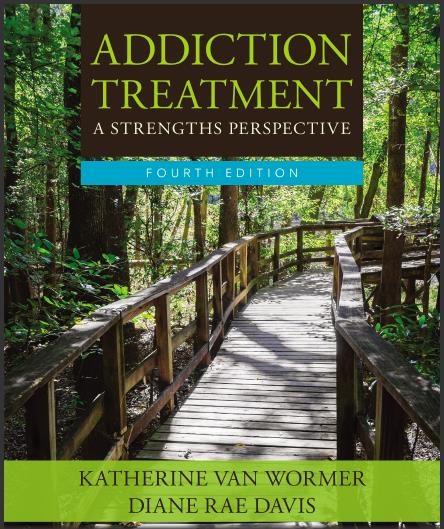
Product details:
ISBN 10: 1305943309
ISBN 13: 978-1305943308
Author: Katherine van Wormer, Diane Davis
ADDICTION TREATMENT covers the biological, psychological, and social aspects of alcoholism, eating disorders, compulsive gambling, and other addictions. The authors bridge the gap between the popular twelve-step and harm-reduction approaches, thus illuminating how you, as a future practitioner, can guide your clients down a trusted path that is tailored towards the client’s particular needs. Through a number of first-person narratives about the experience of addiction, you will discover a realism and depth not commonly found in textbooks. Interesting and relevant topics — such as the case against so-called underage drinking laws and an inside story of working in a casino — draw you into the material and illustrate the importance of reducing harm within the biopsychological framework that ties the text together.
Addiction Treatment 4th Table of contents:
Part 1. Introduction
Chapter 1. The Nature of Addiction
What Is Addiction?
Substance Use Disorder
Biopsychosocial-Spiritual Model
Prevalence of Substance Misuse
The Grip of Addiction
The Strengths Perspective
Themes in Recovery
Addiction Recovery Management
Finding the Strengths in Divergent Models
Harm Reduction and the Strengths Approach
Empirical Research
Earlier Studies of Note
More Recent Research Findings
Treatment Trends
New Substances of Misuse
Calls for a Paradigm Shift
Resistance to Change
Changes at the Government Level
The Unique Context of U.S. Substance Abuse Treatment
Less Reliance on Imprisonment
Other Promising Initiatives
Social Determinants of Health
Summary and Conclusion
Chapter 2. Historical Perspectives
Early Use and Misuse of Intoxicants
The European Context
Colonial America
Prohibition of Alcohol
Marijuana Control Efforts
Modern War on Drugs
History of Gambling and Its Treatment
History of Addiction Treatment
Jellinek’s Pioneering Study
Later Developments
The Anti-Treatment Backlash
The Introduction of Harm Reduction
More Recent Developments
Summary and Conclusion
Part 2. The Biology of Addiction
Chapter 3. Substance Misuse, Dependence, and the Body
Properties of Alcohol and Other Drugs
Depressants
Consumption Levels Worldwide
Alcohol and Good Health
Properties of Alcohol
Tolerance, Withdrawal, and Blackouts
Inhalants
Stimulants
Nicotine
E-Cigarettes
Hallucinogens
New Synthetic Substances
Cannabis (Marijuana)
Metabolism
The Brain and Addiction
The Brain
A Nonsubstance Addiction: Gambling
The Role of Genes in Addiction
Medical Consequences of Substance Misuse
Brain Impairment
Liver Damage
The Heart
The Genitourinary Tract
Summary and Conclusion
Chapter 3 Appendix: Biologically Based Interventions
Behavioral Therapies
Chemical Aversion Therapy
Covert Sensitization
Changing Brain Chemistry
Pharmaceutical Interventions
Alcoholism
Nicotine Treatment
Antidotes for Cocaine and Methamphetamine
Medication for Heroin Users
Medication for Eating Disorders
Help for Behavioral Addictions
Holistic Approaches
Summary and Conclusion
References
Chapter 4. Substance Misuse with a Co-Occurring Mental Disorder or Disability
Introduction
Substance Misuse and Mental Disorders
The Perils of Differential Diagnosis
Disorders That Commonly Co-Occur with Substance Misuse
Anxiety
Posttraumatic Stress Disorder (PTSD)
PTSD Related to Combat
Trauma from Natural Disasters
Gambling Disorder
Eating Disorders
Bipolar Disorders and Depressive Disorders
Personality Disorders
Schizophrenia Spectrum and Other Psychotic Disorders
A Conceptual Framework: The Quadrant Model
Integrated Treatment Practices
StageWise Treatment
Engagement Stage
Persuasion Stage
Active Treatment and Relapse Prevention
Assertive Community Treatment (Act)
Working on Case Management Teams
Integrated Pharmacotherapy
Mutual Help Groups
Substance Misuse and Developmental, Physical, and Cognitive Disabilities
Prevalence and Characteristics
Assessing Treatment Barriers
Intake and Screening
Treatment Practices
Behavioral Treatment in Primary Care
Summary and Conclusion
Chapter 5. Gambling, Eating Disorders, Shopping, and Other Behavioral Addictions
Introduction
Gambling Disorder
Naming the Problem
Prevalence of Gambling Disorder
Demographic Factors
Gender Differences
Neurobiological Considerations
Co-Occurrence of Other Problems
Internet Gambling
Treatment Issues
Motivational and Cognitive Therapy
Further Work in the Cognitive Area
Eating Disorders
Psychosocial Aspects
DSM Diagnoses
Anorexia Nervosa
Bulimia Nervosa
Treatment Interventions
Shopping or Spending Addiction
Hoarding Disorder
Lost in Cyberspace
Are Facebook and Texting Addictive?
Sex Addiction
Cognitive Therapy and the Strengths Perspective
How to Elicit Strengths
Self-Talk and Positive Reframing
Feeling Work
Anger Management
Stress Management
All-or-Nothing Thinking
Use of Humor
Exercises for Feeling Work in the Group
Summary and Conclusion
Part 3. The Psychology of Addiction
Chapter 6. Addiction across the Life Span
The Stages of Growth and Development
Teenage Drinking and Using
Identity versus Role Confusion
Extent of Drug Use: Europe and the United States
The Extent of Substance Use in the United States
The Business Side of Youth Addiction
Psychological Risk Factors
Psychiatric Disorders
Special Risks for Girls
Special Risks for Boys
Binge Drinking in Young Adults
Prevention of Substance Misuse in Teens
Motivational Enhancement Strategies
Gender-Specific Programming for Girls
Addiction Problems in Middle Adulthood
Prevalence of Substance Use
Substance-Using Women from American Indian Backgrounds
Increased Risk among Combat Veterans
Treatment Implications
Substance Use among Women at Midlife
Addiction Problems among Older Adults
Prevalence of Substance Use
Treatment for Drug Misuse
Biological Considerations
Social Risk Factors
Treatment Interventions
Prevention of Relapse
Loss and Grief
Spiritual Healing
Summary and Conclusion
Chapter 7. Screening and Assessment
Introduction
Screening Instruments and Strategies
Assessment Tools
Assessing Levels of Care
Assessment of Persons with Co-Occurring Disorders (COD)
Screening and Assessment of Older Adults
Diagnosing Addiction Problems
Assessment and the Strength Perspective
Summary and Conclusion
Chapter 8. Strengths- and Evidence-Based Helping Strategies
Introduction
Harm Reduction
Reducing Barriers
Choosing to Reduce Harm: Who Chooses and How?
Attending to Readiness to Change
Harm Reduction Strategies
Harm Reduction Psychotherapy
Motivational Interviewing
Techniques for Enhancing Motivation
Closing the Deal
Motivational Enhancement Therapy
Research on the Effectiveness of Motivational Interviewing
Solution-Focused Therapy
Research on the Effectiveness of Solution-Focused Therapy
Cognitive-Behavioral Therapy
“Third Wave” CBT
Relapse Prevention
Contingency Management
Research on CBT Effectiveness
Group Therapy
Motivational Interviewing in a Group Setting
An Example of a Harm Reduction Drop in Group: “Come as You Are”
An Example of a Solution-Focused Group
Traditional Treatment at the Crossroads
Summary and Conclusion
Chapter 9. Mutual Help Groups and Spiritual/Religious Resources
Introduction
Mutual Help Groups
Alcoholics Anonymous (AA)
A Thumbnail Sketch of Alcoholics Anonymous
AA in the Community versus 12-Step Facilitation in Treatment Programs
Research on AA Effectiveness
How Does AA Really Work?
Framing AA as a Spiritual Fellowship
AA and the Brain
AA as a Narrative Community
Whom Does AA Benefit?
Gamblers Anonymous
Other 12-Step Groups
12-Step Programs and Harm Reduction
Other Mutual-Support Groups
Women for Sobriety (WFS)
Smart Recovery
Moderation Management (MM)
Recovery Community Centers
How to Support Client Involvement in Mutual Help Groups
Addiction, Spirituality, and Religion
Spiritual/Religious Practices in Addiction Treatment
Is Spirituality and/or Religious Practice Helpful in Addiction Treatment?
Faith-Based Treatment
Breaking the Silence
Summary and Conclusion
Part 4. The Social Aspects of Addiction
Chapter 10. Family Risks and Resiliencies
Classic Family Systems Therapy
Focus on the Family
Modern Developments
Family Adaptation to Addiction
Wegscheider’s Role Theory
The Chemically Dependent Person
Some Modern Treatment Models
Stages of Change and Family Treatment
Precontemplation
Contemplation
Preparation
Action
Maintenance
Work with Families in Which There Are Co-Occurring Disorders
In Situations of Domestic Violence
Cultural Considerations
Work with Native/American Indian Families
Work with African American Families
Work with Latino Families
Work with Asian and Asian American Families
Work with Appalachian Families
Work with Gay and Lesbian Families
Healing
Rename
Reframe
Reclaim
Exercises for Family Groups
Summary and Conclusion
Chapter 11. Ethnicity, Culture, and the Socioeconomic Determinants of Addiction
Introduction
Asian American and Native Hawaiian/Pacific Islanders
Prevalence Patterns
Gambling Problems
Sociocultural Factors
Treatment Issues
Culturally Based Services
American Indians and Alaskan Natives
Prevalence Patterns
Gambling Problems
Sociocultural Factors
Spiritual and Cultural Values
Treatment Issues
Examples of Native American Culturally Based Services
Hispanics
Prevalence Patterns
Gambling Problems
Socioeconomic Factors
Cultural Factors
Treatment Issues
Hispanic Culturally Based Services
African Americans
Prevalence Patterns
Gambling
Socioeconomic Factors
Cultural Factors
Treatment Issues
Culturally Based Services
Summary and Conclusion
Chapter 12. Gender, Sexual, and Sexual Orientation Differences
Introduction
Gender Differences
Gender Differences in Prevalence
Sociocultural Gender Differences
Partner Relationships
Parenting
Crime and Punishment
Violence and Trauma
Psychological Differences by Gender
Biological Differences by Gender
Treatment Implications
Substance Abuse Counseling and Sexual Orientation
Risk Factors for Substance Use
Lesbians and Substance Misuse
Gay Males and Substance Misuse
Transgender Individuals
Bisexuality
Treatment Issues
A Focus on Spirituality
Summary and Conclusion
Chapter 13. Public Policy
Welfare Reform
Policies Pertaining to the Treatment Profession
Managed Care
The Law and Ethical Codes
The War on Drugs
Mandatory Sentencing
Civil Asset Forfeitures
Drug-Free Zones
The Punishment of Pregnant Drug Users
Systems of Payment and Insurance Coverage
Harm Reduction
Steps Toward Legalization of Marijuana
Treatment Developments
Policies Related to Gambling
Some Positive Steps Toward Harm Reduction
Summary and Conclusion
References
People also search for Addiction Treatment 4th :
addiction treatment 4th edition pdf
addiction treatment a strengths perspective 4th edition
average cost of addiction treatment
addiction treatment courses
addiction treatment a strengths perspective 4th edition pdf free
Tags: Katherine van Wormer, Diane Davis, Addiction Treatment