

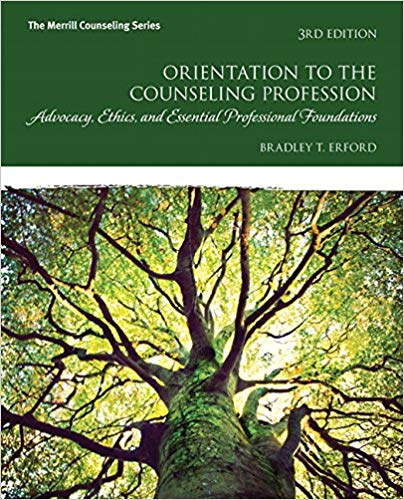
Test Bank for Orientation to the Counseling Profession Advocacy Ethics and Essential Professional Foundations 3rd Edition by Bradley Erford ISBN 0134387791 978-0134387796
Original price was: $70.00.$35.00Current price is: $35.00.
Instant download (Test Bank) Orientation to the Counseling Profession Advocacy Ethics and Essential Professional Foundations 3rd Edition after payment
Test Bank for Orientation to the Counseling Profession Advocacy Ethics and Essential Professional Foundations 3rd Edition by Bradley Erford – Ebook PDF Instant Download/Delivery: 0134387791 , 978-0134387796
Full download Orientation to the Counseling Profession Advocacy Ethics and Essential Professional Foundations 3rd edition after payment
Product details:
ISBN 10: 0134387791
ISBN 13: 978-0134387796
Author: Bradley Erford
Current, innovative, and all encompassing, Orientation to the Counseling Profession: Advocacy, Ethics, and Essential Professional Foundations provides a wealth of information on the most foundational and emerging issues of the counseling profession. It is specifically designed to orient counselors-in-training, regardless of specialty area, to the profession of counseling. The title includes comprehensive coverage of the major tenets of the counseling profession including advocacy and multicultural counseling, licensure, professional associations, ethical/legal issues, crisis intervention, consultation, supervision, outcomes, research, and the counseling process, with diverse applications across the life span, settings, and specialties. Written in keeping with new counselor preparation initiatives, which expose counselors-in-training to essential current and future practices, it prepares students for the future of the counseling practice into which they are about to enter. New to this edition:
Also available with MyLab Counseling
This title is also available with MyLab Counseling–an online homework, tutorial, and assessment program designed to work with the text to engage students and improve results. Within its structured environment, students see key concepts demonstrated through video clips, practice what they learn, test their understanding, and receive feedback to guide their learning and ensure they master key learning outcomes.
Orientation to the Counseling Profession Advocacy Ethics and Essential Professional Foundations 3rd Table of contents:
Section One: Foundations of Professional Counselor Identity
Chapter 1: Becoming a Professional Counselor: Philosophical, Historical, and Future Considerations
-
Preview
-
Counseling and Professional Counselors: Where We Are
-
How Do Counselors Differ from Psychologists and Social Workers?
-
The Philosophical Underpinnings of Counseling
-
How We Got Here: People, Issues, and Societal Forces That Have Shaped the Counseling Profession
-
1900–1920
-
1921–1940
-
1941–1960
-
1961–1980
-
1981–2000
-
2001–Present
-
-
Where We Are Going
-
Evidence-Based Practices, Research-Based Practices, and Outcomes Research
-
Managed Care
-
Multiculturalism, Diversity, and Social Justice Counseling
-
Technology
-
Gatekeeping
-
Professional Advocacy and Social Advocacy Counseling
-
Mentoring and Leadership Training
-
Bonding and Splintering of Facets of the Counseling Profession
-
Developing a Commitment to Career-Long Wellness
-
-
Summary
Chapter 2: Professional Counseling Organizations, Licensure, Certification, and Accreditation
-
Preview
-
Professional Counseling Organizations
-
American Counseling Association
-
ACA Divisions
-
American College Counseling Association
-
American Mental Health Counselors Association
-
American Rehabilitation Counseling Association
-
American School Counselor Association
-
Association for Adult Development and Aging
-
Association for Assessment and Research in Counseling
-
Association for Child and Adolescent Counseling
-
Association for Counselor Education and Supervision
-
Association for Creativity in Counseling
-
Association for Humanistic Counseling
-
Association for Lesbian, Gay, Bisexual, and Transgender Issues in Counseling
-
Association for Multicultural Counseling and Development
-
Association for Specialists in Group Work
-
Association for Spiritual, Ethical, and Religious Values in Counseling
-
Counselors for Social Justice
-
International Association of Addictions and Offender Counselors
-
International Association of Marriage and Family Counselors
-
Military and Government Counseling Association
-
National Career Development Association
-
National Employment Counseling Association
-
-
ACA Regions and Branches
-
-
Other Essential Counseling Organizations
-
ACA Foundation
-
Chi Sigma Iota
-
Council for Accreditation of Counseling and Related Educational Programs (CACREP)
-
Council on Rehabilitation Education
-
National Board for Certified Counselors (NBCC)
-
-
Professional Development
-
Benefits of Joining Professional Counseling Organizations
-
Additional Member Benefits
-
ACA Member Services Committee
-
Student Member Benefits
-
-
Ethical Standards
-
Legislative Advocacy
-
Supporting the Profession’s Mission
-
Relationship with APA
-
Key Challenges in Counseling
-
National and International Accreditation
-
State Accreditation, Certification, and Licensure
-
Education
-
Supervised Experience
-
Examination
-
American Association of State Counseling Boards
-
License Portability
-
Certification for School Counselors
-
Licensure Benefits and Drawbacks
-
-
National Certification
-
Commission on Rehabilitation Counselor Certification
-
-
Summary
-
Answer Key
-
Activity 2.2
Chapter 3: Ethical and Legal Issues in Counseling
-
Preview
-
Ethical Standards and Laws
-
ACA Code of Ethics
-
Technology-Assisted Counseling
-
ASCA Ethical Standards for School Counselors
-
Responsibilities to Students
-
Parents/Guardians
-
Colleagues
-
School, Communities, and Families
-
Self
-
The Profession
-
Maintenance of Standards
-
-
-
Decision Making Using Ethical Standards
-
Legal Resources and Guidelines
-
Court System
-
Statutory Law
-
Regulations and Policies
-
-
Legal Considerations
-
Professional Competence
-
Malpractice and Lawsuits
-
Subpoenas
-
Confidentiality and Limits
-
Privileged Communication
-
Minor-Consent Laws
-
Records and Notes
-
Educational Records
-
Personal Notes
-
-
-
HIPAA
-
Child Abuse and Suicide
-
-
Summary
Section Two: Counseling Processes and Approaches
Chapter 4: Theories of Counseling
-
Preview
-
The Importance of Theory
-
Ethics in Applying Theory
-
What Makes a Good Theory?
-
Theoretical Paradigms
-
Psychodynamic
-
Psychoanalysis
-
Adlerian
-
Other Theories
-
-
Humanistic/Existential
-
Person-Centered
-
Existential
-
Gestalt
-
-
Behavioral/Cognitive-Behavioral
-
Behavioral Counseling
-
Cognitive-Behavioral
-
Rational Emotive Behavior Therapy
-
Reality Therapy and Choice Theory
-
Solution-Focused Brief Counseling
-
-
Family Systems Paradigm
-
Emergent Theories
-
Narrative
-
Constructivist
-
Feminist
-
Interpersonal Psychotherapy
-
-
-
Applying Theory
-
Human Nature
-
Counseling Goals
-
Counselor’s Role
-
Techniques
-
Flexibility and Integration
-
Integrative vs. Eclectic
-
-
-
Summary
-
Answer Key
-
Activity 4.2
-
Activity 4.3
Chapter 5: The Counseling Process
-
Preview
-
Counselor Characteristics
-
Beginning Counselor Issues
-
Client Characteristics
-
Cross-Cultural Competence
-
Stages of the Counseling Process
-
Helping Relationship
-
Initiation
-
Counseling Environment
-
Role of Theory
-
Structure
-
Informed Consent
-
Gathering Information
-
Exploration and Collaboration
-
Goal Setting
-
Managing Lack of Change
-
Termination
-
-
Professional Growth
-
Summary
Chapter 6: Counseling Microskills
-
Preview
-
Essential Microskills
-
Attending (Eye Contact, Body Position, Vocal Tone)
-
Basic Listening Sequence
-
Questions (Open vs. Closed)
-
Reflecting (Paraphrase, Feelings, Meaning)
-
Summarizing
-
-
Summary
Section Three: Client Issues and Advocacy
Chapter 7: Crisis Prevention and Intervention
-
Preview
-
Crisis Theory and Concepts
-
Resilience and Growth
-
Counselor Self-Care
-
Crisis Counseling
-
Ethical Considerations
-
Risk Assessment
-
Suicide
-
Homicide
-
-
Abuse and Violence
-
Intimate Partner Violence
-
Child and Elder Abuse
-
-
Special Topics
-
Community Disasters
-
School Systems
-
Safety
-
-
Summary
Chapter 8: Mental Health and Rehabilitation Counseling
-
Preview
-
Career Options
-
Settings
-
Community, Hospital, Correctional, Private Practice
-
Marriage, Family, Pastoral, Wilderness Therapy
-
-
Mental Health Issues
-
Depression, Anxiety, Eating Disorders, Addictions
-
Treatment Models (Medical, Twelve-Step, Strengths-Based)
-
Special Populations
-
-
Rehabilitation Counseling
-
Summary
Chapter 9: School, College, and Career Counseling
-
Preview
-
School Counseling (Elementary, Middle, High School)
-
Current School Issues
-
College Counseling and Student Services
-
Disability Support
-
Career Counseling
-
Major Theories
-
Technology in Career Work
-
Social Justice
-
-
Summary
Chapter 10: Human Development Throughout the Life Span
-
Preview
-
Developmental Stages and Counseling
-
Infancy, Early Childhood, Middle Childhood, Adolescence
-
Emerging Adulthood, Early Adulthood, Middle Adulthood, Later Adulthood
-
Key Developmental Tasks and Interventions
-
-
Summary
-
Answer Key
-
Activity 10.5
Chapter 11: Multicultural Counseling
-
Preview
-
Multicultural Competence
-
Key Issues
-
Etic vs. Emic
-
Assessment, Evidence-Based Practice
-
-
Identity Development
-
Racial, Ethnic, White, Biracial
-
Feminist, Sexual, Spiritual
-
-
Counseling Diverse Clients
-
Socioeconomic Status
-
Racial/Ethnic Groups
-
Gender and Sexual Minorities
-
Elderly and Disabled Clients
-
-
Social Justice
-
Multicultural Organizational Development
-
Summary
Chapter 12: Assessment, Case Conceptualization, Diagnosis, and Treatment Planning
-
Preview
-
Assessment Tools and Ethics
-
Types of Tests (Standardized/Nonstandardized, Cognitive, Affective, etc.)
-
Validity, Reliability, Cultural Fairness
-
Technology and Resources
-
-
Interviews and Observations
-
Mental Status Exam
-
Suicide and Harm Assessments
-
-
Diagnosis and Treatment
-
Case Conceptualization
-
Benefits/Drawbacks of Diagnosis
-
Treatment Planning Models (e.g., BASIC ID, Client Map)
-
-
Summary
Chapter 13: Supervision and Consultation
-
Preview
-
Supervision Models and Practices
-
Supervisory Relationships
-
Consultation
-
Roles, Models, Skills
-
Settings
-
-
Summary
Chapter 14: Advocating for the Counseling Profession
-
Preview
-
Definition and History
-
Current Advocacy
-
Advocacy Process
-
Counselor Training
-
Advocacy Methods
-
Media, Technology, Policy Engagement
-
-
Summary
Chapter 15: Advocacy Counseling: Being an Effective Agent of Change for Clients
-
Preview
-
Advocacy Counseling Defined
-
When and How to Advocate
-
Competency Areas
-
Intrapersonal, Interpersonal
-
Community, Public Policy, Global Affairs
-
-
Summary
Section Four: The Effectiveness of Counseling
Chapter 16: Accountability in Counseling
-
Preview
-
Advisory Committees
-
Needs Assessment
-
Data-Driven and Perceptions-Based
-
Design Tips
-
-
Program Evaluation
-
Service and Outcomes Assessment
-
-
Outcome Studies and Reporting
-
Accountability in Social Justice and Technology
-
Summary
Chapter 17: Outcome Research in Counseling
-
Preview
-
Purpose and Barriers
-
Effectiveness of Counseling
-
Individual and Group Work
-
School-Based and Career Interventions
-
-
Future Implications
-
Collaboration, Advocacy, Research Use
-
-
Summary
References
Credits
Index
People also search for Orientation to the Counseling Profession Advocacy Ethics and Essential Professional Foundations 3rd:
orientation to the counseling profession 3rd edition
orientation to the counseling profession 3rd edition pdf
orientation to the counseling profession pdf
orientation to the counseling profession 4th edition pdf
orientation to the counseling profession 3rd edition pdf free