

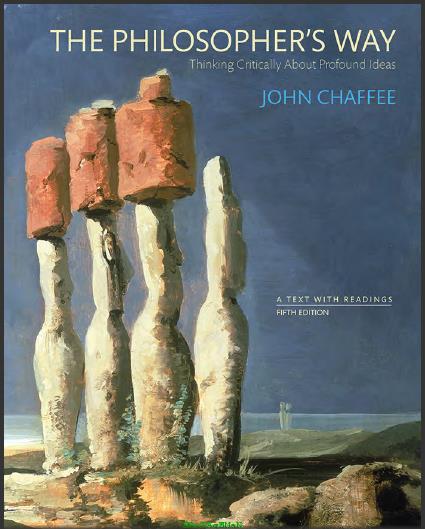
Test Bank for Philosopher’s Way The Thinking Critically About Profound Ideas 5th Edition by John Chaffee ISBN 0133867787 9780133867787
Original price was: $70.00.$35.00Current price is: $35.00.
Instant download (Test Bank) Philosopher’s Way The Thinking Critically About Profound Ideas 5th Edition after payment
Test Bank for Philosopher’s Way The Thinking Critically About Profound Ideas 5th Edition by John Chaffee – Ebook PDF Instant Download/Delivery: 0133867787 , 9780133867787
Full download Philosopher’s Way The Thinking Critically About Profound Ideas 5th edition after payment
Product details:
ISBN 10: 0133867787
ISBN 13: 9780133867787
Author: John Chaffee
MyPhilosophyLab for Introduction to Philosophy Valuepack Access Card MyPhilosophyLab should only be purchased when required by an instructor. For courses in Introduction to Philosophy Empower students to think critically about philosophy The Philosopher’s Way: Thinking Critically About Profound Ideas inspires students to think like philosophers, helping them to become more accomplished critical thinkers and to develop the analytical tools needed to think philosophically about important issues. The text is comprised of readings from major philosophical texts, which are accompanied by commentary from author John Chaffee to guide students in their understanding of the topics. Organized by questions central to the main branches of philosophy, The Philosopher’s Way examines the ideas of philosophers past and present. Also available with MyPhilosophyLab® MyPhilosophyLab for the Introduction to Philosophy course extends learning online to engage students and improve results. Media resources with assignments bring concepts to life, and offer students opportunities to practice applying what they’ve learned. Please note: this version of MyPhilosophyLab does not include an eText. The Philosopher’s Way: Thinking Critically About Profound Ideas, Fifth Edition is also available via REVEL™, an immersive learning experience designed for the way today’s students read, think, and learn.
Philosopher’s Way The Thinking Critically About Profound Ideas 5th Table of contents:
Chapter 1: What is philosophy? Thinking Philosophically About Life
1.1 Why Study Philosophy?
1.2 Defining Philosophy
Philosophy Is the Pursuit of Wisdom
Philosophy Begins with Wonder
Philosophy Is a Dynamic Process
The Ultimate Aim of Philosophy
1.3 Thinking Philosophically Becoming a Critical Thinker
Thinking Philosophically What Is Your Philosophy of Life?
Qualities of a Critical Thinker
Thinking Philosophically Who Are Your Models of Critical Thinking?
The Process of Critical Thinking
Thinking Philosophically Applying the Critical Thinking Model
Stages in Critical Thinking
Stage 1: The Garden of Eden
Stage 2: Anything Goes
Stage 3: Thinking Critically
Stages of Critical Thinking
1.4 Understanding Arguments
The Structure of Arguments
Evaluating Arguments
Deductive Arguments
Inductive Arguments
Informal Fallacies
Thinking Philosophically Evaluating Arguments
1.5 Branches of Philosophy
Metaphysics
Thinking Philosophically Are You Willing to Question Your Beliefs?
Epistemology
Thinking Philosophically How Do You Know What Is True?
Ethics
Thinking Philosophically Do You Have a Moral Philosophy?
Political and Social Philosophy
Aesthetics
1.6 Reading Critically: Working with Primary Sources
Bertrand Russell, from The Value of Philosophy
Reading Critically Analyzing Russell on the Value of Philosophy
Thinking Philosophically What Do You Hope to Learn?
Writing About Philosophy Analyzing Your Beliefs
Chapter Review
For Further Reading and Viewing
Chapter 2: What is the philosopher’s way? Socrates and the Examined Life
2.1 Socrates: A Model for Humanity
Hesiod, Homer, and the Birth of Philosophy
Karl Jaspers, from The Axial Period
A Man from Greece
A Midwife of Ideas
The Wisest of Men?
Plato, from The Apology
Reading Critically Analyzing Socrates on Wisdom and Humility
2.2 The Socratic Method
Plato, from The Republic
Reading Critically Analyzing a Socratic Dialogue
2.3 Socrates’s Central Concern: The Soul
Plato, from The Apology
Reading Critically Analyzing the Core Teachings of Socrates
2.4 The Trial and Death of Socrates
Plato, from The Apology
Thinking Philosophically Countering Personal Attacks
Reading Critically Analyzing Socrates on Trial
Making Connections: Socrates’s Legacy
Thinking Philosophically Is Socrates Relevant Today?
Writing About Philosophy A Socratic Dialogue
Chapter Review
For Further Reading and Viewing
Chaptet 3: Who are you? Consciousness, Identity, and the Self
3.1 Know Thyself?
Thinking Philosophically Do You Know Yourself?
3.2 The Soul Is Immortal: Socrates and Plato
Plato, from Phaedo
Reading Critically Analyzing Socrates on the Self
Plato, from Phaedrus, The Chariot Analogy
Reading Critically Analyzing the Chariot Analogy
3.3 Philosophical Perspectives During the Middle Ages
Saint Augustine’s Synthesis of Plato and Christianity
Thinking Philosophically Do You Believe in an Immortal Soul?
St. Thomas Aquinas’s Synthesis of Aristotle and Christianity
3.4 Descartes’s Modern Perspective on the Self
René Descartes, from Meditations on First Philosophy
Thinking Philosophically Are You a Seeker After Truth?
Reading Critically Analyzing Descartes on the Mind-Body Problem
3.5 The Self Is Consciousness: Locke
John Locke, from On Personal Identity
Thinking Philosophically Applying Locke’s Ideas
Reading Critically Analyzing Locke on the Conscious Self
3.6 There Is No Self: Hume
David Hume, from On Personal Identity
Reading CriticallyAnalyzing Hume on the Absence of Self
3.7 We Construct the Self: Kant
Immanuel Kant, from Prolegomena to Any Future Metaphysics
Immanuel Kant, from The Critique of Pure Reason
Thinking Philosophically Sense, Perception, and Your Self
Reading Critically Analyzing Kant’s Unity of Consciousness
3.8 The Self Is Multilayered: Freud
Sigmund Freud, from An Outline of Psychoanalysis
Thinking Philosophically Looking for Evidence of Your Unconscious
Reading Critically Analyzing Freud’s Ideas About Mind
3.9 The Self Is How You Behave: Ryle
Gilbert Ryle, from The Concept of Mind
Reading Critically Analyzing Ryle’s View of Self as Behavior
3.10 The Self Is the Brain: Physicalism
Functionalism
Jerry Fodor, from The Mind-Body Problem
Eliminative Materialism: Paul Churchland
Paul Churchland, from On Eliminative Materialism
Reading Critically Analyzing Churchland’s Materialism
Contemporary Philosophy of Mind
Richard Brown, from Contemporary Issues in Philosophy of Mind
Reading Critically Analyzing Issues in Contemporary Philosophy of Mind
3.11 The Self Is Embodied Subjectivity: Husserl and Merleau-Ponty
Marcel Proust, from In Search of Time Lost
Thinking Philosophically Applying Phenomenology
Marcel Proust, from Within a Budding Grove
3.12 Buddhist Concepts of the Self
Milindapanha, The Simile of the Chariot
Reading Critically Analyzing the Buddhist Chariot Analogy
Making Connections: In Searchof the Self
Thinking Philosophically What Is Your Concept of the Self?
Writing About Philosophy Defining the Self
Chapter Review
For Further Reading and Viewing
Chapter 4: Are you free? Freedom and Determinism
4.1 Are You the Master of Your Fate?
Thinking Philosophically What Are Your Assumptions About Freedom?
4.2 Determinism
Baron d’Holbach, from The System of Nature
Thinking Philosophically Do You Choose Freely?
Reading Critically Analyzing Baron d’Holbach on the Illusion of Freedom
4.3 Compatibilism
External Constraints May Limit Freedom: W. T. Stace, R. E. Hobart, David Hume
Internal Constraints May Also Limit Freedom: Schlick
Free Will Is a Human Creation: Dennett
Reading Critically Evaluating Compatibilism
4.4 Indeterminism and Libertarianism
We Live in a World of Possibilities: James
William James, from The Will to Believe
Reading Critically Analyzing James on Free Will
We Create Ourselves Through Our Choices: Sartre
Jean-Paul Sartre, from Existentialism Is a Humanism
Reading Critically Analyzing Sartre on Freedom, Choice, and Responsibility
4.5 A Feminist Analysis of Freedom
Reading Critically Understanding Oppression
4.6 Neuroscience and Free Will
Reading Critically Neuroscience and Free Will
Overcoming Limitations to Your Freedom
Confronting External Constraints
Confronting Internal Constraints
Thinking Philosophically What Are The Limitations to Your Freedom?
Writing About Philosophy Understanding Personal Freedom
Chapter Review
For Further Reading and Viewing
Chapter 5: How can we know the nature of reality?
5.1 What Is the Nature of Reality?
Thinking Philosophically What Is Your Concept of Reality?
5.2 Reality Is the Eternal Realm of the Forms: Plato
The Divided Line
The Theory of Innate Ideas
Plato, from Meno
Reading Critically Analyzing Plato’s Theory of Innate Ideas
The Path to Knowledge of Reality: The Cave Allegory
Plato, from The Republic
Reading Critically Analyzing Plato’s Allegory of the Cave
Inspiring Ascent to the Forms: The Ladder of Love
Plato, from Symposium
Reading Critically Analyzing Plato’s Ladder of Love
5.3 Reality Is the Natural World: Aristotle
Aristotle’s Two Categories: Matter and Form
Entelechy
The Four Causes
Aristotle, from Metaphysics
Reading Critically Analyzing Aristotle’s Concept of Reality
5.4 Can Reality Be Known? Descartes
René Descartes, from Meditations on First Philosophy
Reading Critically Analyzing Descartes’s Radical Doubt
Making Connections: Your Beliefs About the World
Thinking Philosophically Evaluating The Accuracy of Your Beliefs
Writing About Philosophy Analyzing Philosophical Themes in a Fictional Work
Chapter Review
For Further Reading and Viewing
Chapter 6: What is real? what is true? Further Explorations
6.1 Questioning Independent Reality
Bertrand Russell, from Appearance and Reality
Reading Critically How Do You Know What Is “Real”?
6.2 All Knowledge Comes From Experience: Locke
Locke’s Critique of “Universality”
John Locke, from An Essay Concerning Human Understanding
Leibniz’s Case Against Locke
Gottfried Wilhelm von Leibniz, from New Essays Concerning Human Understanding
Locke’s Causal Theory of Perception
John Locke, from An Essay Concerning Human Understanding
Reading Critically Analyzing Locke’s Empirical View
6.3 Reality Depends on Perception: Berkeley
George Berkeley, from A Treatise Concerning the Principles of Human Knowledge
Reading Critically Analyzing Berkeley’s Subjective Idealism
6.4 Understanding Reality Demands Skepticism: Hume
David Hume, from An Enquiry Concerning Human Understanding
Reading Critically Analyzing Hume’s Case for Skepticism
6.5 We Constitute Our World: Kant
Immanuel Kant, from Prolegomena to Any Future Metaphysics
Hume’s Challenge to Philosophy
Kant’s Solution: Transcendental Idealism
Immanuel Kant, from Critique of Pure Reason
Two Realities: Phenomenal and Noumenal
Reading Critically Analyzing Kant’s Synthesizing Project
Applying Kant’s Theory
Two Accounts of the Assassination of Malcolm X
Reading Critically How Is Knowledge Constructed?
6.6 Feminist Perspectives on Epistemology
The Position of Constructed Knowledge
Reading Critically Exploring the Epistemological Category of “Constructed Knowledge”
Making Connections: Developing Informed Beliefs
Thinking Philosophically What are the Limits of Your Knowledge?
Writing About Philosophy Constructing Knowledge
Chapter Review
For Further Reading and Viewing
Chapter 7: Is there a spiritual reality? Exploring the Philosophy of Religion
7.1 Thinking Philosophically About Religious Beliefs
Thinking Philosophically What Are Your Religious Beliefs?
7.2 What Is Religion?
Ways of Defining Religion
Frederick Streng, from Ways of Being Religious, “What Is Religion?”
Reading Critically Analyzing Streng on Definitions of Religion
God Is a Human Projection: Feuerbach
Ludwig Feuerbach, from The Essence of Christianity
Reading Critically Analyzing Feuerbach on Religion as Anthropomorphism
Religion Is a Vital Quest: Nishitani
Keiji Nishitani, from Religion and Nothingness
Reading Critically Analyzing Nishitani on the Religious Quest
7.3 A Brief Survey of World Religions Hinduism
Hinduism
Buddhism
Daoism (Taoism)
Judaism
Christianity
Islam
Indigenous Sacred Ways
Thinking Philosophically Expanding Your Religious Understanding
7.4 Can We Prove the Existence of God?
The Ontological Argument
Saint Anselm and Gaunilo, from The Ontological Argument
The Cosmological Argument
Reading Critically Analyzing the Ontological Argument
Saint Thomas Aquinas, from Summa Theologica
Reading Critically Analyzing the Cosmological Argument
The Argument from Gradations of Perfection
The Argument from Design
William Paley, from Natural Theology
Reading Critically Analyzing the Argument from Design
The Argument from Morality
Immanuel Kant, from Critique of Practical Reason, “God as a Postulate of Practical Reason”
Reading Critically Analyzing the Argument from Morality
7.5 The Problem of Evil
J. L. Mackie, from Evil Shows That There Is No God
Reading Critically Analyzing Mackie on “Evil Shows That There Is No God”
John Hick, from Philosophy of Religion, “God Can Allow Some Evil”
Reading Critically Analyzing Hick on the Problem of Evil
Edward H. Madden and Peter H. Hare, A Critique of Hick’s Theodicy
Reading Critically Analyzing Madden and Hare’s Critique of John Hick’s Theodicy
7.6 Faith and Religious Experience
Religious Faith as a Wager: Pascal
Blaise Pascal, from Thoughts on Religion, “A Wager”
Reading Critically Analyzing “Pascal’s Wager”
Religious Beliefs Require Sufficient Evidence: Clifford
W. K. Clifford, from “The Ethics of Belief”
Reading Critically Analyzing Clifford on the Ethics of Belief
Religious Belief Is Legitimate and Compelling: James
William James, from The Will to Believe
Reading Critically Analyzing James on the Will to Believe
Subjective Knowing: The Leap of Faith
Søren Kierkegaard, from “The Leap of Faith and the Limits of Reason”
Søren Kierkegaard, from Concluding Unscientific Postscript
Reading Critically Analyzing Kierkegaard on Faith and Reason
Making Connections: Reflections on the Philosophy of Religion
Writing About Philosophy Can We Prove – or Disprove – God’s Existence?
Chapter Review
For Further Reading and Viewing
Chapter 8: Are there moral truths? Thinking about Ethics
8.1 Your Moral Compass
Ethics and Values
Thinking Philosophically What Are Your Moral Values?
Thinking Critically About Ethics
Thinking Philosophically Making Moral Decisions
8.2 Ethical Relativism
Ethical Subjectivism: Each Person Determines What Is Morally Right
Thinking Philosophically How Subjective Are Your Ethics?
Cultural Relativism: Each Culture Determines What Is Morally Right
Ruth Benedict, from Anthropology and the Abnormal
Thinking Philosophically Cultural Relativism and Your Moral Perspective
Reading Critically Analyzing Benedict on Culture and Values
8.3 Ethical Absolutism: Some Moral Values Are Universal
Thinking Philosophically Do You Believe in Universal Values?
W. T. Stace, from The Concept of Morals
Reading Critically Analyzing Stace’s Critique of Ethical Relativism
8.4 Egoism as a Universal Principle
Plato, from The Republic, “The Myth of Gyges”
Arguments for Egoism
Reading Critically Analyzing the Myth of Gyges
Ayn Rand, from The Virtue of Selfishness
Reading Critically Analyzing Rand on the Virtue of Selfishness
Arguments Against Egoism
James Rachels, from Egoism and Moral Skepticism
Reading Critically Analyzing Rachels’s Critique of Egoism
8.5 Religion and Universal Values
Thinking Philosophically Religion and Your Ethical Values
Divine Command Theory
The Story of Abraham and Isaac, from The Bible
Natural Law Theory
Thinking Philosophically Do You Believe in Natural Laws?
Martin Luther King Jr., from Letter from a Birmingham Jail
Reading Critically Analyzing King on Universal Values
Making Connections: On Becoming an Ethical Person
Robert Coles, from The Disparity Between Intellect and Character
Thinking Philosophically Can Morality Be Learned in College?
Writing About Philosophy Moral Issues in Multiculturalism
Chapter Review
For Further Reading and Viewing
Chapter 9: What are right actions? Constructing an Ethical Theory
9.1 Expanding Your Knowledge of Moral Philosophy: Character and Virtue Ethics
Thinking Philosophically What Is Your Moral Character?
Aristotle, from The Nicomachean Ethics
Reading Critically Analyzing Aristotle’s Virtue Ethics
9.2 Maxims: Duty to Moral Laws
Immanuel Kant, from Fundamental Principles of the Metaphysics of Morals
Thinking Philosophically The Categorical Imperative and Your Moral Compass
Reading Critically Analyzing Kant on Duty and Reason
9.3 Consequences: Utilitarianism
The Greatest Happiness for the Greatest Number: Bentham
Jeremy Bentham, from An Introduction to the Principles of Morals and Legislation
Thinking Philosophically Applying the Hedonistic Calculus
Higher Pleasures Have Greater Worth: Mill
John Stuart Mill, from Utilitarianism
Reading Critically Analyzing Utilitarianism
Consider the Interests of Animals: Singer
Peter Singer, from Animal Liberation
Reading Critically Analyzing Singer on Animal Rights
9.4 Authenticity: Existentialist Ethics
“The Crowd Is Untruth”: Kierkegaard
Søren Kierkegaard, from “On the Dedication to ‘That Single Individual’”
Søren Kierkegaard, from The Present Age
Reading Critically Analyzing Kierkegaard on Authenticity
Beyond Good and Evil: Nietzsche
Friedrich Nietzsche, from The Gay Science
Friedrich Nietzsche, from Beyond Good and Evil
Reading Critically Analyzing Nietzsche on Morality
Authenticity and Ethical Responsibility: Sartre
Jean-Paul Sartre, from Existentialism Is a Humanism
Reading Critically Analyzing Sartre on Moral Responsibility
Simone de Beauvoir, from Ethics of Ambiguity
Our Interplay with Others Defines Us: de Beauvoir
Reading Critically Analyzing de Beauvoir on Moral Choices
Courage Is the Highest Value: Camus
Camus, from The Myth of Sisyphus
Reading Critically Analyzing the Myth of Sisyphus
9.5 Empathy: The Ethics of Care
Concept of the Self
Reason and Emotion
Reading Critically Analyzing Held on the Ethics of Care
9.6 Environmental Ethics
Reading Critically Thinking Critically About Environmental Ethics
9.7 Narrative Ethics
Thinking Philosophically
Making Connections: Your Moral Compass Revisited
Thinking Philosophically Constructing an Ethical Theory
Writing About Philosophy Analyzing Moral Choices in a Novel or Film
Chapter Review
For Further Reading and Viewing
Chapter 10: What is social justice? Creating a Just State
10.1 Elements of a Just Society
Thinking Philosophically Examining Our Society
10.2 Classical Theories of Society: Confucius, Plato, and Aristotle
Society Should Be Based on Virtue: Confucius
Reading Critically Analyzing Confucius on the Social Order
Society Should Be Based on Function and Harmony: Plato
Plato, from The Republic
Reading Critically Analyzing Plato on Social Harmony
Society Is the Natural State of Humanity: Aristotle
Aristotle, from Politics
Reading Critically Analyzing Aristotle on Community
10.3 Justice Depends on a Social Contract: from Hobbes and Locke to Rawls
We Need a Social Contract to Coexist: Hobbes
Thomas Hobbes, from Leviathan
Reading Critically Analyzing Hobbes on the Social Contract
The Social Contract Protects Natural Rights: Locke
John Locke, from The Second Treatise of Civil Government
Thomas Jefferson et al., from The Declaration of Independence: A Transcription
Reading Critically Analyzing Locke on Natural Rights
The State of Nature: Assumptions and Questions
The State of Nature Is a Conceptual Tool: Rawls
John Rawls, from A Theory of Justice
Thinking Philosophically Creating a Just Society
Reading Critically Analyzing Rawls on Justice and Equality
10.4 Justice Is Based on Need and Ability: Marx and Engels
Karl Marx and Friedrich Engels, from Manifesto of the Communist Party
Reading Critically Analyzing Marx and Engels on Social Justice
10.5 Justice is What Promotes the General Welfare: Mill
Thinking Philosophically Analyzing Mill’s Concept of Justice
John Stuart Mill, from on Liberty
Reading Critically Analyzing Mill on Liberty
10.6 Justice Is What Promotes Gender Equality: Okin
Susan Moller Okin, from Justice, Gender, and the Family
Reading Critically Analyzing Okin on Gender Equalit
Thinking Philosophically Your Ideal Society
Making Connections: An Ideal Society
Writing About Philosophy Your Ideal Society
Chapter Review
For Further Reading and Viewing
Credits
Index
People also search for Philosopher’s Way The Thinking Critically About Profound Ideas 5th:
philosopher’s way the thinking critically about profound ideas 5th edition
philosopher’s way the thinking critically about profound ideas
the philosopher’s way thinking critically about profound ideas pdf
what is critical thinking in philosophy
the philosopher’s way thinking critically about profound ideas edition 5
Tags: John Chaffee, Philosopher’s Way, Profound Ideas