


Test Bank for Principles of Microeconomics 7th edition by Gregory Mankiw, Ronald Kneebone – Ebook PDF Instant Download/Delivery: 0176757767, 9780176757762
Full download Principles of Microeconomics 7th edition after payment
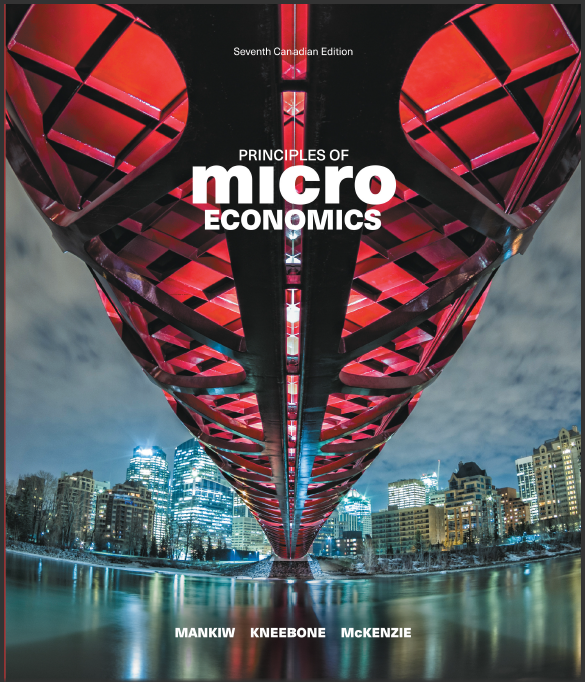
Product details:
ISBN 10: 0176757767
ISBN 13: 9780176757762
Author: Gregory Mankiw, Ronald Kneebone
Principles of Microeconomics, Seventh Canadian Edition, is designed to appeal to all students through its breakdown of concepts, focus on big ideas, and user-friendly language. As the market leader, its clear, concise, and consistent approach grounds students in difficult concepts and links theory to real-world applications, assisting in making the connection from page to action. Students receive a sophisticated understanding of how the economy operates without losing the big ideas through various pedagogical features that summarize major concepts, apply economic theory to students’ experiences and lives, and develop the building blocks required to achieve higher levels of understanding. As Mankiw states, “My goal in writing my text was to try and remember and to write a text that I would have liked to have read”, and this is the same approach he, Kneebone, and McKenzie have continued with the Seventh Canadian Edition.
Principles of Microeconomics 7th Table of contents:
Chapter 1: Ten Principles of Economics
1-1: How People Make Decisions
1-1a: Principle #1: People Face Tradeoffs
1-1b: Principle #2: The Cost of Something Is What You Give Up to Get It
1-1c: Principle #3: Rational People Think at the Margin
1-1d: Principle #4: People Respond to Incentives
1-2: How People Interact
1-2a: Principle #5: Trade Can Make Everyone Better Off
1-2b: Principle #6: Markets Are Usually a Good Way to Organize Economic Activity
1-2c: Principle #7: Governments Can Sometimes Improve Market Outcomes
1-3: How the Economy as a Whole Works
1-3a: Principle #8: A Country’s Standard of Living Depends on Its Ability to Produce Goods and Services
1-3b: Principle #9: Prices Rise When the Government Prints Too Much Money
1-3c: Principle #10: Society Faces a Short-Run Tradeoff between Inflation and Unemployment
1-4: Conclusion
Summary
Key Concepts
Questions for Review
Quick Check Multiple Choice
Problems and Applications
Chapter 2: Thinking Like an Economist
2-1: The Economist as Scientist
2-1a: The Scientific Method: Observation, Theory, and More Observation
2-1b: The Role of Assumptions
2-1c: Economic Models
2-1d: Our First Model: The Circular-Flow Diagram
2-1e: Our Second Model: The Production Possibilities Frontier
2-1f: Microeconomics and Macroeconomics
2-2: The Economist as Policy Adviser
2-2a: Positive versus Normative Analysis
2-2b: Economists in Ottawa
2-2c: Why Economists’ Advice Is Not Always Followed
2-3: Why Economists Disagree
2-3a: Differences in Scientific Judgments
2-3b: Differences in Values
2-3c: Perception versus Reality
2-4: Let’s Get Going
Summary
Key Concepts
Questions for Review
Quick Check Multiple Choice
Problems and Applications
Chapter 3: Interdependence and the Gains from Trade
3-1: A Parable for the Modern Economy
3-1a: Production Possibilities
3-1b: Specialization and Trade
3-2: Comparative Advantage: The Driving Force of Specialization
3-2a: Absolute Advantage
3-2b: Opportunity Cost and Comparative Advantage
3-2c: Comparative Advantage and Trade
3-2d: The Price of Trade
3-3: Applications of Comparative Advantage
3-3a: Should Sidney Crosby Shovel His Own Sidewalk?
3-3b: Should Canada Trade with Other Countries?
3-4: Conclusion
Summary
Key Concepts
Questions for Review
Quick Check Multiple Choice
Problems and Applications
People also search for Principles of Microeconomics 7th :
principles of microeconomics 7th edition solutions pdf
microeconomics 4-7
7 principles of economics quiz
n gregory mankiw principles of microeconomics 7th edition
quizlet principles of microeconomics
Tags: Gregory Mankiw, Ronald Kneebone, Principles of Microeconomics