

Test Bank for Problem Solving with C++ 10th Edition by Walter Savitch, Kenrick Mock – Ebook PDF Instant Download/Delivery: 0134448286, 9780134448282
Full download Problem Solving with C++ 10th edition after payment
Product details:
ISBN 10: 0134448286
ISBN 13: 9780134448282
Author: Walter Savitch, Kenrick Mock
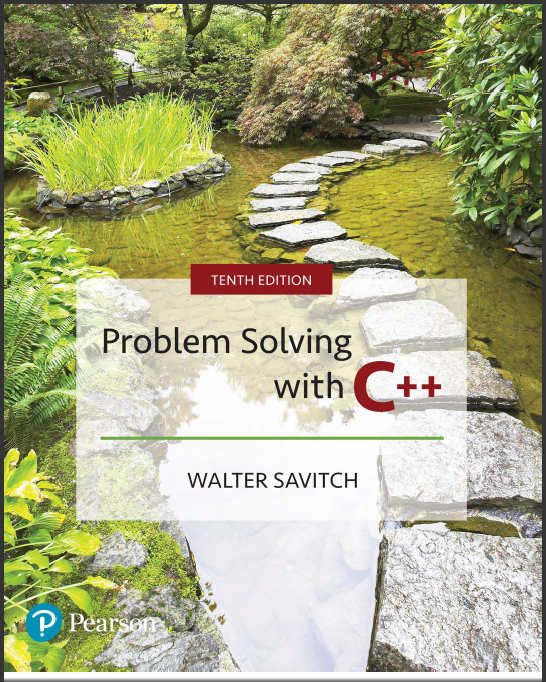
For courses in C++ introductory programming. Learn the fundamentals of C++ programming with an emphasis on problem solving Now in its 10th Edition, Problem Solving with C++ is written for the beginning programmer. The text cultivates strong problem-solving skills and programming techniques as it introduces readers to the C++ programming language. Author Walt Savitch’s approach to programming emphasizes active reading through the use of well-placed examples and self-tests, while flexible coverage means the order of chapters and sections can easily be adapted without sacrificing continuity. Savitch’s clear, concise style is a hallmark feature of the text and is supported by a suite of tried-and-true pedagogical tools. The 10th Edition includes ten new Programming Projects, along with new discussions and revisions.
Problem Solving with C++ 10th Table of contents:
PART I: INTRODUCTION TO C++ PROGRAMMING
CHAPTER 1: INTRODUCTION TO COMPUTERS AND C++ PROGRAMMING
- Introduction
- 1.1 Computer Systems
- Hardware
- Software
- High-Level Languages
- Compilers
- Self-Test Exercises
- 1.2 Programming and Problem-Solving
- Algorithms
- Program Design
- Object-Oriented Programming
- The Software Life Cycle
- Self-Test Exercises
- 1.3 Introduction to C++
- Origins of the C++ Language
- A Sample C++ Program
- Layout of a Simple C++ Program
- Compiling and Running a C++ Program
- Self-Test Exercises
- 1.4 Testing and Debugging
- Kinds of Program Errors
- Self-Test Exercises
- Chapter Summary
- Answers to Self-Test Exercises
- Practice Programs
- Programming Projects
PART II: C++ BASICS
CHAPTER 2: C++ BASICS
- Introduction
- Prerequisites
- 2.1 Variables and Assignments
- Variables
- Names: Identifiers
- Variable Declarations
- Assignment Statements
- Self-Test Exercises
- 2.2 Input and Output
- Output Using
cout - Include Directives and Namespaces
- Escape Sequences
- Formatting for Numbers with a Decimal Point
- Input Using
cin - Designing Input and Output
- Self-Test Exercises
- Output Using
- 2.3 Data Types and Expressions
- The Types
intanddouble - Other Number Types
- C++11 Types
- The Type
char - The Type
bool - Introduction to the Class
string - Type Compatibilities
- Arithmetic Operators and Expressions
- Self-Test Exercises
- More Assignment Statements
- The Types
- 2.4 Simple Flow of Control
- A Simple Branching Mechanism
- Compound Statements
- Self-Test Exercises
- Simple Loop Mechanisms
- Increment and Decrement Operators
- Self-Test Exercises
- 2.5 Program Style
- Indenting
- Comments
- Naming Constants
- Self-Test Exercises
- Chapter Summary
- Answers to Self-Test Exercises
- Practice Programs
- Programming Projects
PART III: FLOW OF CONTROL IN C++
CHAPTER 3: MORE FLOW OF CONTROL
- Introduction
- Prerequisites
- 3.1 Using Boolean Expressions
- Evaluating Boolean Expressions
- Self-Test Exercises
- Enumeration Types (Optional)
- 3.2 Multiway Branches
- Nested Statements
- Multiway
if-elseStatements - Self-Test Exercises
- The
switchStatement - Using
switchStatements for Menus - Blocks
- Self-Test Exercises
- 3.3 More About C++ Loop Statements
- The
whileStatements Reviewed - Increment and Decrement Operators Revisited
- Self-Test Exercises
- The
forStatement - What Kind of Loop to Use
- Self-Test Exercises
- The
breakStatement - Self-Test Exercises
- The
- 3.4 Designing Loops
- Loops for Sums and Products
- Ending a Loop
- Nested Loops
- Self-Test Exercises
- Debugging Loops
- Self-Test Exercises
- Chapter Summary
- Answers to Self-Test Exercises
- Practice Programs
- Programming Projects
PART IV: FUNCTIONS AND PROCEDURAL ABSTRACTION
CHAPTER 4: PROCEDURAL ABSTRACTION AND FUNCTIONS THAT RETURN A VALUE
- Introduction
- Prerequisites
- 4.1 Top-Down Design
- 4.2 Predefined Functions
- Using Predefined Functions
- Random Number Generation
- Type Casting
- Older Form of Type Casting
- Self-Test Exercises
- 4.3 Programmer-Defined Functions
- Function Definitions
- Functions That Return a Boolean Value
- Alternate Form for Function Declarations
- Function Definition–Syntax Summary
- More About Placement of Function Definitions
- Self-Test Exercises
- 4.4 Procedural Abstraction
- The Black-Box Analogy
- Self-Test Exercises
- 4.5 Scope and Local Variables
- The Small Program Analogy
- Global Constants and Global Variables
- Call-by-Value Formal Parameters Are Local Variables
- Block Scope
- Namespaces Revisited
- Self-Test Exercises
- 4.6 Overloading Function Names
- Introduction to Overloading
- Automatic Type Conversion
- Self-Test Exercises
- Chapter Summary
- Answers to Self-Test Exercises
- Practice Programs
- Programming Projects
PART V: ADVANCED C++ TOPICS
CHAPTER 5: FUNCTIONS FOR ALL SUBTASKS
- Introduction
- Prerequisites
- 5.1
voidFunctions- Definitions of
voidFunctions returnStatements invoidFunctions- Self-Test Exercises
- Definitions of
- 5.2 Call-By-Reference Parameters
- A First View of Call-by-Reference
- Call-by-Reference in Detail
- Mixed Parameter Lists
- Self-Test Exercises
- 5.3 Using Procedural Abstraction
- Functions Calling Functions
- Preconditions and Postconditions
- Self-Test Exercises
- 5.4 Testing and Debugging Functions
- Stubs and Drivers
- Self-Test Exercises
- 5.5 General Debugging Techniques
- Keep an Open Mind
- Check Common Errors
- Localize the Error
- The
assertMacro - Self-Test Exercises
- Chapter Summary
- Answers to Self-Test Exercises
- Practice Programs
- Programming Projects
PART VI: CLASSES AND OBJECTS
CHAPTER 6: I/O STREAMS AS AN INTRODUCTION TO OBJECTS AND CLASSES
- Introduction
- Prerequisites
- 6.1 Streams and Basic File I/O
- Why Use Files for I/O?
- File I/O
- Introduction to Classes and Objects
- Techniques for File I/O
- Self-Test Exercises
- Appending to a File (Optional)
- File Names as Input (Optional)
- 6.2 Tools For Stream I/O
- Formatting Output with Stream Functions
- Manipulators
- Self-Test Exercises
- Streams as Arguments to Functions
- A Note on Namespaces
- Self-Test Exercises
- 6.3 Character I/O
- The Member Functions
getandput - The
putbackMember Function (Optional) - Default Arguments for Functions (Optional)
- Self-Test Exercises
- The
eofMember Function - Self-Test Exercises
- Predefined Character Functions
- Self-Test Exercises
- The Member Functions
- Chapter Summary
- Answers to Self-Test Exercises
- Practice Programs
- Programming Projects
People also search for Problem Solving with C++ 10th:
problem solving with c ++ walter savitch 10th edition
problem solving involving combination
walter savitch problem solving with c++
walter savitch
walter savitch books
Tags:
Walter Savitch,Kenrick Mock,Problem Solving