


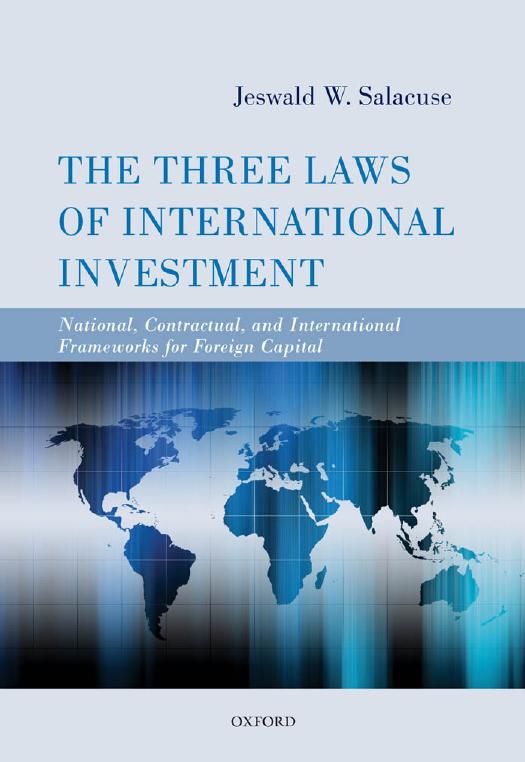
The Three Laws of International Investment 1st edition by Jeswald Salacuse – Ebook PDF Instant Download/Delivery: 0198727372, 978-0198727378
Full download The Three Laws of International Investment 1st edition after payment
Product details:
ISBN 10: 0198727372
ISBN 13: 978-0198727378
Author: Jeswald Salacuse
International investments are governed by three different legal frameworks: 1) national laws of both the host country and the investor’s home country; 2) contracts, whether between the investor and the host country or among investors and their associates; and 3) international law, consisting of applicable treaties, customs, and general principles of law. Together, these three frameworks profoundly influence the organization, operation, and protection of foreign investments. Investors, government officials, and their legal counsel must therefore understand the complex interaction among these frameworks and how best to employ them to advance their interests.
This book examines the content of each of these three legal frameworks for international investment and explores how they influence the foreign investment process and the nature of investment transactions, projects, and enterprises. The book is divided into five parts. Part I, after explaining the contemporary nature and significance of international investment, examines the theoretical and practical links between law and the investment process. Part II explores the nature of national laws regulating foreign investment. Part III considers of the various contractual frameworks for international investments, looking at their negotiation, content, and stability. Part IV sets out the international legal framework governing foreign investment, focusing on the content and nature of investment treaties and on general principles. Finally, Part V discusses how the three legal frameworks interact with each other. By comprehensively examining each of the applicable legal frameworks, this book provides a vital overview of the laws, rules, and regulations governing foreign investment for lawyers, scholars, students, and government officials.
The Three Laws of International Investment 1st Table of contents:
Part I: International Investment and The Law
1. The Nature and Significance of International Investment
1.1 The Meaning of Investment
1.2 The Forms of Investment
1.3 The Nature of International Investors
1.4 Investors and the Role of Return and Risk
1.5 The Nature of International Investment
1.6 Forms of International Investment
1.7 State and Investor Interests Shaping the Laws of International Investment
1.8 Investment and Trade: What’s the Difference?
2. The Relationship between Law and International Investment
2.1 Introduction
2.2 Law Enhances or Diminishes the Predictability of Investment Transactions
2.3 Law Increases or Reduces Associated Transaction Costs
2.4 Law is an Instrument to Direct, Control, and Encourage International Capital Flows
2.5 Law Defines and Regulates Investment Rights, Responsibilities, and Relationships
2.6 Law is a Means to Resolve Investment Disputes
3. Three Legal Frameworks for International Investment: National, Contractual, and International
3.1 The Investment Frameworks in General
3.2 The National Legal Framework
3.3 The Contractual Framework
3.4 The International Legal Framework
3.5 The Interrelationships of the Three Legal Frameworks
Part II: The National Legal Framework
4. Factors Shaping National Legal Frameworks for International Investment
4.1 Introduction
4.2 Four Dominant Attitudes toward International Investment
4.3 National Economic Systems and Development Models
5. National Regulation of the Exit and Entry of Capital
5.1 Introduction
5.2 The Authority of States to Regulate International Capital Movements
5.3 Regulation of Capital Outflows
5.4 Regulation of Capital Inflows
6. National Regulation of Foreign Investment
6.1 National Foreign Investment Policy and Law
6.2 Regulation of Foreign Direct Investment
6.3 The Definition of Permitted Investments
6.4 Incentives and Guarantees Offered to Foreign Investment
6.5 Controls over Foreign Investment Operations
6.6 Administration of Direct Foreign Investment Regulations
6.7 Host Government Investment Approvals
6.8 Privatization of State Assets as a Means to Encourage Foreign Equity Investment
6.9 National Regulation of Foreign Portfolio Equity Investment
6.10 National Regulation of International Debt Investments
6.11 Debt-to-Equity Conversions
7. The Challenges of Legal Change
7.1 The Nature of Legal Change
7.2 The Forces for Legal Change
7.3 Investor Strategies for Coping with the Risk of Legal Change
Part III: The Contractual Legal Framework
8. The Nature and Functions of the Contractual Framework for Investments
8.1 In General
8.2 Investment Contracts as Legal Instruments
8.3 The Economic and Social Functions of Investment Contracts
9. The Negotiation of International Investment Contracts
9.1 The Role of Negotiation in the Investment Process
9.2 The Nature of the Negotiation Process
9.3 Barriers to Negotiating an International Investment
9.4 The Barrier of the Negotiating Environment
9.5 The Barrier of Foreign Laws and Governments
9.6 The Barrier of Ideological Differences
9.7 The Barrier of Foreign Organizations and Bureaucracies
9.8 The Barrier of Multiple Currencies
9.9 The Barrier of Political Instability and Sudden Change
9.10 The Barrier of Cultural Differences
9.11 Negotiating Investment Contracts with Foreign Governments
9.12 Negotiating Long-Term Investment Contracts
10. The Nature and Content of International Investment Contracts
10.1 Introduction
10.2 Wholly Owned Foreign Direct Investments
10.3 International Joint Ventures
10.4 International Joint Venture Contracts
10.5 The Content of International Joint Venture Agreements
10.6 International Investment in Infrastructure
10.7 A Case Study of Infrastructure Investment: The Dabhol Power Company in India
10.8 International Loan Contracts
11. Political Risk Insurance
11.1 Political Risk
11.2 Political Risk Insurance
11.3 National Governmental Programs
11.4 The United States Overseas Private Investment Corporation (OPIC)
11.5 Multilateral Political Risk Insurance Programs
11.6 The Multilateral Investment Guarantee Agency (MIGA)
11.7 Private Sources of Political Risk Insurance
12. Contractual Stability, Instability, and Renegotiation
12.1 The Challenge of Contractual Stability
12.2 Defining Renegotiation
12.3 Post-Contract Renegotiations
12.4 Intra-Contract Renegotiations
12.5 Extra-Contract Renegotiation
12.6 A Case of Extra-Contract Renegotiation: The Dabhol Power Project in India
12.7 Conclusion
Part IV: The International Legal Framework
13. The Foundations of the International Legal Framework for Investment
13.1 In General
13.2 International Conventions
13.3 International Custom
13.4 General Principles of Law
13.5 Customary International Law and General Principles of Law Governing Investment
13.6 Customary International Law Concerning Expropriation and Breach of State Contracts
13.7 Challenges to the Capital-Exporting States’ Position on International Investment Law
13.8 Perceived Deficiencies of International Investment Law
14. The Treatification of International Investment Law
14.1 Introduction
14.2 Historical Background of the Treatification Process
14.3 The Objectives of the Movement to Negotiate Investment Treaties
14.4 The Primary Objectives of Investment Treaties
14.5 Secondary Objectives of Investment Treaties
14.6 Long-Term Goals of Investment Treaties
14.7 The Treaty Negotiation Process
14.8 Conclusion
15. The Nature and Content of Investment Treaties
15.1 Introduction
15.2 Treaty Structure
15.3 Treaty Title and Statement of Purpose
15.4 Definitions and Scope of Application of Investment Treaties
15.5 Investment Promotion, Admission, and Establishment
15.6 General Standards of Treatment of Foreign Investment
15.7 Monetary Transfers
15.8 Expropriation and Dispossession
15.9 Operational and Other Conditions
15.10 Losses from Armed Conflict or Internal Disorder
15.11 The Consequences of Treaty Violations
15.12 Dispute Settlement
15.13 Treaty Exceptions, Amendments, and Terminations
15.14 Conclusion
Part V: Conclusion
16. The Interaction of the Three Legal Frameworks
16.1 In General
16.2 The National Law–Contractual Framework Interaction
16.3 The National Law–International Law Interaction
16.4 The Contractual Framework–International Law Interaction
People also search for The Three Laws of International Investment 1st :
what are the principles of international law. explain
what is the main law of the country
the three primary sources of international law are
the three laws of inertia
the three laws of ai