


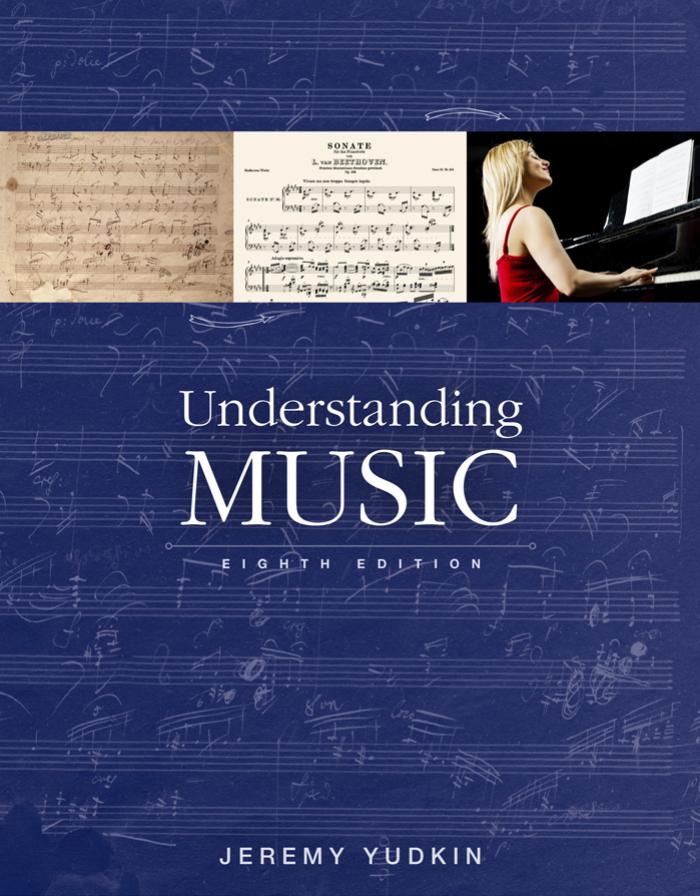
Understanding Music 8th Edition by Jeremy Yudkin – Ebook PDF Instant Download/Delivery: 0133792455 , 978-0133792454
Full download Understanding Music 8th edition after payment
Product details:
ISBN 10: 0133792455
ISBN 13: 978-0133792454
Author: Jeremy Yudkin
For courses in Music Appreciation
Build Listening Skills Through Music Appreciation
Understanding Music teaches readers to listen to music with depth, understanding, and knowledge. Using music as a tool to exercise listening skills, the Eighth Edition integrates lively text, clear listening guides, and hands-on videos and web activities to convey the importance of listening. Through exploring and understanding different music from all around the world, Understanding Music teaches readers how to appreciate music concepts and styles, as well as gain important listening skills they can exercise in all areas of life.
Understanding Music, Eighth Edition is also available via REVEL™, an immersive learning experience designed for the way today’s students read, think, and learn.
Understanding Music 8th Table of contents:
1 Music Around the World
Introduction to the Study of Music
Need to Know
Music as a Reflection of Society
The United States: A Test Case
Need to Know
World Music: A View from a Satellite
Need to Know
What to Listen for in World Music
Need to Know Types of Musical Instruments
Listening to Music from Around the World
Japanese Shakuhachi Music
Listening Guide Listening Sketch for Shakuhachi Music “A Bell Ringing in the Empty Sky”
Music and Islam
Listening Guide Listening Sketch for A Turkish Call to Prayer
African Drumming and Mbira Music
Listening Guide Listening Sketch for Mbira Music “A Place Full of Energy”
2 The Elements of Music
What Is Music?
The Elements of Music
Melody
Pitch
Note Names
Intervals
Dynamics
Listening Guide George Frideric Handel (1685–1759) From Water Music
Rhythm
Tempo
Listening Guide George Frideric Handel (1685–1759) From Water Music
Harmony
Listening Guide George Frideric Handel (1685–1759) From Water Music
Completing the Picture
Musical Form
Jazz and Rock Forms
Sound
Making Music
Making Music: Voices
Making Music: Instruments
The Orchestra
Strings
Woodwinds
Brass Instruments
Percussion Instruments
Keyboard Instruments
Musical Performance
Rehearsal
Attending a Concert
Emotion in Music and Live Performances
Historical Periods and Individual Style
Listening Guide George Frideric Handel (1685–1759) From Water Music
3 The Art of Listening
Need to Know Three Types of Listening
Sound, Rhythm, and Dynamics
Listening Guide Aaron Copland (1900–1990) Fanfare for the Common Man
Words, “Blue Notes,” Rhythm, Swing, Improvisation
Listening Guide Duke Ellington (1899–1974) “It Don’t Mean a Thing (If It Ain’t Got That Swin
Form, Tempo, Meter, Keys, and Cadences
Listening Guide Wolfgang Amadeus Mozart (1756–1791) Minuet and Trio from Symphony No. 18 in F Majo
Need to Know
Keys and Cadences
4 The Middle Ages: 400–1400
General Characteristics of Medieval Music
Medieval Technology
Need to Know
The Music of the Middle Ages
I: Plainchant
Listening Guide Kyrie (Plainchant)
Need to Know Plainchaint Characteristics
II: Secular Song and Polyphony
Listening Guide Beatriz de Dia (Late Twelfth Century) Song, “A Chantar”
Performance of Medieval Music
Listening Guide Perotinus (ca. 1170–ca. 1236) Viderunt Omnes (four-voice polyphony for the Cathedr
Performance in Context An Icon of Paris
Listening Guide Guillaume de Machaut (ca. 1300–1377) Secular song (rondeau), Doulz Viaire Gracieus
The End of the Middle Ages
Composers, Patrons, and Audiences The Medieval Audience
5 The Renaissance: 1400–1600
Life and Times in the Renaissance
Need to Know Three Major Changes in the Renaissance
Renaissance Music
General Characteristics of Renaissance Music
Music in the Early Renaissance
The Renaissance Mass
The Mid-Renaissance
Josquin Desprez (ca. 1440–1521)
Listening Guide Thomas Aquinas (1225–1274) Plainchant hymn, Pange Lingua
Listening Guide Josquin Desprez (ca. 1440–1521) Kyrie from Pange Lingua Mass
The Late Renaissance
Composers, Patrons, and Audiences Patronage
The Counter-Reformation and the Music of Palestrina
The Renaissance Motet
The Renaissance Secular Song
Listening Guide Giovanni Pierluigi da Palestrina (ca. 1525–1594) Motet, Exsultate Deo
The Madrigal
Musical Borrowing
Listening Guide Thomas Morley (1557–1602) Two English Madrigals
The Rise of Instrumental Music
Performance in Context St. Mark’s in Venice: The Church of Gold
Listening Guide Giovanni Gabrieli (ca. 1555–1612) Canzona Duodecimi Toni
The Importance of Dancing
Listening Guide Tielman Susato (fl. 1543–1570) Ronde and Saltarello
6 The Baroque Era: 1600–1750
Life in the Baroque Era
Performance in Context Versailles
Need to Know New Developments of the Baroque
General Characteristics of Baroque Music
Composers, Patrons, and Audiences Audiences in the Baroque Era
The Early Baroque (1600–1700)
Monteverdi and the First Great Opera
Listening Guide Claudio Monteverdi (1567–1643) Orfeo’s recitative, Eurydice’s recitative, chor
Opera in the Seventeenth Century
An Argument Over the Future of Music
Henry Purcell and English Opera
Listening Guide Henry Purcell (1659–1695) Dido’s lament from the opera Dido and Aeneas
Sonata and Concerto
French Music
The Late Baroque (1700–1750)
Late Baroque Opera
The Late Baroque Concerto
Antonio Vivaldi (1678–1741)
Listening Guide Antonio Vivaldi (1678–1741) First Movement from Violin Concerto, Op. 8, No. 1, La
Johann Sebastian Bach (1685–1750)
Need to Know
Musical Borrowings
Listening Guide Johann Sebastian Bach (1685–1750) St. Matthew Passion (excerpt)
George Frideric Handel (1685–1759)
A Musical Offering
Castratos
Listening Guide George Frideric Handel (1685–1759) “Halleluyah” Chorus from Messiah
7 The Classic Era: 1750–1800
From Absolutism to Enlightenment to Revolution
Need to Know The Enlightenment
The Musical Public
Performance in Context A Provincial Theater
General Characteristics of Classic Music
Need to Know Three Characteristics of Classic Music
Genres of Classic Music
Convention in Classic Music
Forms of Classic Music
Summary
The Early Classic Period
The Classic Masters
Franz Joseph Haydn (1732–1809)
Composers, Patrons, and Audiences The Classic Orchestra
Haydn’s Music
Haydn’s Contract
Listening Guide Franz Joseph Haydn (1732–1809) Minuet and Trio from Symphony No. 45
Listening Guide Franz Joseph Haydn (1732–1809) Fourth Movement from String Quartet, Op. 33, ♭ No
Wolfgang Amadeus Mozart (1756–1791)
Leopold Mozart
The Boy Genius
Composers, Patrons, and Audiences Composers and Patrons in the Classic Era
Mozart’s Music
Musical Forgeries
Listening Guide Wolfgang Amadeus Mozart (1756–1791) First Movement from Symphony No. 40 in G Minor
8 Beethoven
Beethoven’s Life
Beethoven’s Early Life
Need to Know Beethoven Timeline
The Heroic Phase
Beethoven’s Personality
Personal Crisis and Halt to Productivity
Late Years
Beethoven’s Work Habits
Beethoven’s Music
Music Critics
Listening Examples
Performance in Context The Theatre on the River Wien
Listening Guide Ludwig Van Beethoven (1770–1827) Six Easy Variations on a Swiss Tune in F Major fo
Beethoven’s Piano Playing
Listening Guide Ludwig Van Beethoven (1770–1827) Symphony No. 5 in C Minor
Composers, Patrons, and Audiences Beethoven’s Orchestra
Beethoven’s Late Music
9 The Nineteenth Century I: Early Romantic Music
The Age of Romanticism
Need to Know Key Trends in the Nineteenth Century
The Industrial Revolution
Political, Intellectual, and Social Changes
The New Artistic Spirit
Need to Know Key Themes of Romantic Music
Music for All
The New Sound
The History of the Pianoforte, 1700–1860
Program Music
Massive and Miniature
Favorite Romantic Genres
Favorite Romantic Instruments
The Individual and the Crowd
Women in Nineteenth-Century Music
Romantic Song
Early Romanticism
Franz Schubert (1797–1828)
Schubert’s Music
Listening Guide Franz Schubert (1797–1828) Song, “The Trout” (“Die Forelle”)
Hector Berlioz (1803–1869)
Berlioz’s Music
Performance in Context The Paris Conservatory
Felix Mendelssohn (1809–1847)
Mendelssohn’s Music
Fanny Mendelssohn Hensel (1805–1847)
Listening Guide Fanny Mendelssohn Hensel (1805–1847) “Lied” from Songs Without Words, Op. 8, N
Composers, Patrons, and Audiences Music for the Middle Classes
Fryderyk Chopin (1810–1849)
Chopin’s Music
Listening Guide Fryderyk Chopin (1810–1849) Prelude in E Minor, Op. 28, for Piano
Robert Schumann (1810–1856)
Schumann’s Music
Listening Guide Robert Schumann (1810–1856) “Träumerei” (“Dreaming”), from Kinderszenen,
Clara Schumann (1819–1896)
Clara Schumann
10 The Nineteenth Century II: Mid- to Late-Romantic Music
Mid Romanticism
Need to Know Three Types of Opera: From Grand to Simple
Franz Liszt (1811–1886)
Liszt’s Music
Listening Guide Franz Liszt (1811–1886) Transcendental Étude No. 10 in F Minor
Critical Views of Liszt
Verdi and Wagner
Giuseppe Verdi (1813–1901)
Verdi’s Music
Listening Guide Giuseppe Verdi (1813–1901) Otello (excerpt)
Richard Wagner (1813–1883)
The Ring Cycle
Wagner’s Music
Performance in Context The Home of Wagner Opera
The Bayreuth Festival
The Nationalist Composers
Pyotr Ilyich Tchaikovsky (1840–1893)
Tchaikovsky’s Music
Copyright
Late Romanticism
Johannes Brahms (1833–1897)
Brahms’s Music
Listening Guide Johannes Brahms (1833–1897) Fourth Movement from Symphony No. 4 in E Minor
Giacomo Puccini (1858–1924)
Puccini’s Music
Listening Guide Giacomo Puccini (1858–1924) “One Fine Day” (“Un bel dì”) from Madama Butt
Gustav Mahler (1860–1911)
Alma Mahler
Mahler’s Music
Listening Guide Gustav Mahler (1860–1911) Fourth Movement, “Primeval Light” (“Urlicht”) fr
11 The Twentieth Century and Beyond, Part I: The Classical Scene
An Overview
History and the Arts, 1900–1939
1939–2000
General Characteristics of Twentieth-Century Music
The Replacement of Tonality
Melody
Rhythm
Length
Tone Color and Sound
The Longest Pieces in the World
The Beginnings of Change
Impressionism and Symbolism
Claude Debussy (1862–1918)
Primitivism
Igor Stravinsky (1882–1971)
Listening Guide Igor Stravinsky (1882–1971) The Rite of Spring (Le Sacre du Printemps), Opening Se
Performance in Context An Art-Deco Palace for the Avant-Garde
Stravinsky’s Music
Expressionism
Arnold Schoenberg (1874–1951)
Schoenberg’s Music
Schoenberg and Atonality
Listening Guide Arnold Schoenberg (1874–1951) “Madonna” from Pierrot Lunaire
Listening Guide Arnold Schoenberg (1874–1951) Theme and Sixth Variation from Variations for Orches
Schoenberg’s Students
Alban Berg (1885–1935)
Berg’s Music
Listening Guide Alban Berg (1885–1935) Wozzeck, Act 3, Scene 4
Listening Guide Anton Webern (1883–1945) Third Movement from Five Movements for String Quartet, Op
Other Composers Active Before World War II: Bartók, Shostakovich, Britten, Ives, Copland
Béla Bartók (1881–1945)
Bartók’s Music
Dmitri Shostakovich (1906–1975)
Benjamin Britten (1913–1976)
The American Scene
Charles Ives (1874–1954)
Listening Guide Charles Ives (1874–1954) Second Movement from Three Places in New England (“Putn
Aaron Copland (1900–1990)
Listening Guide Aaron Copland (1900–1990) Fanfare for the Common Man
Building Bridges
George Gershwin (1898–1937)
Leonard Bernstein (1918–1990)
Composers, Patrons, and Audiences Audiences for Music in the Twentieth Century
After the War: Modernism, the Second Stage
Total Serialism
Listening Guide Pierre Boulez (b. 1925) Structures I
The Radical 1960s: New Sounds, Freedom, and Chance
Who Cares If You Listen?
Composers, Patrons, and Audiences The Twentieth-Century Orchestra
Listening Guide John Cage (1912–1992) Sonata III from Sonatas and Interludes for Prepared Piano
Classical Music Today
Postmodernism
ETHEL
Postmodern Music
Fusion
The “Downtown” Scene
Listening Guide Guy Klucevsek (b. 1947) “Dance?” from Wing/Prayer
Inclusion
Listening Guide Pauline Oliveros (b. 1932) Sound Patterns
Listening Guide Olly Wilson (b. 1937) Sometimes (extract)
Listening Guide Kaija Saariaho (b. 1952) Terra Memoria for String Quartet (extract)
Listening Guide John Tavener (1944–2013) Out of Night (Alleluia)
Listening Guide Osvaldo Golijov (b. 1960) “Lúa Descolorida”
Conclusion
12 The Twentieth Century and Beyond, Part II: Jazz, an American Original
Jazz: Four Key Elements
The History of Jazz
Origins
Band Music
Ragtime
Listening Guide Scott Joplin (1868–1917) “Maple Leaf Rag,” for piano solo
The Blues
Listening Guide Bessie Smith (1894–1937) “Florida-Bound Blues”
New Orleans Jazz
Listening Guide Louis Armstrong (1901–1971) “Hotter Than That”
Swing
Performance in Context The “Home of Happy Feet”
Listening Guide Duke Ellington (1899–1974) “It Don’t Mean a Thing (If It Ain’t Got That Swin
Bebop
Listening Guide The Charlie Parker Quartet “Confirmation”
Cool Jazz
Free Jazz
Jazz and Classical
Fusion
Back to the Future
The Current Scene
13 The Twentieth Century and Beyond, Part III: Popular Music in the United States
Styles of Popular Music
Beginnings: 1850–1950
Composers, Patrons, and Audiences Patronage and Commercialization
Listening Guide “Blue Moon” Music by Richard Rodgers, words by Lorenz Hart
Copyright and Royalties for Popular Music
The Fortunate Fifties
Rock and Roll: The Beginnings
Listening Guide Chuck Berry “Johnny B. Goode” words and music by Chuck Berry
Elvis Presley
Rebellion
Listening Guide Elvis Presley “Blue Suede Shoes” words and music by Carl Perkins
Early Rock and Roll: Structure and Style
Early Rock and Roll: Black and White
The Turbulent Sixties
John F. Kennedy’s Inaugural Address (Extracts)
The Beatles
Performance in Context From the Concert Hall to the Stadium
Listening Guide The Beatles “It Won’t Be Long” words and music by John Lennon and Paul McCartn
Listening Guide The Beatles “Strawberry Fields Forever” words and music by John Lennon and Paul
Bob Dylan
Jimi Hendrix
Other Trends in the Sixties
The Stratocaster
The 1970s and 1980s: Variety, Legacy, and Change
Listening Guide Michael Jackson “Billie Jean” words and music by Michael Jackson
Listening Guide Madonna “Material Girl” words and music by Peter Brown and Robert Rans
Censorship in Popular Music
The Nineties and Beyond
Genres in Popular Music Today
Scratching, Sampling, Looping, and Auto-Tune
Rap Sheet
People also search for Understanding Music 8th:
understanding music keys
jeremy yudkin understanding music
understanding music theory guitar
understanding music time signatures
understanding music scales
Tags: Jeremy Yudkin, Understanding Music