


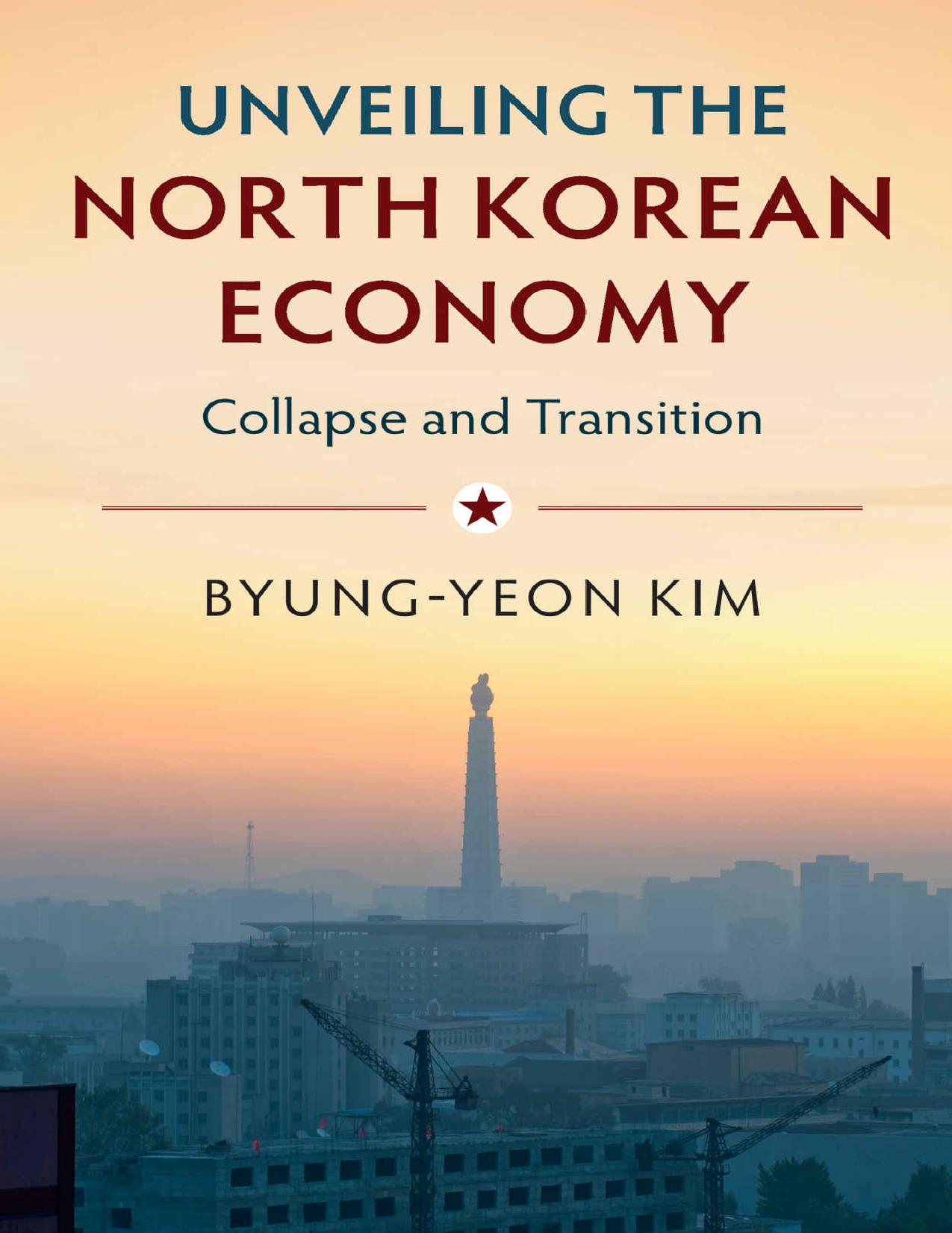
Unveiling the North Korean Economy 1st edition by Byung Yeon Kim – Ebook PDF Instant Download/Delivery: 1316635163, 978-1316635162
Full download Unveiling the North Korean Economy 1st edition after payment
Product details:
ISBN 10: 1316635163
ISBN 13: 978-1316635162
Author: Byung Yeon Kim
North Korea is one of the most closed and secretive societies in the world. Despite a high level of interest from the outside world, we have very little detailed information about how the country functions economically. In this valuable book for both the academic and policy-making circles, Byung-Yeon Kim offers the most comprehensive and systematic analysis of the present day North Korean economy in the context of economic systems and transition economics. It addresses what is really happening in the North Korean economy, why it has previously failed, and how the country can make the transition to a market economy. It takes advantage not only of carefully reconstructed macro data but also rich, new data at the micro level, such as quantitative surveys of North Korean refugees settled in South Korea, and the surveys of Chinese companies that interact heavily with North Korea.
Unveiling the North Korean Economy 1st Table of contents:
Introduction
1 An Evaluation of the Socialist Economy
1.1 Economic Systems
1.2 The Performance of the Socialist Economy
1.2.a Growth Performance
1.2.b Inefficiencies
1.2.c Balance: Shortage of Consumer Goods
1.2.d Conflicts between Institutions and Behaviour of Economic Agents
1.3 Households in Socialist Economies
1.3.a Informal Economic Activities
1.3.b Shortage and the Labour Supply
1.4 Firms in Socialist Economies
1.4.a Firms under Asymmetric Information
1.4.b Firms in the Shortage Model
1.4.c Government Responses
1.5 Sustainability and Collapse of the Socialist Economy
1.5.a Causes of Collapse
1965 Economic Reform
Coordination Failure
Informalisation
Quantity of Corruption
Quality of Corruption
Forced Surrender
1.5.b Reforms and the Collapse of a Socialist System
Notes
2 The North Korean Economy
2.1 The North Korean Socialist Economic System
2.1.a Brief Economic History
Establishment of a Socialist Economic System in the Democratic People’s Republic of Korea up to 1953
Mass Mobilisation and Daean Management System, 1953–1983
Attempts to Change Economic Management, 1984–1990
Arduous March, Forced Economic Changes and Struggle to Survive since 1990
2.1.b The North Korean Economic System
Juche Ideology and Pseudo-Central Planning System Combined with Mass Mobilisation
Juseok Fond and Spot Guidance
Partial Marketisation and External Liberalisation
2.2 Performance of the North Korean Socialist Economic System
2.2.a Long-Term Growth Performance of the North Korean Economy
2.2.b Extent of Economic Inefficiency
Appendix: Estimates of North Korean GDP and Growth Rates
2.3 Households: Surviving in Informal Markets
2.3.a Introduction
2.3.b North Korean Refugees in South Korea
2.3.c Participation of North Koreans in Official and Informal Economy
2.3.d Income of North Koreans
2.3.e Channels for Obtaining Food and Consumer Goods
2.3.f Conclusion
Appendix: Consumer Prices in North Korea
2.4 Firms: Surviving with Markets and Foreign Trade
2.4.a Decentralisation in the Enterprise Sector
2.4.b Firms and Informal Markets
2.4.c Firms and Foreign Trade
2.4.d Firms and External Relations: Firm-Level Investigation
Surveys and Data Description
Determinants of Firm Performance
Perceptions of Businesspersons of the North Korean Economy
2.4.e Conclusion
Appendix: North Korean Foreign Trade
2.5 Regime Stability in North Korea: Corruption and Markets
2.5.a Introduction
2.5.b Policies toward Markets
2.5.c Analysis and Hypotheses
2.5.d Empirical Evidence
2.5.e Effects of Markets and Corruption on the Stability of the Regime
2.5.f Conclusion
Notes
3 Transition of the North Korean Economy
3.1 An Overview of the Transition Experience
3.1.a Transition Strategy, Policies and Institutions in Eastern Europe
Transition Strategy: Big-Bang versus Gradualism
Stabilisation
Liberalisation
Privatisation and New Entry of Firms
Sequencing
Institutional Development
3.1.b Chinese Transition: Experimentation and Dual-Track Approach
Aims of Reform and Initial Conditions
Reform Strategies: Experimentation and Dual-Track Approach
Reform Policies
Partial Liberalisation and Co-ordination Failure
Lessons from the Chinese Transition
3.2 Macroeconomic Stabilisation and Liberalisation
3.2.a Price Liberalisation
Initial Conditions in North Korea
Applications to North Korea
3.2.b Trade Liberalisation
Initial Conditions in North Korea
Applications to North Korea
3.2.c Exchange Rate Regime
Initial Conditions in North Korea
Applications to North Korea
3.2.d Establishment of Monetary and Fiscal Policy
Initial Conditions in North Korea
Applications to North Korea
3.3 Privatisation and New Entry of Firms
3.3.a Privatisation
Initial Conditions in North Korea
Applications to North Korea
3.3.b Creation of New Enterprises
Initial Conditions in North Korea
Applications to North Korea
3.4 Economic Integration with South Korea
3.4.a Experiences of Integration and Unification
3.4.b Integration Scenario
3.4.c Economic Policies for Radical Unification
3.4.d Economic Policies for Gradual Unification
A Chinese-Style Scenario
Temporary Separation Scenario
3.4.e Unification Costs and Benefits
Notes
Conclusion
References
Index
People also search for Unveiling the North Korean Economy 1st :
unveiling the north korean economy pdf
unveiling the north korean economy collapse and transition pdf
byung-eun kim
byung yeon
lee byung-hun news
Tags: Byung Yeon Kim, North Korean