


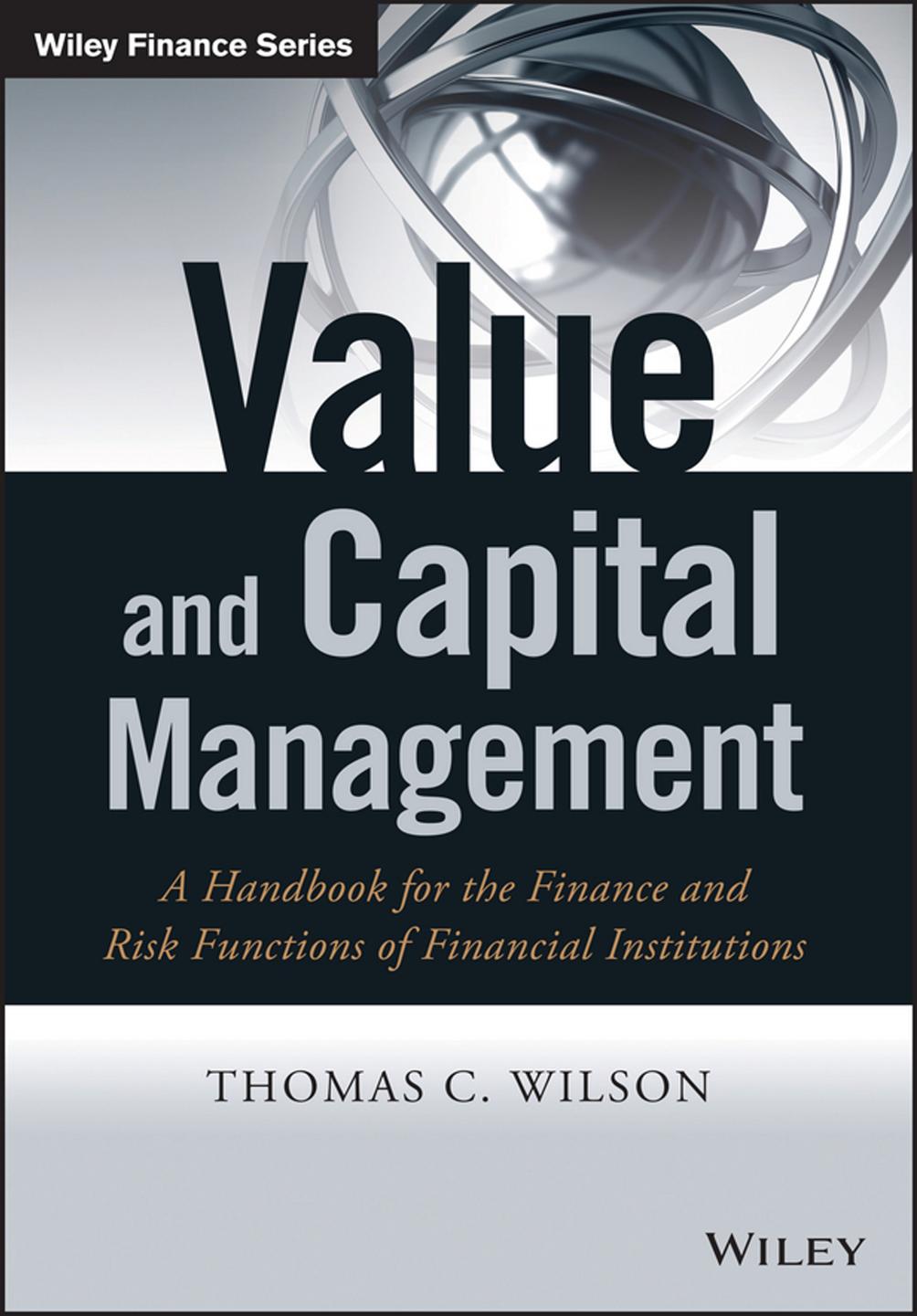
Value and capital management a handbook for the finance and risk functions of financial institutions 1st edition by Thomas Wilson ISBN 1118774639 978-1118774632
Original price was: $70.00.$35.00Current price is: $35.00.
Instant download Value and capital management a handbook for the finance and risk functions of financial institutions after payment
Value and capital management a handbook for the finance and risk functions of financial institutions 1st edition by Thomas Wilson – Ebook PDF Instant Download/Delivery: 1118774639, 978-1118774632
Full download Value and capital management a handbook for the finance and risk functions of financial institutions 1st edition after payment
Product details:
ISBN 10: 1118774639
ISBN 13: 978-1118774632
Author: Thomas Wilson
A value management framework designed specifically for banking and insurance
The Value Management Handbook is a comprehensive, practical reference written specifically for bank and insurance valuation and value management. Spelling out how the finance and risk functions add value in their respective spheres, this book presents a framework for measuring – and more importantly, influencing – the value of the firm from the position of the CFO and CRO. Case studies illustrating value-enhancing initiatives are designed to help Heads of Strategy offer CEOs concrete ideas toward creating more value, and discussion of “hard” and “soft” skills put CFOs and CROs in a position to better influence strategy and operations. The challenge of financial services valuation is addressed in terms of the roles of risk and capital, and business-specific “value trees” demonstrate the source of successful value enhancement initiatives.
Value and capital management a handbook for the finance and risk functions of financial institutions 1st Table of contents:
Part One: Introduction
Chapter 1: Why is Value Management Important?
Better Information
Better Insights
Better Decisions
Why Shareholder Value?
Chapter 2: How do CFOs and CROs Add Value?
The Evolution of the Corporate Center as “Shareholder Surrogate”
The Implications for the CFO
The Implications For The CRO
Part Two: Better Information – Measuring Value
Chapter 3: RAPMs – The Industry Standard
What Makes Financial Services Unique?
What Do RAPMs Do And How?
The RAPM (R)Evolution
Three RAPMs For Three Distinct Purposes…
…Linking Directly To Shareholder Value
Insurance Example
Banking Example
Chapter 4: Two Challenges in Using RAPMs
Do RAPMs Influence Strategy?
Do RAPMs Give The Right Signals?
Chapter 5: Valuing Financial Services – The Theory
What Determines Share Value? Market Multiples, Roe And Growth…
…But What Determines Market Multiples?
Why A Market-Consistent Approach?
Value: Where It Comes From and How to Create More of It
Chapter 6: Valuing Financial Services – The Evidence
Evidence From The Insurance Industry1
Evidence From Banking
Is It Just Me Or are Others Thinking the Same Thing?
Chapter 7: Market-Consistent Valuation for Insurers
Introduction to Fair Valuation For Insurers
Calculating Traditional Embedded Value
European Embedded Value
Market Consistent Embedded Value (Mcev)
How is MCEV Calculated in Practice?
From MCEV to MVBS
Final Comments: Whither MCEV?
Part Three: Better Insights – Managing Value
Chapter 8: Property and Casualty Insurance
History And Economic Rationale1
From Principles to Rules of the Game
From Rules to the Valuation of PC Businesses
PC KPIs: Understanding And Managing Value
Chapter 9: Life and Health Insurance
History and Economic Rationale
From Principles to “Rules of the Game”
LH Valuation
Understanding Value Creation: Capital Intensity and Financial Risk Taking
Chapter 10: Banking
History1
Products
Economic Rationale
From Principles To “Rules Of The Game”
From “Rules” To Value
Chapter 11: Achieving Profitable Growth
Rules of the Game and KPIs
Management Actions – Three Horizons of Growth
Horizon 1 – Increasing Sales Productivity
Horizon 1 – Going Multi-Channel
Horizon 1 – Getting More out of Existing Customers; Cross Sell, Big Data and Customer Loyalty
Horizon 1 – Managing the Customer Portfolio Skew
Horizon 2 – Anticipating Mega-trends
Horizon 2 – Exploiting Adjacencies
Horizon 2 – Transformational and Bolt-On Acquisitions
Horizon 3 – Creative Disruptions
Chapter 12: Achieving Operating Efficiency
The Importance of Operating Efficiency
Rules of the Game
Pay Less: Optimize Procurement
Pay less: From Business Process Redesign to Outsourcing
Use Less, But More Effectively: Digitize and Automate
Use Less, But More Effectively: Re-Engineer the Product Portfolio
Case Example
Use Less, But More Effectively: Managing Acquisition Expenses
Part Four: Better Decisions – Capital, Balance Sheet and Risk Management
Chapter 13: Corporate Strategy and Capital Allocation
Corporate Strategy, Capital Allocation and Performance Management
Capital Allocation: The Capital Budget, From Sources to Uses of Capital
Capital Allocation: Optimizing the Corporate Portfolio
Capital Allocation: Aligning Financial Resources within Constraints
Chapter 14: Strategic Planning and Performance Management
What is Strategic Planning?
Why Does Strategic Planning Fail and What can be Done About It?
Corporate Strategy
Chapter 15: Balance Sheet Management
Balance Sheet Management Activities
The Asset/Liability Committee (ALCO) Mandate and Agenda
The Asset/Liability Management (ALM) Unit
Two Complications to the “Classic” ALM Unit
The Insurer ALM–Investment Value Chain
The Treasury Function
Chapter 16: The Economics of Asset/Liability Management
The Role of ALM Earnings
The Risks: Some Spectacular ALM Failures
The Returns: Are Shareholders Willing to Pay a Premium or a Discount?
Chapter 17: The Practical Aspects of Asset/Liability Management
ALM Performance and Risk Measures
Calculating Funds Transfer Prices (FTPs)
Measuring Alpha
Chapter 18: Cash and Liquidity Management
Managing Funding Liquidity Risk
What Happens If It Goes Wrong?
Measuring Funding Liquidity Risk
Chapter 19: Managing the Capital and Funding Structure
Capital Funding Management
Determining The Optimal Capital Structure
The Empirical Reality: What Determines Capital Structure?
Chapter 20: Risk Management
Enterprise Risk Management
Taking The Right Decisions
The Role Of Culture
Chapter 21: Risk Governance and Organization
Risk Governance Principles
Role of the Board and Management
Three-Line-of-Defense Model
The Risk Function
Chapter 22: Risk Identification and Evaluation
From Risk Identification to Evaluation
Data-Driven Approaches
Evaluation-Based Approaches
Building a Resilient Organization
Chapter 23: Risk Underwriting – Strategy and Governance
Underwriting Context
Underwriting Strategy
Underwriting Governance
Chapter 24: Risk Underwriting – Technical Tools
Retail Segment: “Scoring” Models
Commercial Lines: Leveraging Expert Judgment
Underwriting Structured Solutions
Underwriting Controls, Validation and Learning
Chapter 25: Risk Underwriting – From Technical Pricing to Value Maximization
Technical Production Cost: RAPM Pricing
From Technical Pricing to Optimal Price
Chapter 26: Managing Operational and Reputational Risks
Defining Operational Risk
Managing Operational Risk
Chapter 27: Risk and Limit Controlling
Risk Reporting
An Effective Risk Limit Framework
Final Thoughts on Risk and Limit Reporting
People also search for Value and capital management a handbook for the finance and risk functions of financial institutions 1st :
valuation handbook guide to cost of capital
asset management handbook pdf
value and capital
investment management handbook
capital handbook
Tags: Thomas Wilson, capital management, the finance, risk functions