


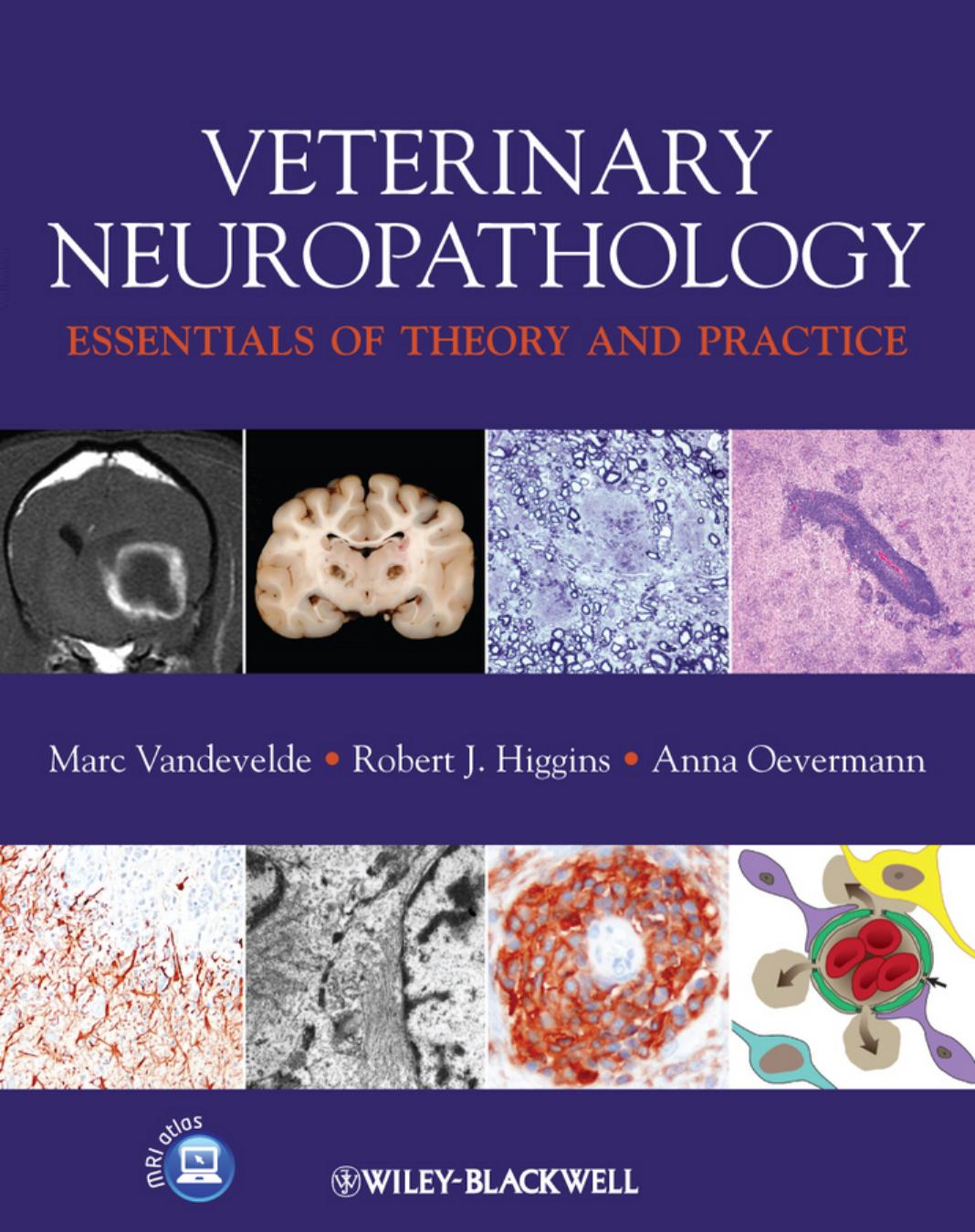
Veterinary Neuropathology Essentials of Theory and Practice 1st edition by Marc Vandevelde, Robert Higgins, Anna Oevermann ISBN 1118349496 978-1118349496
Original price was: $70.00.$35.00Current price is: $35.00.
Instant download Veterinary Neuropathology Essentials of Theory and Practice after payment
Veterinary Neuropathology Essentials of Theory and Practice 1st edition by Marc Vandevelde, Robert Higgins, Anna Oevermann – Ebook PDF Instant Download/Delivery: 1118349496, 978-1118349496
Full download Veterinary Neuropathology Essentials of Theory and Practice 1st edition after payment
Product details:
ISBN 10: 1118349496
ISBN 13: 978-1118349496
Author: Marc Vandevelde, Robert Higgins, Anna Oevermann
Introducing the theoretical and practical basics of veterinary neuropathology, this concise and well illustrated book is an essential basic diagnostic guide for pathologists, neurologists and diagnostic imaging specialists. It presents readers with strategies to deal with neuropathological problems, showing how to interpret gross and histological lesions using a systematic approach based on pattern recognition.
It starts with an overview of the general principles of neuroanatomy, neuropathological techniques, basic tissue reaction patterns, and recognition of major lesion patterns. The book goes on to cover vascular diseases, inflammatory diseases, trauma, congenital malformations, metabolic-toxic diseases, neoplasia and degenerative diseases mainly of the central nervous system. In the respective chapters pathologists can quickly find information to support their daily diagnostic workup for both small and large domestic species. Based on the authors’ extensive diagnostic and post graduate teaching experience as well as the inclusion of MRI as it relates to neuropathology, this book also offers a comprehensive but basic analysis of veterinary neuropathology that neurologists and other MRI users will find very useful.
- An essential manual for daily diagnostic work
- Richly illustrated with high quality colour gross, histological and MRI images
- Includes a section on the function and use of MRI (by Johann Lang, DECVDI)
Veterinary Neuropathology Essentials of Theory and Practice 1st Table of contents:
1: General neuropathology
1.1 Principles of neuroanatomy for diagnostic neuropathologists
1.1.1 Anatomical orientation by using the ventricular system
1.1.2 Major anatomical regions of interest
1.1.3 Histological neuroanatomy
1.2 Neuropathological techniques
1.2.1 Necropsy techniques
1.2.2 Brain sectioning, macroscopic inspection and sampling for histology
1.3 Basic tissue reaction patterns
1.3.1 Reactions of neurons to injury
1.3.2 Oligodendrocytes
1.3.3 Astrocytes
1.3.4 Microglia/macrophages
1.3.5 CSF spaces
1.3.6 Blood vessels
1.3.7 Disturbance of water balance: edema
1.3.8 Artifacts, postmortem degeneration, pseudolesions and old age
1.4 Recognizing major lesion patterns
1.4.1 The major lesion patterns
1.4.2 Lesion distribution pattern
1.4.3 Classification of neurological diseases
1.4.4 General strategy
1.5 Neuropathology in the clinics: magnetic resonance imaging (MRI)
1.5.1 Basic MRI physics
1.5.2 Principles of interpretation
2: Vascular disorders
2.1 Pathophysiology of ischemia
2.2 General strategy for diagnosing vascular lesions
2.3 Common vascular lesions
2.3.1 Vascular lesions of the brain
2.3.2 Vascular lesions of the spinal cord
2.3.3 Ischemia in the peripheral nervous system and muscles
3: Inflammatory diseases
3.1 Pathophysiology of inflammation
3.1.1 Entry and effect of infectious agents in the nervous system
3.1.2 Immune reaction of the host against the infectious agent in the CNS
3.1.3 Morphological aspects of the immune response
3.2 General strategy for diagnosis of inflammatory lesions
3.2.1 Recognizing major inflammatory reaction patterns
3.2.2 Determining the distribution pattern of the lesions
3.2.3 Specific features
3.3 Common CNS infections
3.3.1 Neurotropic viral infections
3.3.2 Viral granulomatous inflammation
3.3.3 Viral vasculitis
3.3.4 Viral leukoencephalitis
3.3.5 Bacterial infections
3.3.6 Mycotic and algal infections
3.3.7 Protozoal infections
3.3.8 Helminth infections
3.4 Non-infectious and immune-mediated inflammatory lesions
3.4.1 Definition
3.4.2 Neurological diseases assumed to be immune-mediated
4: Trauma
4.1 Pathophysiology of CNS trauma
4.1.1 Pathogenesis of brain trauma
4.1.2 Pathogenesis of spinal cord trauma
4.2 General strategy for diagnosis of traumatic CNS lesions
4.3 Traumatic nervous system diseases
4.3.1 Trauma of the brain
4.3.2 Traumatic spinal cord lesions
4.3.3 Trauma in the peripheral nervous system
5: Congenital malformations
5.1 Pathophysiology
5.1.1 Ontogeny of the CNS
5.1.2 Etiology
5.2 General strategy for diagnosing anomalies of the CNS
5.3 Common malformations
5.3.1 Neural tube closure defects
5.3.2 Defects of forebrain induction
5.3.3 Neuronal migration disorders and sulcation defects
5.3.4 Disorders of proliferation or size
5.3.5 Encephaloclastic defects
5.3.6 Malformations in the caudal fossa and spinal cord
5.3.7 Congenital hydrocephalus and other anomalies of CSF pathways
6: Metabolic–toxic diseases
6.1 General strategy for diagnosis of metabolic–toxic lesions
6.1.1 The major patterns
6.1.2 Further differential diagnosis
6.2 Encephalomalacias/myelomalacias
6.2.1 Polioencephalomalacia (PE) or cerebrocortical necrosis (CCN)
6.2.2 Polioencephalomalacia of subcortical structures and brainstem
6.2.3 Poliomyelomalacia
6.2.4 Leukoencephalomalacias
6.2.5 Encephalomalacias involving both gray and white matter
6.3 Acquired metabolic–toxic selective lesions
6.3.1 Neuronal degeneration
6.3.2 Axonal degeneration
6.3.3 Myelin degeneration
6.4 Spongy degeneration
6.5 Metabolic–toxic lesions of the peripheral nervous system (PNS) and skeletal muscle
6.5.1 Metabolic–toxic neuropathies
6.5.2 Metabolic–toxic myopathies
7: Neoplasia
7.1 General strategy for diagnosis of neoplastic lesions
7.1.1 Clinic and diagnostic imaging
7.1.2 Interpretation of gross findings
7.1.3 Diagnosis
7.1.4 Grading
7.2 Tumors of neuroepithelial origin
7.2.1 Astrocytomas
7.2.2 Oligodendroglioma
7.2.3 Mixed gliomas (oligoastrocytomas)
7.2.4 Ependymoma
7.2.5 Choroid plexus tumors (papillomas and carcinomas)
7.2.6 Neuronal and mixed neuronal–glial tumors
7.2.7 Embryonal tumors
7.3 Tumors of cranial and spinal nerves
7.3.1 Benign PNST
7.3.2 Malignant peripheral nerve sheath tumors (MPNST)
7.4 Tumors of the meninges
7.4.1 Meningioma
7.4.2 Granular cell tumor
7.4.3 Mesenchymal tumors
7.5 Lymphomas and hematopoietic tumors
7.5.1 Primary T and B cell lymphomas
7.5.2 Intravascular lymphoma
7.5.3 Metastatic lymphoma
7.5.4 Primary CNS histiocytic sarcoma
7.6 Germ cell tumors
7.6.1 Germinoma
7.6.2 Teratoma
7.7 Embryonal tumors of non-neuroepithelial origin
7.7.1 Thoracolumbar spinal cord tumor (ectopic nephroblastoma)
7.8 Secondary or metastatic tumors
8: Degenerative diseases
8.1 General strategy for differential diagnosis of degenerative lesions
8.1.1 Recognizing the major patterns
8.1.2 Further analysis
8.1.3 Diagnosis
8.2 Degeneration of neurons
8.2.1 General aspects
8.2.2 Motor neuron diseases
8.2.3 Cerebellar degenerations
8.2.4 Other neuronal degenerations
8.3 Axonal degenerations
8.3.1 Wallerian-like degenerative axonopathies
8.3.2 Axonopathies with prominent axonal swelling
8.4 Myelin disorders
8.4.1 Leukodystrophies
8.4.2 Myelin dysgenesis
8.5 Storage diseases
8.5.1 Lysosomal storage diseases
8.5.2 Neuronal ceroid lipofucsinoses (NCL)
8.5.3 Lafora’s disease
8.5.4 Acquired lysosomal storage diseases
8.6 Spongiform encephalopathies
8.6.1 Transmissible degenerative diseases
8.6.2 Neuropathology of TSE
8.6.3 TSEs in domestic animals
8.7 Spongy degenerations
8.7.1 Definition and general morphological features
8.7.2 Spongy degeneration in branched-chain organic acidurias
8.7.3 Spongy degenerations of other causes
8.8 Selective symmetrical encephalomalacias (SSE)
8.8.1 General morphological features
8.8.2 Mitochondrial encephalopathies in people and similar lesions in animals
8.9 Degenerative diseases of the peripheral nervous system and muscle
8.9.1 Degenerative polyneuropathies
8.9.2 Degenerative myopathies
People also search for Veterinary Neuropathology Essentials of Theory and Practice 1st :
veterinary neuropathology essentials of theory and practice pdf
veterinary technician national exam requirements
veterinary neuropathology
veterinary neuro exam
veterinary neurological exam form
Tags: Marc Vandevelde, Robert Higgins, Anna Oevermann, Veterinary Neuropathology