


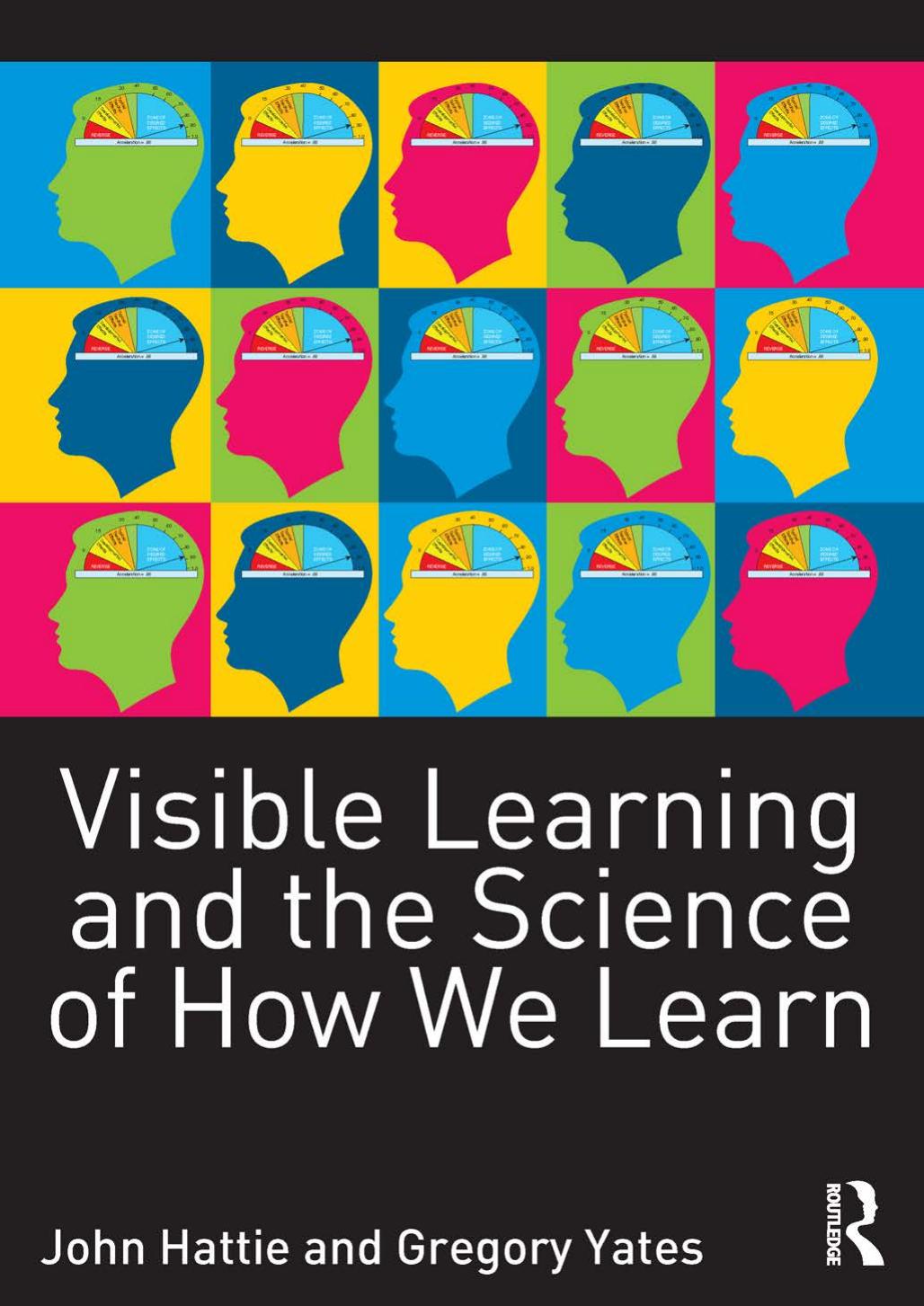
Visible Learning and the Science of How We Learn 1st edition by John Hattie, Gregory Yates – Ebook PDF Instant Download/Delivery: 0415704995 , 978-0415704991
Full download Visible Learning and the Science of How We Learn 1st edition after payment
Product details:
ISBN 10: 0415704995
ISBN 13: 978-0415704991
Author: John Hattie, Gregory Yates
On publication in 2009 John Hattie’s Visible Learning presented the biggest ever collection of research into what actually work in schools to improve children’s learning. Not what was fashionable, not what political and educational vested interests wanted to champion, but what actually produced the best results in terms of improving learning and educational outcomes. It became an instant bestseller and was described by the TES as revealing education’s ‘holy grail’.
Now in this latest book, John Hattie has joined forces with cognitive psychologist Greg Yates to build on the original data and legacy of the Visible Learning project, showing how it’s underlying ideas and the cutting edge of cognitive science can form a powerful and complimentary framework for shaping learning in the classroom and beyond.
Visible Learning and the Science of How We Learn explains the major principles and strategies of learning, outlining why it can be so hard sometimes, and yet easy on other occasions. Aimed at teachers and students, it is written in an accessible and engaging style and can be read cover to cover, or used on a chapter-by-chapter basis for essay writing or staff development.
The bookis structured in three parts – ‘learning within classrooms’, ‘learning foundations’, which explains the cognitive building blocks of knowledge acquisition and ‘know thyself’ which explores, confidence and self-knowledge. It also features extensive interactive appendices containing study guide questions to encourage critical thinking, annotated bibliographic entries with recommendations for further reading, links to relevant websites and YouTube clips.
Visible Learning and the Science of How We Learn 1st Table of contents:
Part 1 Learning within classrooms
1 Why don’t students like learning at school? The Willingham thesis
2 Is knowledge an obstacle to teaching?
3 The teacher-student relationship
4 Your personality as teacher: can your students trust you?
5 Time as a global indicator of classroom learning
6 The recitation method and the nature of classroom learning
7 Teaching for automaticity in basic academic skill
8 The role of feedback
9 Acquiring complex skills through social modelling and explicit teaching
10 Just what does expertise look like?
11 Just how does expertise develop?
12 Expertise in the domain of classroom teaching
Part 2 Learning foundations
13 How knowledge is acquired
14 How knowledge is stored in the mind
15 Does learning need to be conscious, and what is the hidden role played by gesture?
16 The impact of cognitive load
17 Your memory and how it develops
18 Mnemonics as sport, art, and instructional tools
19 Analysing your students’ style of learning
20 Multitasking: a widely held fallacy
21 Your students are digital natives. Or are they?
22 Is the Internet turning us into shallow thinkers?
23 How music impacts on learning
Part 3 Know thyself
24 Confidence and its three hidden levels
25 Self-enhancement and the dumb-and-dumber effect
26 Achieving self-control
27 Neuroscience of the smile: a fundamental tool in teaching
28 The surprising advantages of being a social chameleon
29 Invisible gorillas, inattentional blindness, and paying attention
30 Thinking fast and thinking slow: your debt to the inner robot
31 IKEA, effort, and valuing
People also search for Visible Learning and the Science of How We Learn 1st :
visible learning and the science of how we learn routledge
visible learning.org
visible learning science
the visible learning research
visible learning and the science of how we learn
Tags: John Hattie, Gregory Yates, Visible Learning, the Science