


Visualization Analysis and Design 1st Edition by Munzner Tamara – Ebook PDF Instant Download/Delivery: 9781466508910, 1466508910
Full download Visualization Analysis and Design 1st Edition after payment
Product details:
ISBN 10:1466508910
ISBN 13: 9781466508910
Author: Munzner Tamara
Learn How to Design Effective Visualization Systems
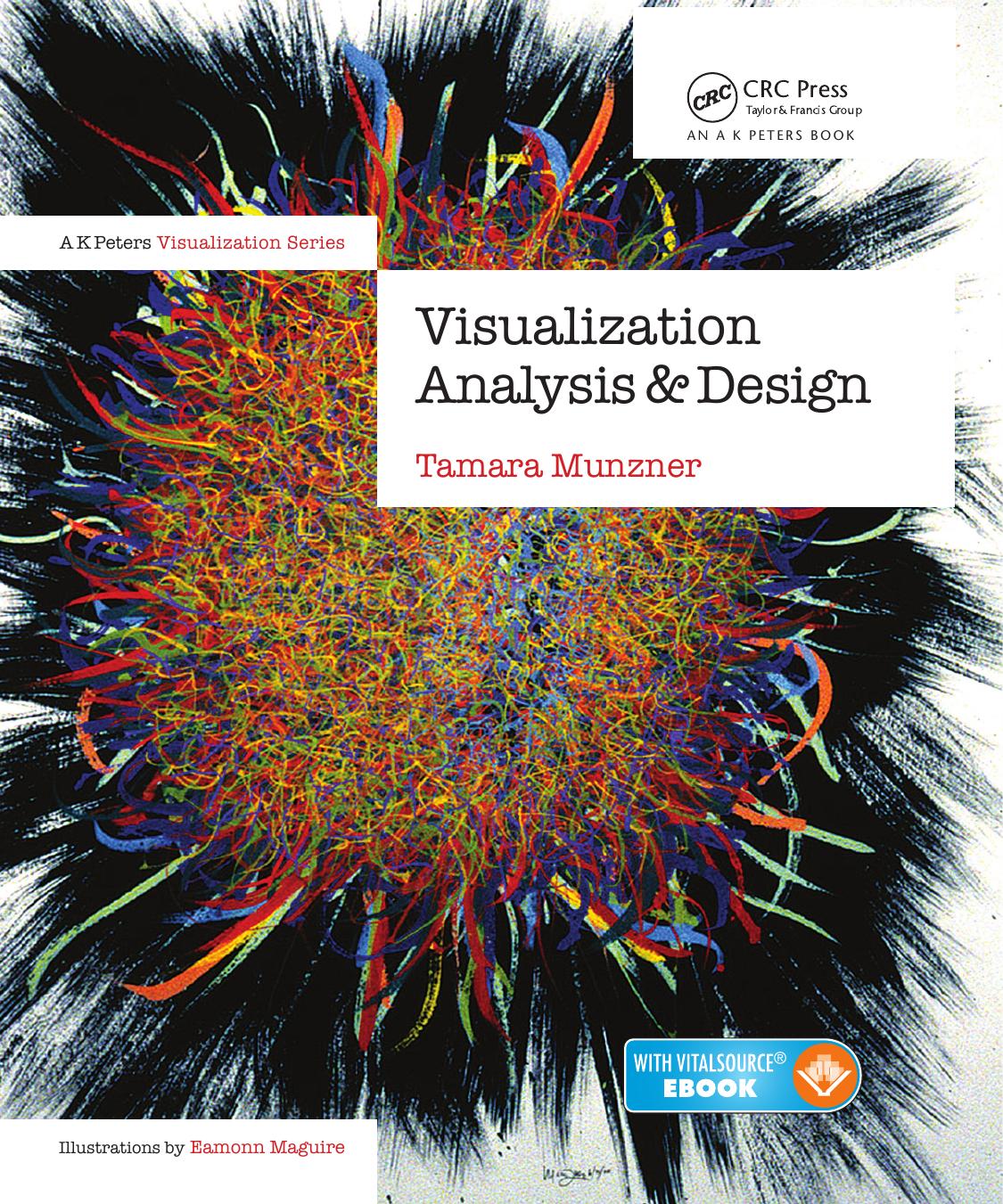
Visualization Analysis and Design provides a systematic, comprehensive framework for thinking about visualization in terms of principles and design choices. The book features a unified approach encompassing information visualization techniques for abstract data, scientific visualization techniques for spatial data, and visual analytics techniques for interweaving data transformation and analysis with interactive visual exploration. It emphasizes the careful validation of effectiveness and the consideration of function before form.
The book breaks down visualization design according to three questions: what data users need to see, why users need to carry out their tasks, and how the visual representations proposed can be constructed and manipulated. It walks readers through the use of space and color to visually encode data in a view, the trade-offs between changing a single view and using multiple linked views, and the ways to reduce the amount of data shown in each view. The book concludes with six case studies analyzed in detail with the full framework.
The book is suitable for a broad set of readers, from beginners to more experienced visualization designers. It does not assume any previous experience in programming, mathematics, human–computer interaction, or graphic design and can be used in an introductory visualization course at the graduate or undergraduate level.
Table of contents:
1. What: Vis and Why Do It?
-
The Big Picture
-
Why Have a Human in the Loop?
-
Why Have a Computer in the Loop?
-
Why Use an External Representation?
-
Why Depend on Vision?
-
Why Show the Data in Detail?
-
Why Use Interactivity?
-
Why Is the Vis Idiom Design Space Huge?
-
Why Focus on Tasks?
-
Why Focus on Effectiveness?
-
Why Are Most Designs Ineffective?
-
Why Is Validation Difficult?
-
Why Are There Resource Limitations?
-
Why Analyze?
2. What: Data Abstraction
-
The Big Picture
-
Why Do Data Semantics and Types Matter?
-
Data Types
-
Dataset Types
-
Attribute Types
-
Semantics
3. Why: Task Abstraction
-
The Big Picture
-
Why Analyze Tasks Abstractly?
-
Who: Designer or User
-
Actions
-
Targets
-
How: A Preview
-
Analyzing and Deriving: Examples
4. Analysis: Four Levels for Validation
-
The Big Picture
-
Why Validate?
-
Four Levels of Design
-
Angles of Attack
-
Threats and Validation Approaches
-
Validation Examples
5. Marks and Channels
-
The Big Picture
-
Why Marks and Channels?
-
Defining Marks and Channels
-
Using Marks and Channels
-
Channel Effectiveness
-
Relative vs. Absolute Judgments
6. Rules of Thumb
-
The Big Picture
-
Why and When to Follow Rules of Thumb?
-
No Unjustified 3D
-
No Unjustified 2D
-
Eyes Beat Memory
-
Resolution over Immersion
-
Overview First, Zoom and Filter, Details on Demand
-
Responsiveness Is Required
-
Get It Right in Black and White
-
Function First, Form Next
7. Arrange Tables
-
The Big Picture
-
Why Arrange?
-
Classifying Arrangements by Keys and Values
-
Express: Quantitative Values
-
Separate, Order, and Align: Categorical Regions
-
Spatial Axis Orientation
-
Spatial Layout Density
8. Arrange Spatial Data
-
The Big Picture
-
Why Use Given?
-
Geometry
-
Scalar Fields: 1 Value
-
Vector Fields: Multiple Values
-
Tensor Fields: Many Values
9. Arrange Networks and Trees
-
The Big Picture
-
Connection: Link Marks
-
Matrix Views
-
Costs and Benefits: Connection vs. Matrix
-
Containment: Hierarchy
10. Map Color and Other Channels
-
The Big Picture
-
Color Theory
-
Colormaps
-
Other Channels
11. Manipulate View
-
The Big Picture
-
Why Change?
-
Change View over Time
-
Select Elements
-
Navigate: Changing Viewpoint
-
Navigate: Reducing Attributes
12. Facet into Multiple Views
-
The Big Picture
-
Why Facet?
-
Juxtapose and Coordinate Views
-
Partition into Views
-
Superimpose Layers
13. Reduce Items and Attributes
-
The Big Picture
-
Why Reduce?
-
Filter
-
Aggregate
14. Embed: Focus + Context
-
The Big Picture
-
Why Embed?
-
Elide
-
Superimpose
-
Distort
-
Costs and Benefits: Distortion
15. Analysis Case Studies
-
Graph-Theoretic Scagnostics
-
VisDB
-
Hierarchical Clustering Explorer
-
PivotGraph
-
InterRing
-
Constellation
People also search for:
data visualization analysis
power bi data visualization analysis
munzner visualization analysis and design
basics of data visualization analysis
visualization analysis and design pdf
Tags: Munzner Tamara, v