


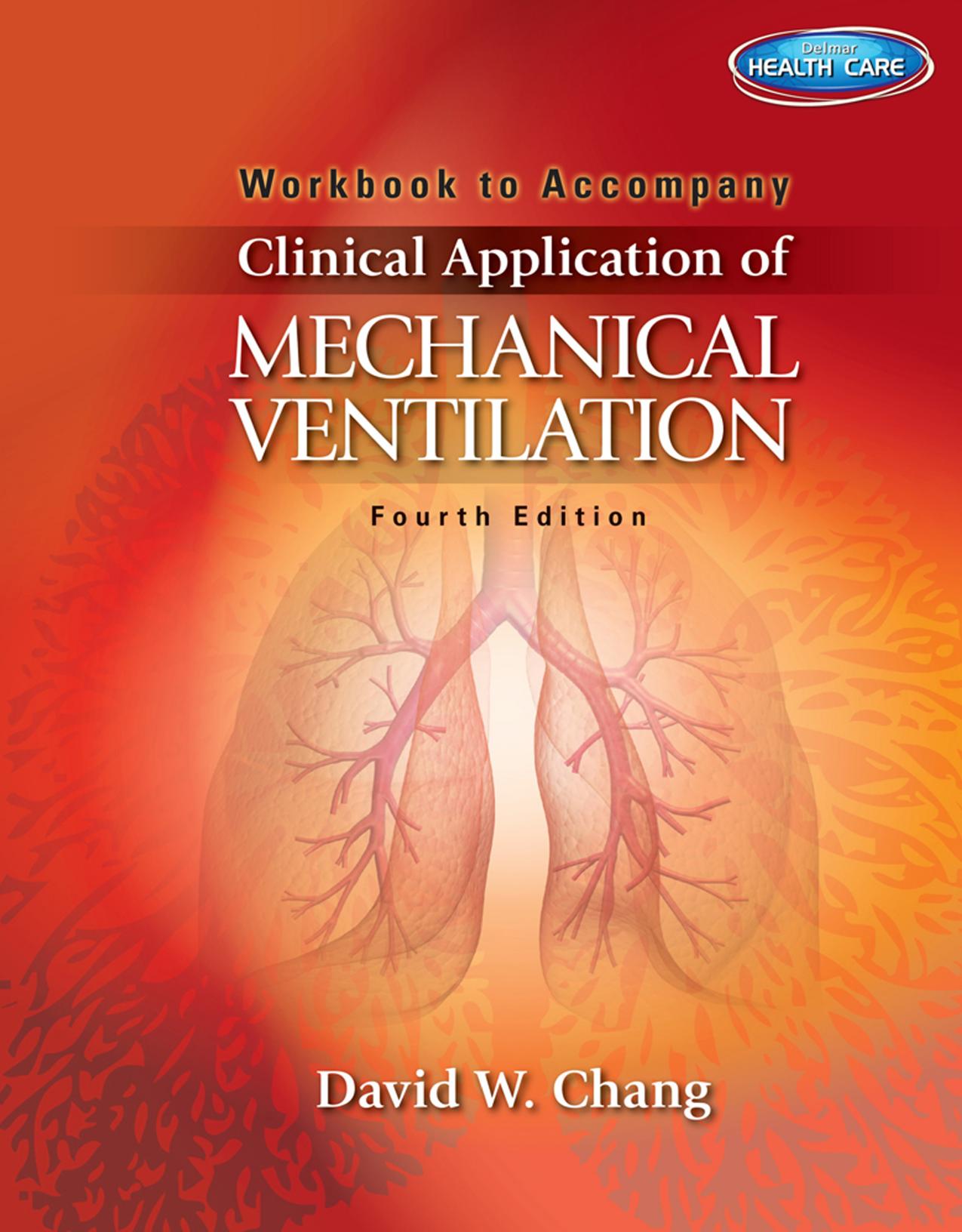
Workbook to Accompany Chang’s Clinical Application of Mechanical Ventilation 4th edition by David Chang ISBN 1111539677 978-1111539672
Original price was: $70.00.$35.00Current price is: $35.00.
Instant download Workbook to Accompany Chang’s Clinical Application of Mechanical Ventilation 4e after payment
Workbook to Accompany Chang’s Clinical Application of Mechanical Ventilation 4th edition by David Chang – Ebook PDF Instant Download/Delivery: 1111539677, 978-1111539672
Full download Workbook to Accompany Chang’s Clinical Application of Mechanical Ventilation 4th edition after payment
Product details:
ISBN 10: 1111539677
ISBN 13: 978-1111539672
Author: David Chang
This Workbook is designed to reinforce the essential concepts presented in Clinical Application of Mechanical Ventilation, and give learners practice with questions written in NRBC format. With a concise and easy-to-read approach, the new edition of this book integrates the essential concepts of respiratory physiology with the clinical application of mechanical ventilation. Extensive coverage of airway management and weaning criteria, and a concise view of pharmacotherapy for mechanical ventilation are included. This edition features new material on special procedures in mechanical ventilation, chest tubes and placement, proportional pressure support, airway management, and ventilator waveform analysis.
Workbook to Accompany Chang’s Clinical Application of Mechanical Ventilation 4th Table of contents:
Acknowledgments
Ch 1: Principles of Mechanical Ventilation
Outline
Key Terms
Learning Objectives
Introduction
Airway Resistance
Lung Compliance
Deadspace Ventilation
Ventilatory Failure
Oxygenation Failure
Clinical Conditions Leading to Mechancial Ventilation
Summary
Self-Assessment Questions
Answers to Self-Assessment Questions
References
Additional Resources
Ch 2: Effects of Positive Pressure Ventilation
Outline
Key Terms
Learning Objectives
Introduction
Pulmonary Considerations
Cardiovascular Considerations
Hemodynamic Considerations
Renal Considerations
Hepatic Considerations
Abdominal Considerations
Gastrointestinal Considerations
Nutritional Considerations
Neurologic Considerations
Summary
Self-Assessment Questions
Answers to Self-Assessment Questions
References
Ch 3: Classification of Mechanical Ventilators
Outline
Key Terms
Learning Objectives
Introduction
Ventilator Classification
Input Power
Drive Mechanism
Control Circuit
Control Variables
Phase Variables
Terminology of Ventilation Modes
Output Waveforms
Alarm Systems
Summary
Self-Assessment Questions
Answers to Self-Assessment Questions
References
Additional Resources
Ch 4: Operating Modes of Mechanical Ventilation
Outline
Key Terms
Learning Objectives
Introduction
Negative and Positive Pressure Ventilation
Operating Modes of Mechanical Ventilation
Closed-Loop System
Spontaneous
Positive End-Expiratory Pressure (PEEP)
Continuous Positive Airway Pressure (CPAP)
Bilevel Positive Airway Pressure (BiPAP)
Controlled Mandatory Ventilation (CMV)
Assist/Control (AC)
Intermittent Mandatory Ventilation (IMV)
Synchronized Intermittent Mandatory Ventilation (SIMV)
Mandatory Minute Ventilation (MMV)
Pressure Support Ventilation (PSV)
Adaptive Support Ventilation (ASV)
Proportional Assist Ventilation (PAV)
Volume-Assured Pressure Support (VAPS)
Pressure-Regulated Volume Control (PRVC)
Adaptive Pressure Control (APC)
Volume Ventilation Plus (VV+)
Pressure-Controlled Ventilation (PCV)
Airway Pressure Release Ventilation (APRV)
Biphasic Positive Airway Pressure (Biphasic PAP)
Inverse Ratio Ventilation (IRV)
Automatic Tube Compensation (ATC)
Neurally Adjusted Ventilatory Assist (NAVA)
High-Frequency Oscillatory Ventilation (HFOV)
Summary
Self-Assessment Questions
Answers to Self-Assessment Questions
References
Additional Resources
Ch 5: Special Airways For Ventilation
Outline
Key Terms
Learning Objectives
Introduction
Oropharyngeal Airway
Nasopharyngeal Airway
Esophageal Obturator Airway (EOA)
Esophageal Gastric Tube Airway (EGTA)
Laryngeal Mask Airway (IMA)
Esophageal-Tracheal Combitube (ETC)
Double-Lumen Endobronchial Tube (DLT)
Summary
Self-Assessment Questions
Answers to Self-Assessment Questions
References
Additional Resources
Ch 6: Airway Management in Mechanical Ventilation
Outline
Key Terms
Learning Objectives
Introduction
Intubation
Common Artificial Airways in Mechanical Ventilation
Intubation Procedure
Rapid Sequence Intubation
Management of Endotracheal and Tracheostomy Tubes
Speaking Valves
Extubation
Complications of Endotracheal Airway
Summary
Self-Assessment Questions
Answers to Self-Assessment Questions
References
Additional Resources
Ch 7: Noninvasive Positive Pressure Ventilation
Outline
Key Terms
Learning Objectives
Introduction
Terminology
Physiologic Effects of NPPV
Use of Continuous Positive Airway Pressure (CPAP)
Use of Bilevel Positive Airway Pressure (Bilevel PAP)
Common Interfaces for CPAP and Bilevel PAP
Potential Problems with Interfaces
Titration of Continuous Positive Airway Pressure
Titration of Bilevel Positive Airway Pressures
Summary
Self-Assessment Questions
Answers to Self-Assessment Questions
References
Additional Resources
Ch 8: Initiation of Mechanical Ventilation
Outline
Key Terms
Learning Objectives
Introduction
Goals of Mechanical Ventilation
Indications
Contraindications
Initial Ventilator Settings
Ventilator Alarm Settings
Hazards and Complications
Summary
Self-Assessment Questions
Answers to Self-Assessment Questions
References
Additional Resources
Ch 9: Monitoring in Mechanical Ventilation
Outline
Key Terms
Learning Objectives
Introduction
Vital Signs
Chest Inspection
Fluid Balance and Anion Gap
Arterial Blood Gases
Oxygen Saturation Monitoring
End-Tidal Carbon Dioxide Monitoring
Transcutaneous Blood Gas Monitoring
Cerebral Perfusion Pressure
Summary
Self-Assessment Questions
Answers to Self-Assessment Questions
References
Ch 10: Hemodynamic Monitoring
Outline
Key Terms
Learning Objectives
Introduction
Invasive Hemodynamic Monitoring
Arterial Catheter
Central Venous Catheter
Pulmonary Artery Catheter
Summary of Preloads and Afterloads
Calculated Hemodynamic Values
Mixed Venous Oxygen Saturation
Less-Invasive Hemodynamic Monitoring
Noninvasive Hemodynamic Monitoring
Impedance Cardiography
Summary
Self-Assessment Questions
Answers to Self-Assessment Questions
References
Ch 11: Ventilator Waveform Analysis
Outline
Key Terms
Learning Objectives
Introduction
Flow Waveforms During Positive Pressure Ventilation
Effects of Constant Flow During Volume-Controlled Ventilation
Spontaneous Ventilation During Mechanical Ventilation
Effects of Flow, Circuit, and Lung Characteristics on Pressure-Time Waveforms
Effects of Descending Ramp Flow Waveform during Volume-Controlled Ventilation
Waveforms Developed during Pressure-Controlled Ventilation
Pressure Support and Spontaneous Ventilation
Effects of Lung Characteristics on Pressure-Controlled Ventilation Waveforms
Using Waveforms for Patient-Ventilator System Assessment
Using Expiratory Flow and Pressure Waveforms as Diagnostic Tools
Troubleshooting Ventilator Function
Pressure-Volume Loop (PVL) and Flow-Volume Loop (FVL)
Summary
Self-Assessment Questions
Answers to Self-Assessment Questions
References
Additional Resources
Ch 12: Management of Mechanical Ventilation
Outline
Key Terms
Learning Objectives
Introduction
Basic Management Strategies
Strategies to Improve Ventilation
Strategies to Improve Oxygenation
Arterial Blood Gases
Troubleshooting of Common Ventilator Alarms and Events
Care of the Ventilator Circuit
Care of the Artificial Airway
Fluid Balance
Electrolyte Balance
Nutrition
Adjunctive Management Strategies
Summary
Self-Assessment Questions
Answers to Self-Assessment Questions
References
Additional Resources
Ch 13: Pharmacotherapy for Mechanical Ventilation
Outline
Key Terms
Learning Objectives
Introduction
Drugs for Improving Ventilation
Delivery of MDI Medications
Neuromuscular Blocking Agents
Central Nervous System Agents
Other Agents Used in Mechanical Ventilation
Summary
Self-Assessment Questions
Answers to Self-Assessment Questions
References
Additional Resources
Ch 14: Procedures Related to Mechanical Ventilation
Outline
Key Terms
Learning Objectives
Introduction
Chest Tube and Drainage System
Assisting in Fiberoptic Bronchoscopy
Transport of Mechanically Ventilated Patients
Summary
Self-Assessment Questions
Answers to Self-Assessment Questions
References
Additional Resources
Ch 15: Critical Care Issues in Mechanical Ventilation
Outline
Key Terms
Learning Objectives
Introduction
Acute Lung Injury and Acute Respiratory Distress Syndrome
Ventilator-Associated Pneumonia (VAP)
Hypoxic-Ischemic Encephalopathy (HIE)
Trauma Brain Injury
Summary
Self-Assessment Questions
Answers to Self-Assessment Questions
References
Ch 16: Weaning from Mechanical Ventilation
Outline
Key Terms
Learning Objectives
Introduction
Definition of Weaning Success and Failure
Patient Condition Prior to Weaning
Weaning Criteria
Rapid Shallow Breathing Index (RSBI)
Weaning Procedure
Weaning Protocol
Signs of Weaning Failure
Causes of Weaning Failure
Terminal Weaning
Summary
Self-Assessment Questions
Answers to Self-Assessment Questions
References
Additional Resources
Ch 17: Neonatal Mechanical Ventilation
Outline
Key Terms
Learning Objectives
Introduction
Intubation
Surfactant Replacement Therapy
Nasal CPAP
Basic Principles of Neonatal Ventilation
Initiation of Neonatal Ventilatory Support
High Frequency Ventilation (HFV)
Other Methods of Ventilation
Extracorporeal Membrane Oxygenation (ECMO)
Summary
Self-Assessment Questions
Answers to Self-Assessment Questions
References
Additional Resources
Ch 18: Mechanical Ventilation in Nontraditional Settings
Outline
Key Terms
Learning Objectives
Introduction
Mechanical Ventilation at Home
Mechanical Ventilation in Mass Casualty Incidents
Mechanical Ventilation in Hyperbaric Condition
Mechanical Ventilation in Hypobaric Condition
Traveling with Portable Ventilators
Summary
Self-Assessment Questions
Answers to Self-Assessment Questions
References
Additional Resources
Ch 19: Case Studies
Case 1: COPD
Case 2: Status Asthmaticus
Case 3: Post-Abdominal Surgery
Case 4: Head Injury
Case 5: Smoke Inhalation
Case 6: Drug Overdose
Case 7: Tension Hemopneumothorax
Case 8: Chest Trauma
Case 9: Acute Respiratory Distress Syndrome
Case 10: Myasthenia Gravis
Case 11: Guillain-Barré
Case 12: Botulism
Case 13: Meconium Aspiration/Patent Ductus Arteriosus
Case 14: Persistent Pulmonary Hypertension of the Newborn
Case 15: Home Care and Disease Management
Case 16: End-of-Life Sedation on Mechanical Ventilation
Appendices
Appendix 1: Respiratory Care Calculations
Appendix 2: Normal Electrolyte Concentrations in Plasma
Appendix 3: Oxygen Transport Normal Ranges
Appendix 4: Hemodynamic Normal Ranges
Appendix 5: Glasgow Coma Score
Appendix 6: Apache II Severity of Disease Classification System
Glossary
Index
People also search for Workbook to Accompany Chang’s Clinical Application of Mechanical Ventilation 4th :
change workbook pdf
workbook to accompany understanding anatomy and physiology
change company
workbook to accompany anatomy & physiology revealed 4.0
a change to a patient’s account
Tags: David Chang, Accompany Chang’s, Mechanical Ventilation