


The Writing Strategies Book 1st edition by Jennifer Serravallo – Ebook PDF Instant Download/Delivery: 032507822X, 978-0325078229
Full download The Writing Strategies Book 1st edition after payment
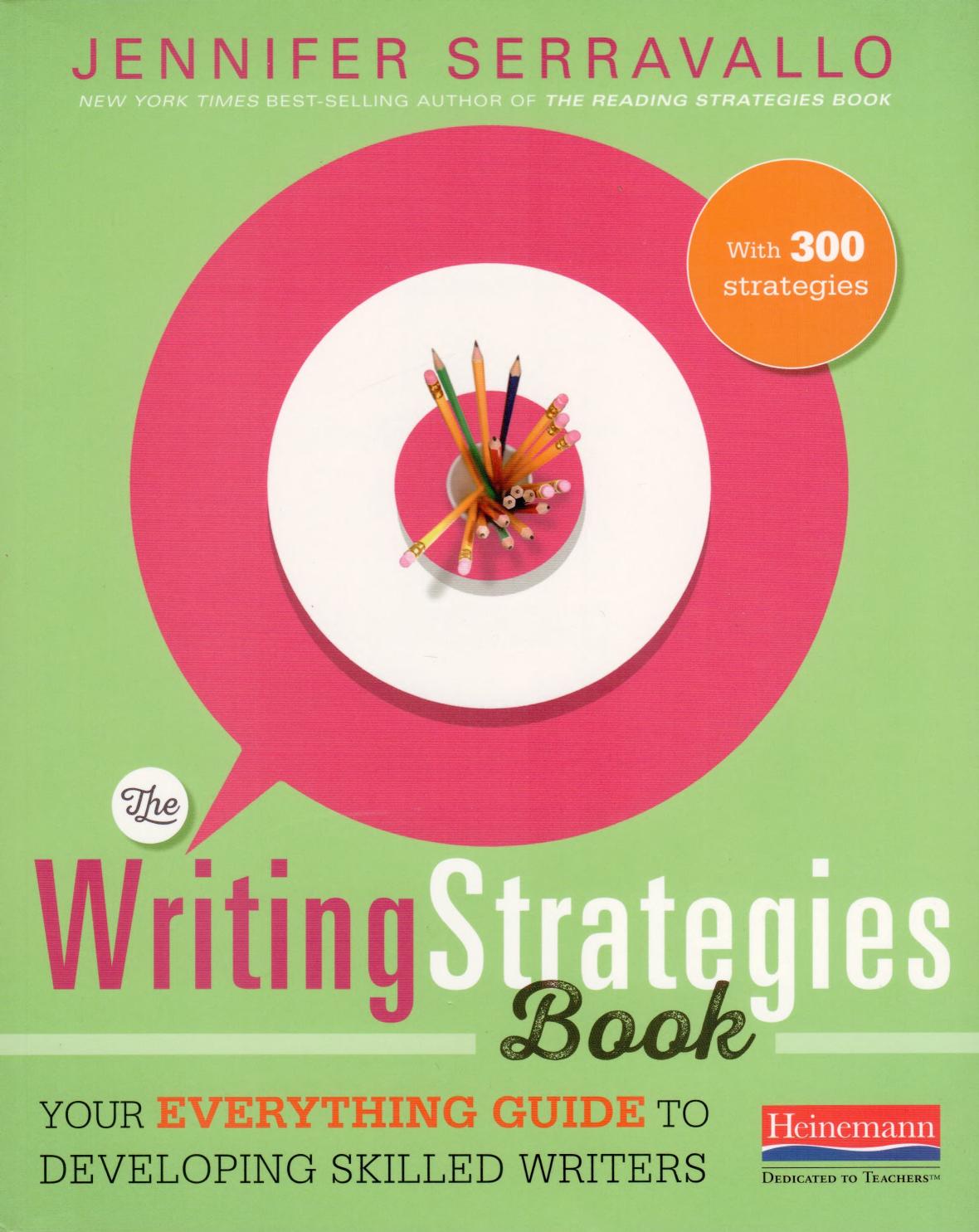
Product details:
ISBN 10: 032507822X
ISBN 13: 978-0325078229
Author: Jennifer Serravallo
The Reading Strategies Book made the New York Times Best Seller List by making it simpler to match students’ needs to high-quality instruction. Now, in The Writing Strategies Book, Jen Serravallo does the same, collecting 300 of the most effective strategies to share with writers, and grouping them beneath 10 crucial goals.
“You can think of the goals as the what, “writes Jen, “and the strategies as the how.” From composing with pictures all the way to conventions and beyond, you’ll have just-right teaching, just in time. With Jen’s help you’ll:
- develop individual goals for every writer
- give students step-by-step strategies for writing with skill and craft
- coach writers using prompts aligned to a strategy
- present mentor texts that support a genre and strategy
- adjust instruction to meet individual needs with Jen’s Teaching Tips
- demonstrate and explain a writing move with her Lesson Language
- learn more with Hat Tips to the work of influential teacher–authors.
She even offers suggestions for stocking your writing center, planning units of study, celebrating student writing, and keeping records.
Whether you use Writing Workshop, 6+1 Traits, Daily 5’s “Work on Writing,” a scripted writing program, the writing exercises in your basal, or any other approach, you’ll discover a treasure chest of ways to work with whole classes, small groups, or individual writers.
“I am convinced that helping kids to articulate clear goals for their work,” writes Jen Serravallo, “and supporting them with strategies and feedback to accomplish those goals, makes a huge difference.” With The Writing Strategies Book you can make that kind of difference with your writers every day.
The Writing Strategies Book 1st Table of contents:
Acknowledgments
Getting Started
Goal 1: Composing with Pictures
Strategy 1.1: Talk (as You Draw)
Strategy 1.2: Point Around the Pictures
Strategy 1.3: Reread Your Pictures So It Sounds Like a Storybook
Strategy 1.4: Reread Your Pictures to Teach
Strategy 1.5: Add Detail to Make Pictures Easier to Read
Strategy 1.6: Label Your Pictures
Strategy 1.7: Look Back and Say, “How Can I Make This Clearer?”
Strategy 1.8: Make Your Picture Look Like the Picture in Your Mind
Strategy 1.9: Left to Right
Strategy 1.10: You Can Come Back to a Piece and Do More
Strategy 1.11: Drew the People? Draw the Place!
Strategy 1.12: Writing Across the Pages
Strategy 1.13: A Series of Pictures to Show Change
Strategy 1.14: Circles and Sticks
Strategy 1.15: Drawing with Shapes
Strategy 1.16: Touch, Then Draw
Strategy 1.17: Draw (the Best You Can) and Move On!
Strategy 1.18: Imagine It, Make It!
Goal 2: Engagement: Independence, Increasing Volume, and Developing a Writing Identity
Strategy 2.1: Create Your Best Environment
Strategy 2.2: Picture the End! (Or, Imagine It Done)
Strategy 2.3: Listen. Praise.
Strategy 2.4: Use the Room
Strategy 2.5: Decide a Piece Is “Finished” (for Now)— and Self-Start a New One
Strategy 2.6: Writers Are Problem Solvers
Strategy 2.7: The Pen Is Mightier Than the Sword
Strategy 2.8: Keep Your Pencil in Your Hand/Fingers on the Keyboard
Strategy 2.9: Partners Can Give Gentle Reminders to Stay on Track
Strategy 2.10: Silence the “It’s No Good” Voice
Strategy 2.11: Make a Plan for Writing Time
Strategy 2.12: Reread to Jump Back In
Strategy 2.13: Keep Objects Close
Strategy 2.14: Set a “More” Goal for the Whole Writing Time
Strategy 2.15: Break Up Your Writing Time into Smaller Chunks
Strategy 2.16: Stuck with Writing? Read.
Strategy 2.17: Imagine Your Audience
Strategy 2.18: Keep a Side Project
Strategy 2.19: Consult a Fellow Writer
Strategy 2.20: Experiment with Change
Strategy 2.21: Why Do You Write?
Strategy 2.22: One Bite at a Time
Strategy 2.23: Your Aim: Black on White
Strategy 2.24: Make It a Habit
Strategy 2.25: Live Like Someone Consumed by a Project
Strategy 2.26: Write to Vent, Then Turn to Your Project
Strategy 2.27: Be Realistic
Goal 3: Generating and Collecting Ideas
Strategy 3.1: Important People
Strategy 3.2: Moments with Strong Feelings
Strategy 3.3: Observe Closely
Strategy 3.4: Photo Starts
Strategy 3.5: Mapping the Heart
Strategy 3.6: Reread and Look for Patterns
Strategy 3.7: Writing to Change the World!
Strategy 3.8: Walk Your World
Strategy 3.9: Interview to Dig for and Uncover Topics
Strategy 3.10: Scrapbook Your Life (to Write About It Later)
Strategy 3.11: Mine Mentor Texts for Topics
Strategy 3.12: These Are a Few of My Favorite Things
Strategy 3.13: Start with a Character
Strategy 3.14: Listen for (and Write!) Music
Strategy 3.15: Jot Today, Write Tomorrow
Strategy 3.16: Give Yourself Exercises/Assignments
Strategy 3.17: Get Sparked by Setting
Strategy 3.18: Tour Your Home
Strategy 3.19: Always Times, One Time
Strategy 3.20: Ideas for Other Genres Might Be Hiding (in Plain Sight!)
Strategy 3.21: Borrow a (Spark) Line
Strategy 3.22: Found Poems
Strategy 3.23: Over and Over
Strategy 3.24: Wonder, “What If . . . ?”
Strategy 3.25: Mix and Match Story Elements
Strategy 3.26: Word Mapping
Strategy 3.27: If It Could Go on Facebook, You Can Jot It in a Notebook
Strategy 3.28: Ask Yourself Questions (and Then Answer Them)
Strategy 3.29: Collect Triggers
Strategy 3.30: Subtopics Hiding in Topics
Strategy 3.31: Purposefully Wander
Strategy 3.32: Abstract Issues, Specific Examples
Strategy 3.33: Scan the Newspaper
Strategy 3.34: Read Something on an Unfamiliar Topic
Strategy 3.35: Person vs. Nature
Strategy 3.36: Find Characters and Ideas in the World
Strategy 3.37: Defining Moments
Strategy 3.38: Start with an Outlandish Claim
Goal 4: Focus/Meaning
Strategy 4.1: Make Your Pictures and Your Words Agree
Strategy 4.2: Focus in Time
Strategy 4.3: Find the Heart
Strategy 4.4: Write a Title
Strategy 4.5: Write About a Pebble
Strategy 4.6: Zoom In on a Moment of Importance
Strategy 4.7: Ask Questions to Focus
Strategy 4.8: Find Your Passion to Focus
Strategy 4.9: Imagine Your Audience and Consider Your Purpose
Strategy 4.10: Write a Poem to Try On a Focus
Strategy 4.11: Cut It to the Bone
Strategy 4.12: Underline One Line (That Says the Most)
Strategy 4.13: Their Topic, Your Idea
Strategy 4.14: Use a Search Engine to Find Connections
Strategy 4.15: Focus on an Image
Strategy 4.16: Find a Theme in Your Collection
Strategy 4.17: Craft an “Elevator Speech”
Strategy 4.18: Craft a Thesis
Strategy 4.19: The “So What?” Rule
Strategy 4.20: Write “Off the Page”
Strategy 4.21: Focus on an Issue
Strategy 4.22: What Problem Are You Solving?
Strategy 4.23: Experimental Draft to Find Focus
Strategy 4.24: Let Available Sources Steer Your Focus
Strategy 4.25: Shape Your Focus with Active Verbs
Goal 5: Organization and Structure
Strategy 5.1: Pattern Books
Strategy 5.2: Say Say Say, Sketch Sketch Sketch, Write Write Write
Strategy 5.3: Add a Page, Subtract a Page
Strategy 5.4: Move a Page to a New Place
Strategy 5.5: All About or One Time?
Strategy 5.6: Teaching Texts: How-Tos
Strategy 5.7: Organize in Sequence
Strategy 5.8: Uh-Oh . . . UH-OH . . . Phew
Strategy 5.9: Beef Up the Middle
Strategy 5.10: Question–Answer
Strategy 5.11: End in the Moment
Strategy 5.12: End with Last Words from the Character
Strategy 5.13: Start with a Table of Contents
Strategy 5.14: Parts of a Topic: Features and Characteristics
Strategy 5.15: Parts of a Topic: Kinds
Strategy 5.16: Moving from Chunk to Chunk
Strategy 5.17: Line Breaks
Strategy 5.18: Start with a Plan in Mind
Strategy 5.19: Create Urgency
Strategy 5.20: Nonfiction Leads
Strategy 5.21: Lead by Addressing the Reader
Strategy 5.22: Audiences for Information
Strategy 5.23: Draw Your Layout
Strategy 5.24: Outline, Reoutline, Outline Again
Strategy 5.25: Lay Out Pages to See the Architecture
Strategy 5.26: Take Scissors to Your Draft
Strategy 5.27: Draw Out (Don’t Summarize) to Build Suspense
Strategy 5.28: Repetition/List Structure
Strategy 5.29: Multiscene Storyboarding
Strategy 5.30: Problem–Solution Structure for Persuasive Writing
Strategy 5.31: Moving Quickly (or Slowly) Through Time
Strategy 5.32: Take a Piece, Rework the Genre or Structure Several Times
Strategy 5.33: Headings, Subheadings, Sub-Subheadings
Strategy 5.34: Weigh the Parts of Your Piece
Strategy 5.35: Coming Full Circle
Strategy 5.36: Seesaw Structure
Strategy 5.37: Conclude with the Big Idea
Strategy 5.38: Parallel Story
Strategy 5.39: Write the Bones, Then Go Back to Flesh It Out
Strategy 5.40: Leading with Contrast
Goal 6: Elaboration
Strategy 6.1: Pictures Teach, Words Teach
Strategy 6.2: Add More to Your Pictures (Then, Maybe More to Your Words!)
Strategy 6.3: Speech Bubbles Let Your Characters Talk
Strategy 6.4: Act It Out . . . Then Get It Down
Strategy 6.5: “Nudge” Paper
Strategy 6.6: Teach with Diagrams
Strategy 6.7: See the World Like a Poet (Metaphor and Simile)
Strategy 6.8: Flaps and Carets
Strategy 6.9: “What Else Happened?”
Strategy 6.10: Prove It
Strategy 6.11: Take Notes from an Illustration or a Photo
Strategy 6.12: Cracking Open Nouns
Strategy 6.13: Show, Don’t Tell: Using Senses to Describe Places
Strategy 6.14: Show, Don’t Tell: Emotions
Strategy 6.15: Let Your Readers Know Who’s Talking!
Strategy 6.16: Read Mentor Texts with Two Lenses: Information, Aesthetic
Strategy 6.17: Research from People (Interviews)
Strategy 6.18: Keeping a Research Notebook
Strategy 6.19: Read, Sketch, Stretch
Strategy 6.20: External Character Description
Strategy 6.21: Write the “Inside Story”
Strategy 6.22: Support Your Facts
Strategy 6.23: Partner Facts: Ask Yourself, “How?”
Strategy 6.24: Use a Refrain
Strategy 6.25: Cracking Open Verbs
Strategy 6.26: Exploring Options for Setting
Strategy 6.27: Picture Your Character
Strategy 6.28: Tell What It’s Not (to Say What It Is)
Strategy 6.29: Be Patient, Go Slow
Strategy 6.30: Bring in the Periphery
Strategy 6.31: Use Empathy to Figure Out What to Add
Strategy 6.32: Writing Through a Mask
Strategy 6.33: How Does Your Character Talk?
Strategy 6.34: Character Dialogue and Dialect for Historical Accuracy
Strategy 6.35: Use Imagery to Make a Fact Come Alive
Strategy 6.36: Get the Sound (of Some Mentors) in Your Head
Strategy 6.37: Be Your Own Harshest Critic
Strategy 6.38: Mentor Sentence
Strategy 6.39: Talk to Yourself
Strategy 6.40: Character Gestures to Show Traits
Strategy 6.41: Anecdotes Can Teach and Give Evidence
Strategy 6.42: Rule of Threes
Strategy 6.43: Lie (to Tell the Truth)
Strategy 6.44: Weave in Symbolism
Strategy 6.45: Clue In the Reader to the Past (Flashback)
Goal 7: Word Choice
Strategy 7.1: Onomatopoeia: Sound Effects
Strategy 7.2: Write with Authority: Domain-Specific Vocabulary
Strategy 7.3: Precise Nouns
Strategy 7.4: Bring Objects to Life
Strategy 7.5: Verbs That Match the Meaning
Strategy 7.6: Shades of Meaning
Strategy 7.7: Alphabox
Strategy 7.8: Sneaky Sounds: Alliteration, Consonance, and Assonance
Strategy 7.9: Rhythm
Strategy 7.10: Read Aloud to Find “Clunks”
Strategy 7.11: Words That Match the Audience
Strategy 7.12: Revisit the Language Gems in Your Notebook
Strategy 7.13: Make Your Own Word
Strategy 7.14: Leave Only the Essential Words
Strategy 7.15: Rhyme Time
Strategy 7.16: Clever Titles, Headings, and Subheadings
Strategy 7.17: Hyperbole
Strategy 7.18: Vary Words to Eliminate Repetition
Strategy 7.19: Watch Your Tone
Strategy 7.20: Choose Your Pronouns
Strategy 7.21: Short → Long → Short
Strategy 7.22: Gut Check Each Word
Strategy 7.23: Not “So” “Very” “Nice”
Strategy 7.24: Know When to Keep an Adverb
Strategy 7.25: Work for More-Precise Language (by Taking Out Adjectives and Adverbs)
Strategy 7.26: Rewrite a Line (Again and Again and Again)
Strategy 7.27: Surprising Verbs
Strategy 7.28: Surprising Nouns
Strategy 7.29: Name Your Characters and Places
Strategy 7.30: Specific, Definite, Concrete: Allow Your Words to Call Up Pictures
Strategy 7.31: Omit Needless Words
Goal 8: Conventions: Spelling and Letter Formation
Strategy 8.1: Long or Short Word?
Strategy 8.2: Talk Like a Turtle
Strategy 8.3: Consult the Alphabet Chart
Strategy 8.4: Write, Reread, Write, Reread, Repeat
Strategy 8.5: When’s It Big? When’s It Small?
Strategy 8.6: Penmanship Counts!
Strategy 8.7: Write Words You Know in a Snap!
Strategy 8.8: Vowel Charts for the Middles of Words
Strategy 8.9: Spell as Best You Can—on the First Go
Strategy 8.10: Use Your Resources to Spell
Strategy 8.11: Part-by-Part Spelling
Strategy 8.12: Chin Drops
Strategy 8.13: Visualize the Word and Have a Go
Strategy 8.14: Use Words You Know to Spell Unknown Words
Strategy 8.15: Read Your Writing Backward (and Catch Spelling Mistakes!)
Strategy 8.16: Circle and Spell
Strategy 8.17: Making It Plural (Consonants Plus -s or -es)
Strategy 8.18: Turn to Spell-Check
Strategy 8.19: Check for Homophones
Strategy 8.20: Apostrophes for Contractions
Strategy 8.21: To Apostrophe or Not to Apostrophe? (Possessives)
Strategy 8.22: Making It Plural (While Changing the Base Word)
Goal 9: Conventions: Grammar and Punctuation
Strategy 9.1: Make Lines for What You Want to Write
Strategy 9.2: Finger Space
Strategy 9.3: Read with Your Finger
Strategy 9.4: Repeated Rereadings to Check a Checklist
Strategy 9.5: Does It Sound Like a Book?
Strategy 9.6: Ellipses
Strategy 9.7: To And or Not to And?
Strategy 9.8: Guess What! Complete Sentences
Strategy 9.9: Don’t Overdo It!
Strategy 9.10: Colons
Strategy 9.11: Punctuating (and Paragraphing) Speech
Strategy 9.12: Pause for Periods
Strategy 9.13: Voice Comma
Strategy 9.14: Group Words for Comprehension: Commas
Strategy 9.15: Say It with Feeling!
Strategy 9.16: Paragraph Starters
Strategy 9.17: Read Your Draft Aloud and Listen
Strategy 9.18: Match the Number of the Subject to the Number of the Verb
Strategy 9.19: Knowing When You Need a New Paragraph
Strategy 9.20: Negative + Negative = Positive
Strategy 9.21: Irregular Verbs and Subject–Verb Agreement
Strategy 9.22: Eliminating Repetition with Sentence Combining
Strategy 9.23: Revising Run-On Sentences
Strategy 9.24: Creating Complex Sentences
Strategy 9.25: Creating Compound Sentences
Strategy 9.26: Dashes
Strategy 9.27: Play with Pauses
Strategy 9.28: I or Me? Us or We? They or Them?
Strategy 9.29: Parenthetic Expressions
Strategy 9.30: Verb Tense Consistency Within a Sentence
Strategy 9.31: Considering Sentence Length
Strategy 9.32: Semicolons
Strategy 9.33: Accentuate the Positive (Tightening Up Sentences)
Strategy 9.34: Rephrase for Clarity
Strategy 9.35: When Did the Action Happen? (Simple, Continuous, and Perfect Tenses)
Goal 10: Collaborating with Writing Partners and Clubs
Strategy 10.1: Use a Partner to Hear More Sounds in Words
Strategy 10.2: Using Partners to Make Writing More Readable
Strategy 10.3: Storytelling from Sketches
Strategy 10.4: Talk Around the Idea, Then Write
Strategy 10.5: Make Promises (You Can Keep)
Strategy 10.6: Partner Inquisition (to Get Your Thinking Going)
Strategy 10.7: Tell Me: Does It Make Sense?
Strategy 10.8: Partner Space
Strategy 10.9: Help Wanted/Help Offered
Strategy 10.10: PQP (Praise, Question, Polish)
Strategy 10.11: Tell Me: Does It Match My Intention?
Strategy 10.12: Interrupt Your Partner
Strategy 10.13: Dig for Fictional Details with a Partner
Strategy 10.14: Form a Club
Strategy 10.15: Storytelling to Figure Out Point of View and Perspective
Strategy 10.16: Tell Me: How Does It Affect You?
Strategy 10.17: Code the Text
Strategy 10.18: Written Response
Strategy 10.19: Changes and Choices
Appendix: Publishing and Celebrating Writing
Bibliography
Back Cover
People also search for The Writing Strategies Book 1st :
the writing strategies book pdf
the writing strategies book ebook
the writing strategies book amazon
the writing strategies book pdf free download
the writing strategies book by jennifer serravallo
Tags: Jennifer Serravallo, The Writing