


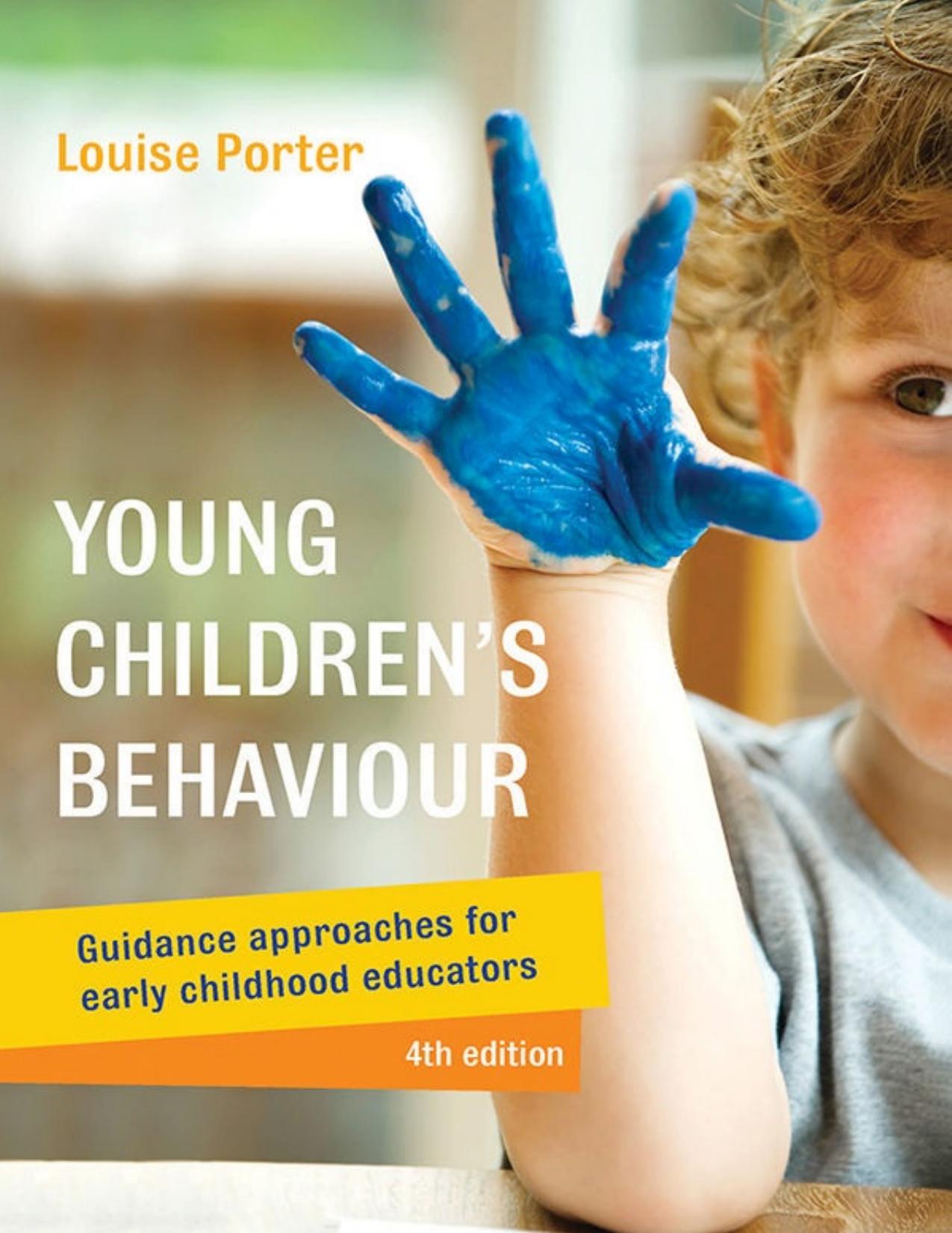
Young Children’s Behaviour Guidance Approaches for Early Childhood Educators 4th edition by Louise Porter ISBN 1760113956 978-1760113957
Original price was: $70.00.$35.00Current price is: $35.00.
Instant download Young Children’s Behaviour Guidance Approaches for Early Childhood Educators after payment
Young Children’s Behaviour Guidance Approaches for Early Childhood Educators 4th edition by Louise Porter – Ebook PDF Instant Download/Delivery: 1760113956 , 978-1760113957
Full download Young Children’s Behaviour Guidance Approaches for Early Childhood Educators 4th edition after payment
Product details:
ISBN 10: 1760113956
ISBN 13: 978-1760113957
Author: Louise Porter
‘The book provides a comprehensive, yet practical discussion of guidance strategies that can be implemented in a variety of situations. These strategies promote a respect for children and their rights, enhance children’s self-esteem, and help to foster pro-social skills. This book is a must-read for both students and practitioners who work with children and families.’ – Dr Laura McFarland, School of Education, Charles Sturt University
Drawing on the latest research evidence, Young Children’s Behaviour outlines the beliefs and values that underpin the guidance approach to managing the behaviours of children from birth to eight years of age. In contrast with rewards-and-punishment systems, guidance believes that children do not need incentives to behave well, but instead need skills. Rather than punishing them for lacking skills, guidance teaches young children self-regulation skills so that they can behave considerately.
The author provides practical strategies that both meet children’s needs and safeguard the rights of surrounding adults and children. These methods include listening, being assertive, giving positive instructions, solving problems collaboratively, and coaching children to self-regulate their emotions and impulses. The text also offers advice on responding to many common challenges including separation distress, meltdowns, aggression, and social withdrawal. Finally, the book suggests how educators can provide educational and behavioural support for children with atypical development and describes how to foster effective relationships with parents whose children display challenging behaviours.
Dr Louise Porter powerfully argues that behaviour guidance is the most effective approach to working with young children and reflects the deepest values of early childhood education and care.
Young Children’s Behaviour Guidance Approaches for Early Childhood Educators 4th Table of contents:
Introduction
1 Principles of early years education
Early education guidelines
Principles of early care and education
Aims of early childhood programs
Conclusion
2 Principles of behaviour guidance
Beliefs
Values
Controlling practices
Guidance practices
Effectiveness of the two styles
Ethics of disciplinary practices
Resistance to abandoning controlling discipline
Conclusion
3 Needs
A model of human needs
Survival
Safety and wellbeing
Self-esteem
Belonging
Autonomy
Purpose and happiness
Transcendence
Needs versus strategies
Conclusion
4 Understanding emotions
Emotions
Children’s emotions
Emotions and learning
Emotions and needs
Emotions and behaviour
Emotions and gender
Emotional intelligence
Emotions and thoughts
Emotion regulation in childhood
Managing anger
Coach helpful thinking
Conclusion
5 Providing a child-centred program: mastery and accomplishment
Structural features
Program content
Teaching and learning processes
Routines
Group story and song sessions
Managing transitions
Conclusion
6 Meeting children’s basic needs: survival, safety and wellbeing
Survival
Safety and wellbeing
Promoting children’s resilience
Conclusion
7 Meeting children’s need for self-esteem: competence and worth
Self-concept
Self-esteem
Types of self-esteem
Promote competence
Promote worth
How to acknowledge
Responding to children’s disappointment
The two faces of perfectionism
Phasing out rewards
Conclusion
8 Meeting children’s need to belong: care and connection
Acceptance by adults
Peer group acceptance
Friendships
Social play
Methods to meet children’s need to belong
Conclusion
9 Meeting children’s need for autonomy: voice and choice
Autonomy-supportive measures
Conclusion
10 Influences on behaviour
Types of behavioural difficulties
Identifying the causes of persistent behavioural difficulties
Reactive behaviours
External stressors
Developmental inexperience
Internal influences
The ‘attention seeking’ myth
‘Testing’ behaviour
Conclusion
11 Listening to children
Conditions needed for listening
Judgment
Observation
Listening skills
Roadblocks to communication
Listening to children’s anger
Conclusion
12 Everyday guidance practices
Selecting a response
Prevention
Give positive instructions
Make requests
Ask children
Explain the effect of a behaviour
Be assertive
Collaborative problem solving
Conflicts of values
Recovering from conflict
Apologies
Conclusion
13 Supporting children’s self-regulation
Methods to coach self-regulation
Meltdowns
Time in
Time away
Consistency
Conclusion
14 Solving persistent problems
The solution-focused approach
Principles of a solution-focused approach
Define the problem
Set goals
Redefine the problem
Examine exceptions
Pattern interruption
Give up coercion
Cope with setbacks
Have fun
Conclusion
15 Solutions to children’s emotional difficulties
Fears
Separation distress
Reunions
Bereavement
A death in the family
Conclusion
16 Solutions to children’s social difficulties
Social withdrawal
Excessive reliance on others
Exclusion of peers
Aggression
Rough and tumble play
Super-hero play
Telling tales
Unwillingness to share
Sexuality and gender
Conclusion
17 Interventions for children with atypical development
Delayed or impaired communication skills
Supportive measures for children with language difficulties
Neuro-developmental disorders
Developmental delay
Advanced development (‘giftedness’)
Assessment
Interventions
Support parents
Conclusion
18 Collaboration with parents
Styles of interactions between educators and parents
Impediments to collaboration
Qualities of relationships with parents
Cross-cultural collaboration
Collaborating with families in adversity
Collaborative practices
Finding solutions
Responding to parents’ complaints
Complaints from third parties
Conclusion
Resources
Notes
Bibliography
Index
People also search for Young Children’s Behaviour Guidance Approaches for Early Childhood Educators 4th :
how to guide young children’s positive behavior
how to manage young children’s behavior
child guidance techniques
types of behavior guidance
guiding young children’s behavior